Biodiversity
Ensuring the health of ecosystems and the species contained therein is vital to ensuring societal well-being and a sustainable economic recovery. Yet many of these ecosystems are threatened by human-induced pressures, including pollution, habitat degradation, and urbanization, as well as by climate change. Ecologic Institute works to safeguard biodiversity against these and other threats through its activities. Specific contributions include policy support (e.g. policy assessments, recommendation provisioning, data collection, and analysis) as well as activities to increase societal awareness, capacities, and engagement. The team further supports the delivery of the Sustainable Development Goals and the mainstreaming of biodiversity considerations into other sectoral policies, such as water, agriculture, and climate. Team members have specific expertise in the EU Biodiversity Strategy and Birds and Habitats Directives, Natura 2000 management, and the global UN Convention on Biological Diversity (CBD).
Specifically, Ecologic Institute supports, for example, the effective implementation of environmental policies related to biodiversity, the improvement of coherence and quality of data use or the integration of socio-cultural ecosystem services into green urban planning. Another focus is the research and use of the multifunctional potential of green and blue infrastructure for biodiversity and the provision of ecosystem services.













Selected Projects for Biodiversity
European Topic Center on Biological Diversity (ETC/BD) 2014-2018
- Duration
-
-
- Funding
-
European Environment Agency (EEA), International
Framework Contract to Monitor LIFE Projects and Support Communication about the LIFE Programme
- Duration
-
-
- Funding
-
European Commission, Directorate-General Environment (DG Environment), International
Evidence‐based Improvements in the Birds and Habitats Directives Implementation: a systematic review (E-BIND)
- Duration
-
-
- Funding
-
European Commission, Directorate-General Environment (DG Environment), International
Implementation of the EU's Action Plan for Nature, People and the Economy
- Duration
-
-
- Funding
-
European Commission, Directorate-General Environment (DG Environment), International
Enabling Green and Blue Infrastructure Potential in Complex Social-ecological Regions (ENABLE)
- Duration
-
-
- Funding
-
Federal Ministry of Education and Research (BMBF), Germany
Linking Biodiversity to National Economic and Social Priorities in the EU Member States
- Duration
-
-
- Funding
-
European Commission, Directorate-General Environment (DG Environment), International
Knowledge, Assessment, and Management for Aquatic Biodiversity and Ecosystem Services Across EU Policies (AQUACROSS)
- Duration
-
-
- Funding
-
European Commission, Directorate-General Research & Innovation (DG Research & Innovation), International
Biodiversity and Sustainable Development in the EU's Outermost Regions and Overseas Countries and Territories (NetBiome-CSA)
- Duration
-
-
- Funding
-
European Commission, Directorate-General Research & Innovation (DG Research & Innovation), International
Implementation of Natura 2000 and the Habitats and Birds Directives
- Duration
-
-
- Funding
-
European Union, Committee of the Regions (CoR), International
Selected Publications for Biodiversity

EEA, 2015: State of nature in the EU. Results from reporting under the nature directives 2007–2012, Technical report No 02/2015, European Environment Agency, Copenhagen.
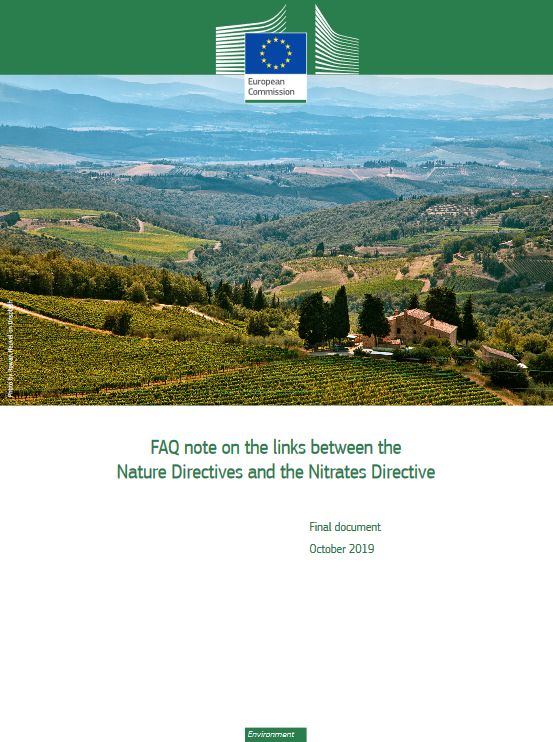
European Commission (ed.) 2019: FAQ note on the links between the Nature Directives and the Nitrates Directive.
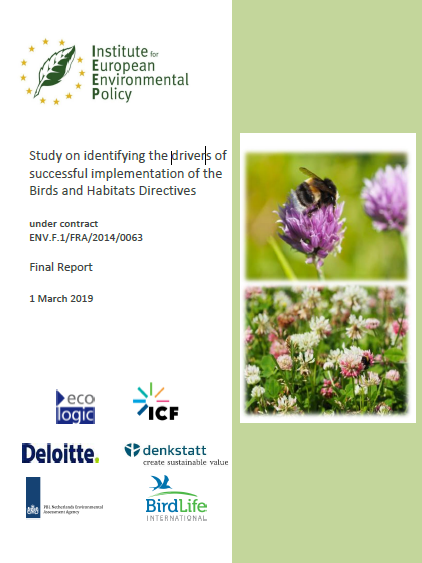
Tucker, G, Stuart, T, Naumann, S, Stein, U, Landgrebe-Trinkunaite, R and Knol, O (2019) Study on identifying the drivers of successful implementation of the Birds and Habitats Directives. Report to the European Commission, DG Environment on Contract ENV.F.1/FRA/2014/0063, Institute for European Environmental Policy, Brussels.
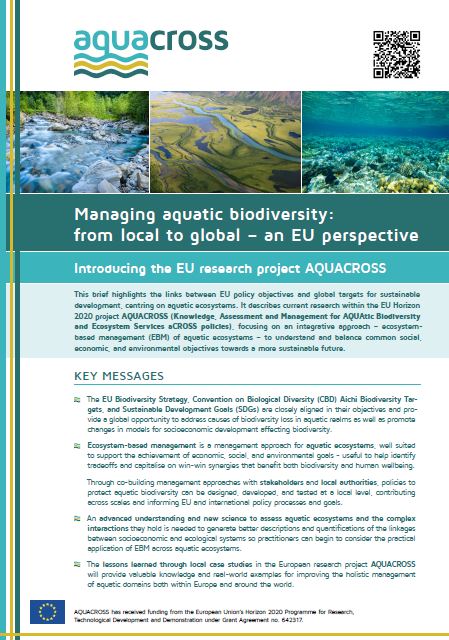
AQUACROSS consortium 2016: Managing aquatic biodiversity: from local to global – an EU perspective. Introducing the EU research project AQUACROSS.
Rouillard, J., Lago, M., Abhold, K. et al. 2018: Protecting aquatic biodiversity in Europe: How much do EU environmental policies support ecosystem-based management? Ambio (47)1. doi:10.1007/s13280-017-0928-4
Kuemmerlen, Mathias et al. 2018: Case Study 7 Report: Biodiversity Management for Rivers of the Swiss Plateau. Eawag, Ecologic Institute, University of Liverpool: Dübendorf, Berlin, Liverpool.
Kaphengst, Timo and Christiane Gerstetter (2015). Addressing Multiple Values of Biodiversity in Development Cooperation - Policy Brief January 2015. Berlin: Ecologic Institute.
Ecologic Institute and UCL Centre for Law and the Environment (2015): The Implementation of the Natura 2000, Habitats Directive 92/43/ECC and Birds Directive 79/409/ECC (Preparation for an ex-post territorial impact assessment).
Gerdes, Holger; Zoritza Kiresiewa; Manuel Lago et. al. 2014: The value of biodiversity and ecosystem services in the EU’s Outermost Regions and Overseas Countries and Territories.
Selected Events for Biodiversity
Conference:Ecosystem-Based Management for the Protection of Aquatic Biodiversity – AQUACROSS Final Conference
- Date
-
-
- Location
- Brussels, Belgium
Workshop:Linking Biodiversity to Economic and Social Priorities – Regional Workshop
- Date
-
- Location
- Berlin, Germany
Discussion:Biodiversity Policy in the German Bundestag 2014 - 2018 - How Does This Affect the Daily Work of Parliament?
- Date
-
- Location
- Berlin, Germany
Selected Presentations for Biodiversity
Speech:Nature-based Solutions and Ecosystem-based Aquatic Biodiversity Management
- Date
-
-
- Location
- Sharm el Sheikh, Egypt
Speech:Europe's Marine Biodiversity and the Need to Look Upstream for Ecosystem-based Management
- Date
-
- Location
- Kiel, Germany