Trade
Both cross-border trade in goods and services and foreign investment are important parts of the global economy. States have undertaken to follow certain rules by signing international trade and investment agreements. From a sustainability perspective, trade and investment are ambiguous: for example, the international transport of goods causes emissions, but can also contribute to the global diffusion of environmentally friendly technologies.
Ecologic Institute examines the tension between trade and the environment, especially from a legal and economic perspective, and makes proposals on how to make trade and investment agreements as environmentally friendly as possible. Reviewing evolving policies and regulatory proposals for their compatibility with international agreements is an important part of the Institute's work. In addition, Ecologic Institute develops recommendations on how to make international trade in resources along supply chains more environmentally friendly and how to prevent the illegal trade in natural resources.
Contact




Selected Projects for Trade
Trade and Investment Agreements
Consumer Rights in International Trade Agreements and How They Can be Enforced
- Duration
-
-
- Funding
-
Federation of German Consumer Organisations (vzbv), Germany
Regulatory Cooperation under TTIP – a Risk for Democracy and National Regulation?
- Duration
-
-
- Funding
-
Heinrich Böll Foundation (HBS), Germany
Investor-state Dispute Resolution under TTIP
- Duration
-
- Funding
-
Heinrich Böll Foundation (HBS), Germany
International Law and Support for Renewable Energies
- Duration
-
-
- Funding
Supply Chains
Assessment of 10 Years EU Retail Forum for Sustainability
- Duration
-
-
- Funding
-
European Commission, Directorate-General Environment (DG Environment), International
Global Material Flows and Demand-supply Forecasting for Mineral Strategies (MinFuture)
- Duration
-
-
- Funding
-
European Commission, Directorate-General Research & Innovation (DG Research & Innovation), International
International Governance for Environmentally Sound Supply of Raw Materials (InGoRo)
- Duration
-
-
- Funding
-
German Environment Agency (UBA), Germany
How to Verify Claims on the Environmental Properties of Products and Organizations?
- Duration
-
-
- Funding
-
European Commission, Directorate-General Environment (DG Environment), International
Selected Publications for Trade
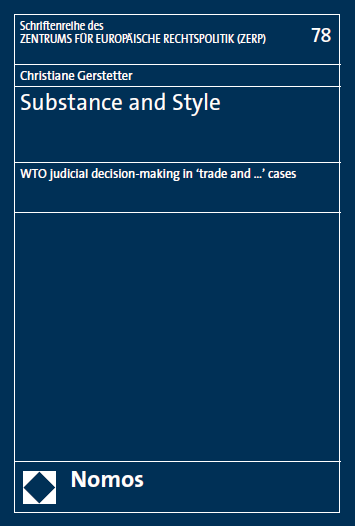
Substance and Style: WTO judicial decision-making in 'trade and ...' cases von Dr. Christiane Gerstetter 2021, 634 S., geb., 118,– €, ISBN 978-3-8487-5768-8, (Schriftenreihe des Zentrums für Europäische Rechtspolitik der Universität Bremen (ZERP), Bd. 78)
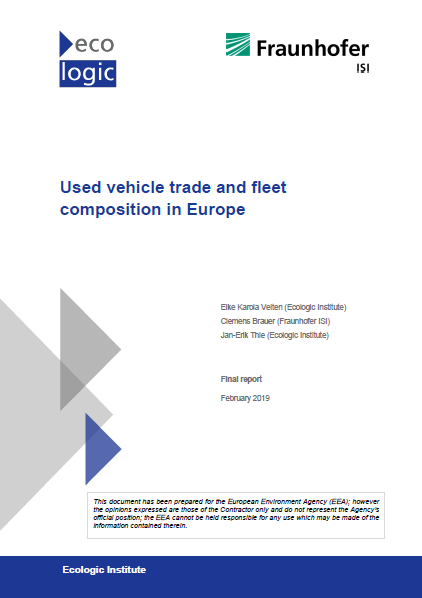
Velten, Eike Karola; Clemens Brauer, Jan-Erik Thie (2020): Used vehicle trade and fleet composition in Europe. Final report of the project "Used vehicle trade and fleet composition in Europe" on behalf of the EEA. Ecologic Institute and Fraunhofer Institute for Systems and Innovation Research ISI: Berlin, Karlsruhe.
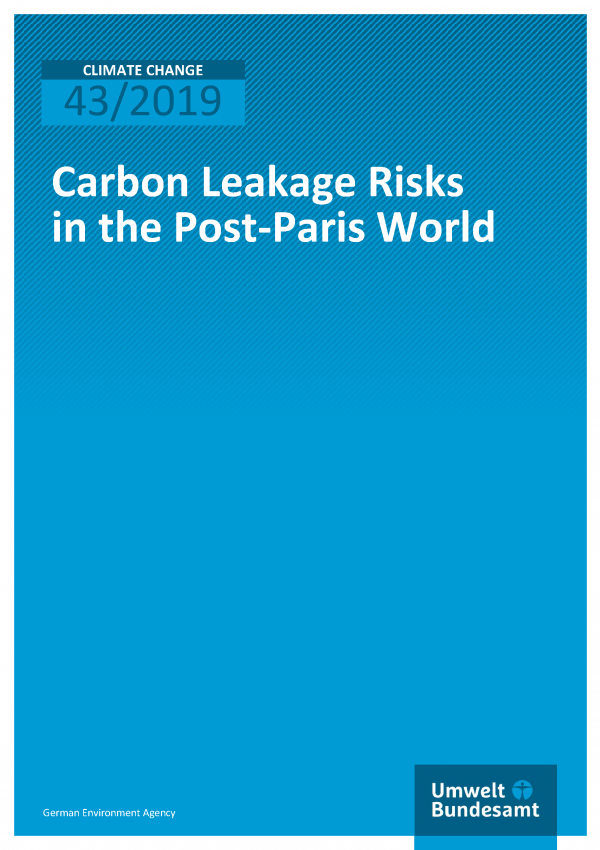
Görlach, Benjamin and Elizabeth Zelljadt (2019): Carbon Leakage Risks in the Post-Paris World. UBA Climate Change 43/2019. Dessau-Roßlau: Umweltbundesamt
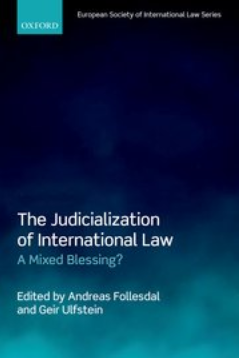
Gerstetter, Christiane: Substance and Style - How the WTO Adjudicators Legitimize their Decisions, in: Andreas Follesdal and Geir Ulfstein: The Judicialization of International Law, Oxford University Press: Oxford, 2018