Climate
To avert the climate crisis, global greenhouse gas emissions must reach "net zero" within the space of a few decades. Ecologic Institute combines political, economic, and legal analysis to propose effective policy solutions for this challenge at all levels.
At the international level, our legal experts monitor and contribute to negotiations under the United Nations Framework Convention on Climate Change (UNFCCC). At EU, national, regional, and local levels, our research projects produce recommendations for concrete policy instruments as well as appropriate governance and institutions for the implementation of the Paris Agreement.
The climate team covers most aspects of climate policy, especially at the European level. Our team has a particularly strong track record in a number of specific policy areas, such as carbon pricing (with a focus on the EU Emissions Trading System), climate laws, long-term planning, and evaluating policy effectiveness. Our team also includes experts in the fields of energy, transport, agriculture, and the circular economy.
We engage with and work for a broad range of academic organizations and stakeholders from governments, business, and civil society, co-producing solutions to manage the climate crisis. Communicating results and insights in a targeted fashion is one of the team's priorities. We strive for innovation in fostering an ongoing dialogue among key public and private actors – both online and in person – to support effective and forward-thinking climate action.
The climate team also engages in teaching, in cooperation with a number of universities. Moreover, we design our own training courses, enhancing capacity and understanding of climate change and possible solutions to audiences that include journalists and UNFCCC negotiators. We also present on a regular basis to visitor groups from around the world, explaining our understanding of EU and German policy processes. Furthermore, we have been continuously teaching courses on emissions trading for over a decade.




















Selected Projects for Climate
Transformative Policies for a Climate-neutral European Union (4i-TRACTION)
- Duration
-
-
- Funding
-
European Commission, Directorate-General Research & Innovation (DG Research & Innovation), International
Transitioning to Net Zero' Success Stories
- Duration
-
-
- Funding
-
Smart Energy for Europe Platform (SEFEP), International Agora Energiewende, Germany
EU Regions in the Transformation Towards a Climate-neutral Future
- Duration
-
-
- Funding
-
European Parliament (EP), International
Dialogue on Pathways and Policies for a Climate-neutral EU (Climate Recon 2050)
- Duration
-
-
- Funding
-
European Climate Foundation (ECF), International
EU Climate Policy in the Medium-term (2030) and Long-term (2050+)
- Duration
-
-
- Funding
-
Oeko-Institut (Öko-Institut e.V.), Germany
Future of the EU: What Role for Climate and Energy Policies?
- Duration
-
-
- Funding
-
Stiftung Mercator, Germany
A "Fit for 55" Package Based on Environmental Integrity and Solidarity
- Duration
-
-
- Funding
-
Agora Energiewende, Germany
Assessing Policy Evaluations in the Context of the National Energy and Climate Plans (NECPs)
- Duration
-
-
- Funding
-
German Environment Agency (UBA), Germany
Accelerating Global Climate Action before 2030
- Duration
-
-
- Funding
-
German Environment Agency (UBA), Germany
Selected Publications for Climate

Velten, Eike Karola, Duwe, Matthias, Evans, Nick (2022): Charting a path to net zero: An assessment of national long-term strategies in the EU. Summary. Ecologic Institute, Berlin.
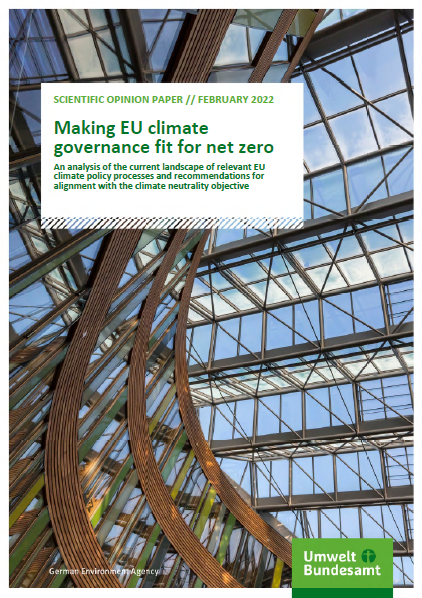
Duwe, Matthias 2022: Making EU climate governance fit for net zero. An analysis of the current landscape of relevant EU climate policy processes and recommendations for alignment with the climate neutrality objective. Scientific opinion paper. Dessau-Roßlau: Federal Environment Agency.
Haase, Isabel; Eike Karola Velten, Harrison Branner, Anna Reyneri (2022) The use of auctioning revenues from the EU ETS for climate action – An analysis based on eight case studies. Technical report. Ecologic Institute, Berlin.
4i-TRACTION (2022): Making EU Climate Policy Fit for Climate Neutrality. 4i-TRACTION Policy Brief. Ecologic Institute, Berlin.
European Commission (ed.) 2021: Possible extension of the EU Emissions Trading System (ETS) to cover emissions from the use of fossil fuels in particular in the road transport and the buildings sector. Luxembourg: Publications Office of the European Union.
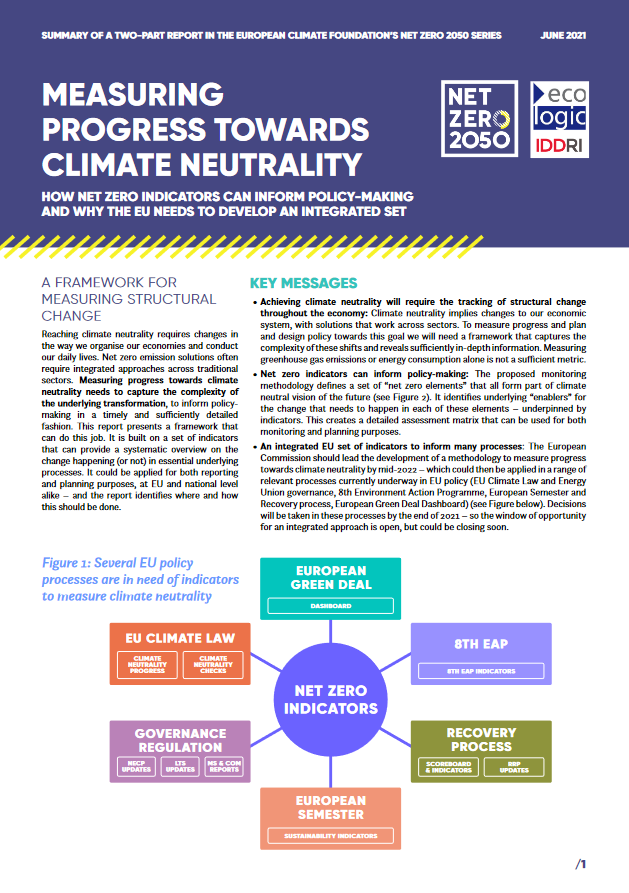
Duwe, Matthias; Eike Karola Velten, Isabel Haase, Nicolas Berghmans, Nick Evans and Deyana Spasova (2021): Measuring progress towards climate neutrality. Ecologic Institute, Berlin / IDDRI, Paris
Evans, Nick; Matthias Duwe (2021): 'Climate governance systems in Europe: the role of national advisory bodies'. Ecologic Institute, Berlin; IDDRI, Paris.
Iwaszuk, Ewa; Mederake, Linda; Knoblauch, Doris (2019): The Transformative Potential of Local Climate Change Strategies. In: Zevi, Tobia (Ed.) The Century of Global Cities. How Urbanisation is Changing the World and Shaping our Future. Milan: Italian Institute for International Political Studies.
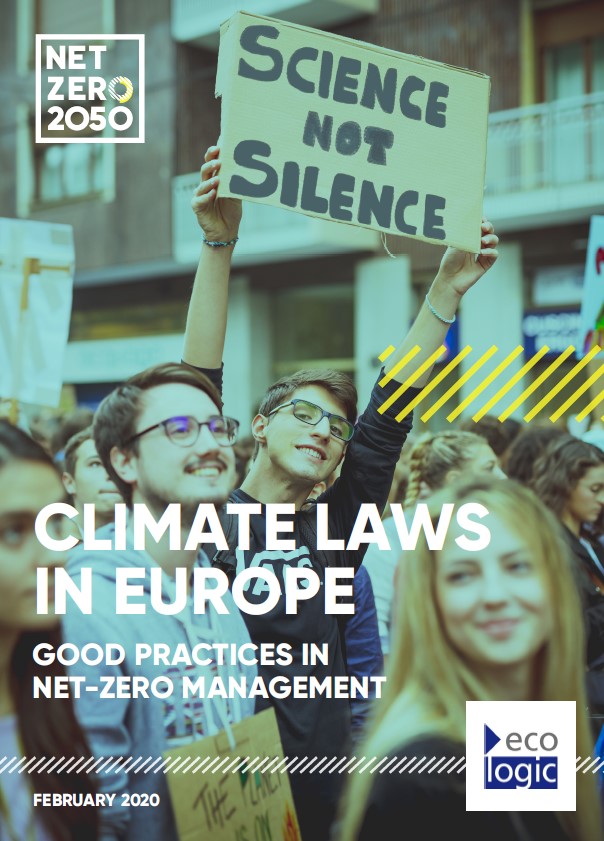
Duwe, Matthias and Evans, Nicholas (2020): Climate Laws in Europe: Good Practices in Net-Zero Management. Berlin, Den Haag.
Meyer-Ohlendorf, Nils 2019: A European Climate Law – What Should It Look Like?. Ecologic Institute: Berlin.
Ecologic Institute, the Istituto Affari Internazionali, the Institute of European Environment Policies, the Climate Strategy Institute 2050 2019: The Future of the EU – the Role of Climate and Energy Policies. Conclusions.
Duwe, Matthias; Ostwald, Robert (2017): The Innovation Fund: how can it support low-carbon industry in Europe: Design recommendations for the successor instrument to the NER 300 in Phase 4 of the EU ETS. Ecologic Institute, Berlin.
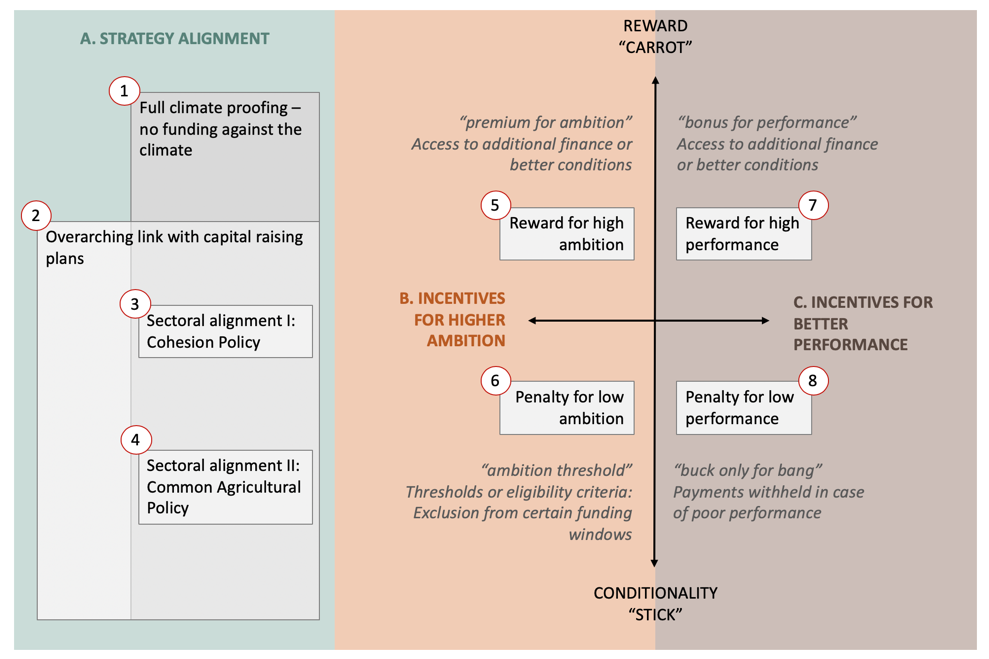
Duwe, Matthias 2018: Result Oriented Spending for the Climate: Creating strong connections between the EU budget and National Energy and Climate Plans. Berlin: Ecologic Institute.
Bodle, Ralph, Lena Donat and Matthias Duwe (2016). The Paris Agreement: Analysis, Assessment and Outlook. German Federal Environment Agency (UBA) Research Paper. Dessau-Roßlau: Umweltbundesamt.
Görlach, Benjamin and Elizabeth Zelljadt (2019): Carbon Leakage Risks in the Post-Paris World. UBA Climate Change 43/2019. Dessau-Roßlau: Umweltbundesamt
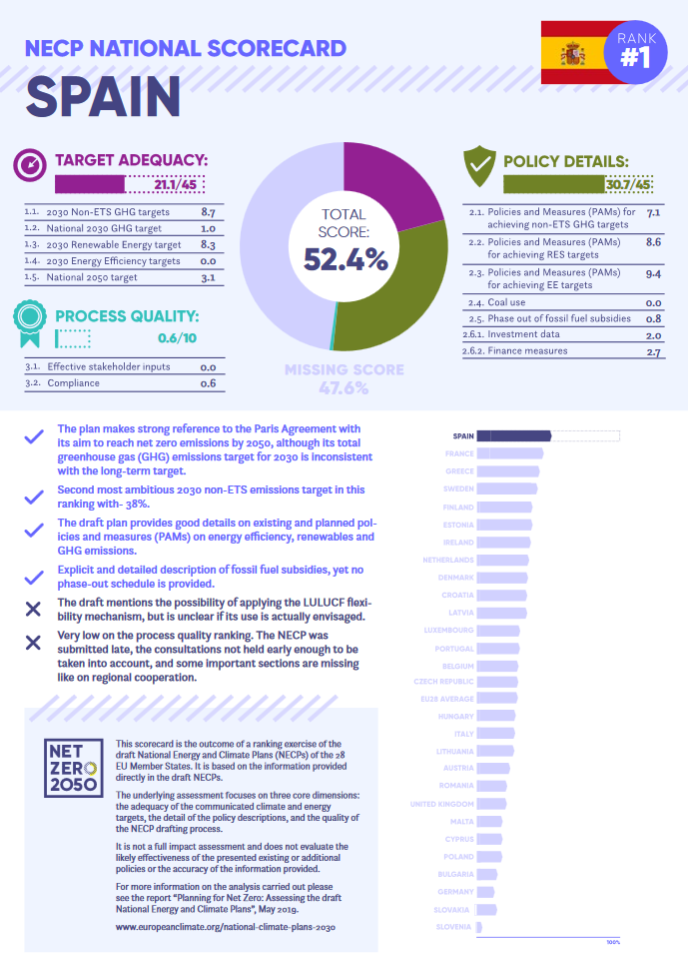
Duwe, Matthias; Eike Karola Velten, Nick Evans, Mona Freundt, Julien Pestiaux, Benoît Martin, Pascal Vermeulen (2019): Planning for net-zero: Assessing the Draft National Energy and Climate Plans. Berlin, Louvain-la-Neuve, Bruessels.
Selected Events for Climate
Conference:Charting a Path Towards EU Climate Neutrality in Turbulent Times
- Date
-
- Location
- Brussels, Belgium
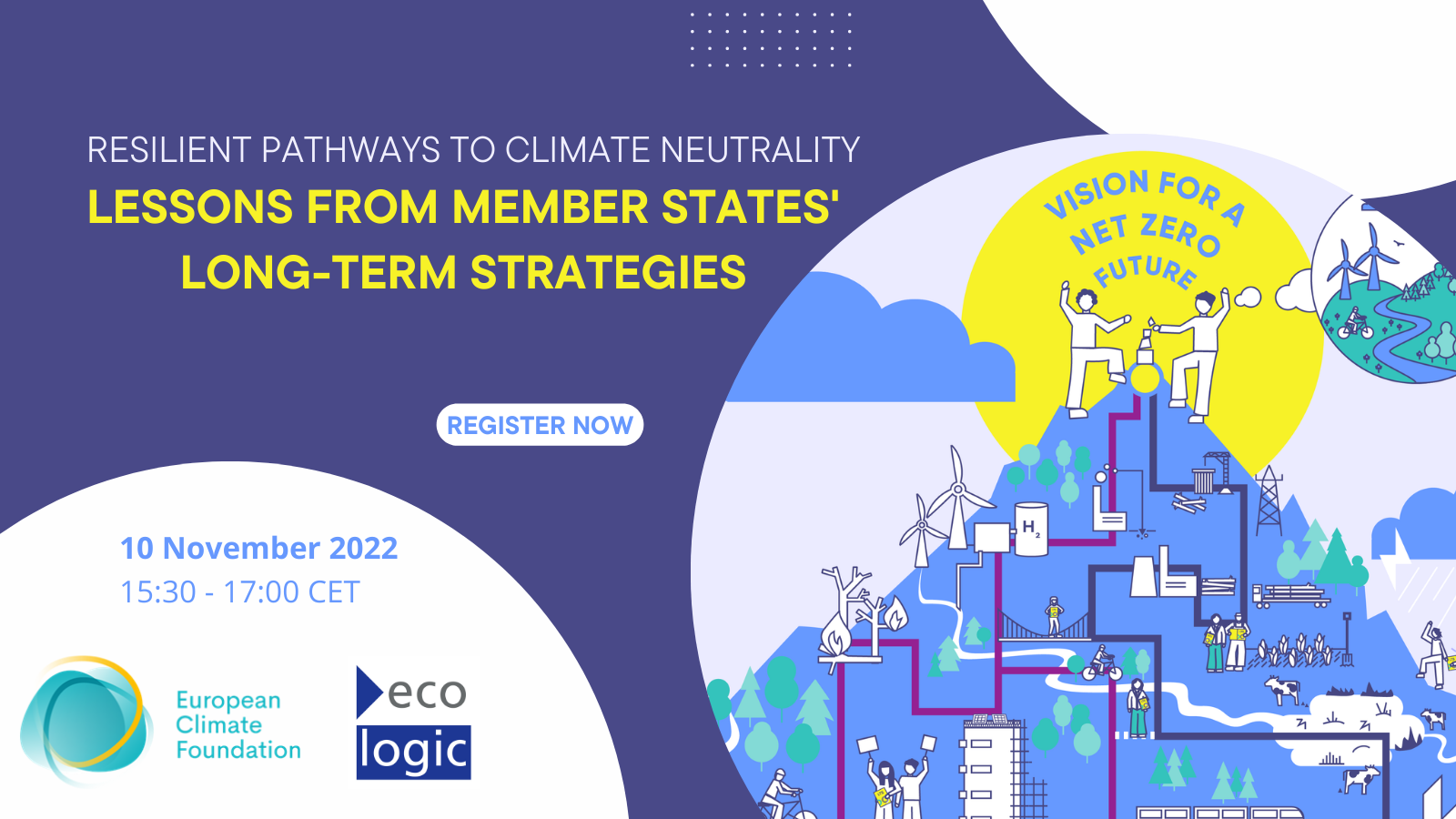
Digital Event: Resilient Pathways to Climate Neutrality
- Date
-
- Location
- online
Digital Event:How Can Advisory Bodies Effectively Support Climate Policy?
- Date
-
- Location
- online
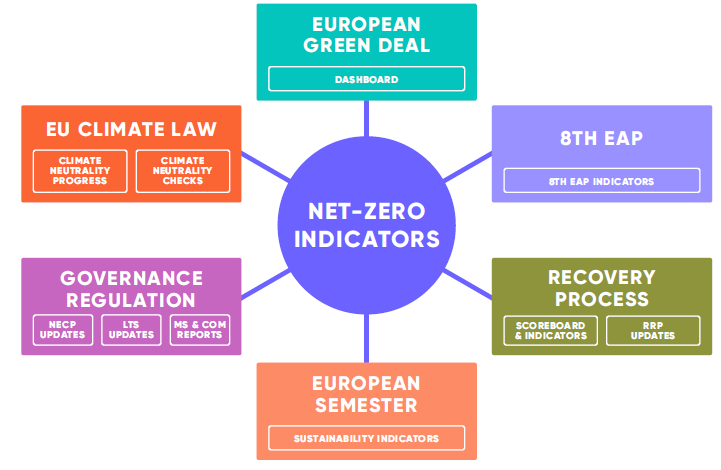
Digital Event:Measuring Progress towards Climate Neutrality
- Date
-
- Location
- online
Discussion:The EU on the Road to the Glasgow Climate Summit (COP26)
- Date
-
- Location
- online
Digital Event:The EU Climate Law: Holding the EU Accountable for Delivering on the Paris Agreement
- Date
-
- Location
- online
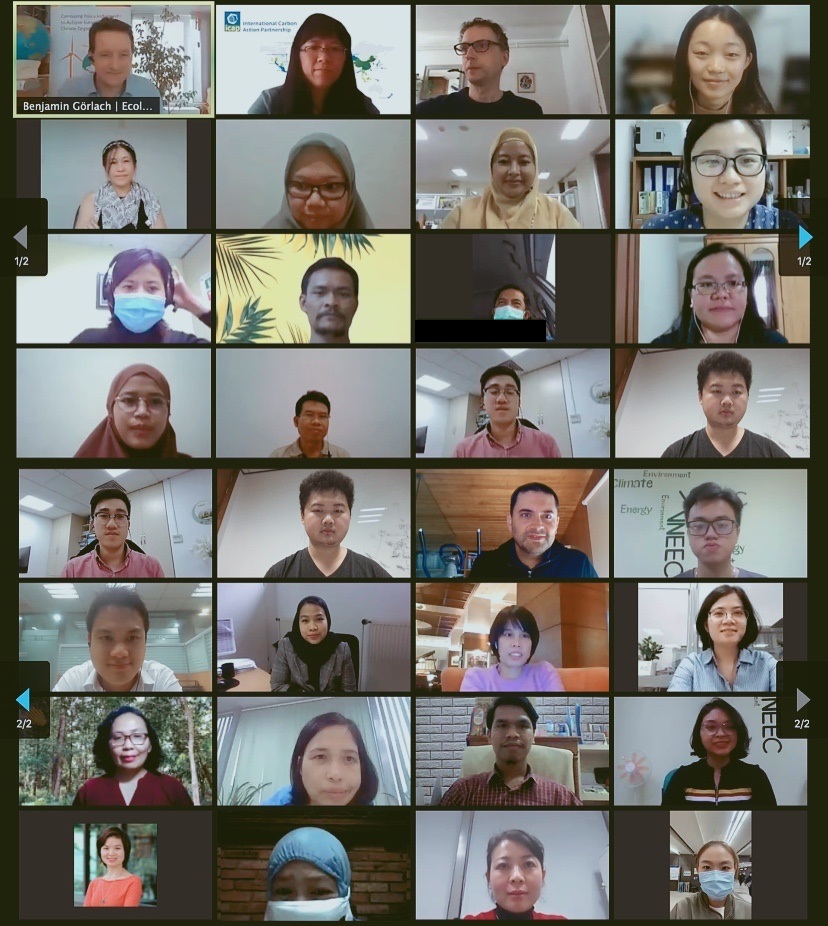
Digital Event:ICAP Virtual Seminar on Emissions Trading in Southeast Asia
- Date
-
-
- Location
- online
Digital Event:A Climate Neutral Europe by 2050
- Date
-
- Location
- online
Digital Event:Carbon Contracts for Difference for Industrial Transformation - Online Event Series
- Date
-
-
- Location
- Online, Germany
Conference:Business Mitigates Climate Change – Final Event of the Dialogue Forum
- Date
-
- Location
- Berlin, Germany
Digital Event:Stakeholder Engagement in the EU: Preparing National Energy and Climate Plans
- Date
-
- Location
- online
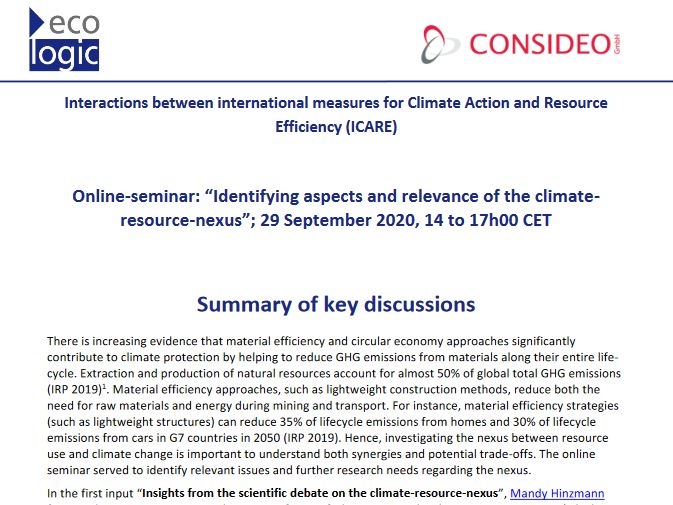
Digital Event:Identifying Aspects and Relevance of the Climate-resource-nexus
- Date
-
- Location
- online
Conference:Momentum on Long-Term Climate Strategies: Where We Are in Europe? – Side Event from the Climate Recon 2050 Project at COP24
- Date
-
- Location
- Katowice, Poland
Selected Presentations for Climate
Panel discussion:Transatlantic Climate Cooperation under President Biden
- Date
-
- Location
- online
Speech:Good Practices from Germany as an Inspiration for Polish Local-governments
- Date
-
- Location
- online
Speech:Professionalizing Climate Policy
- Date
-
- Location
- online
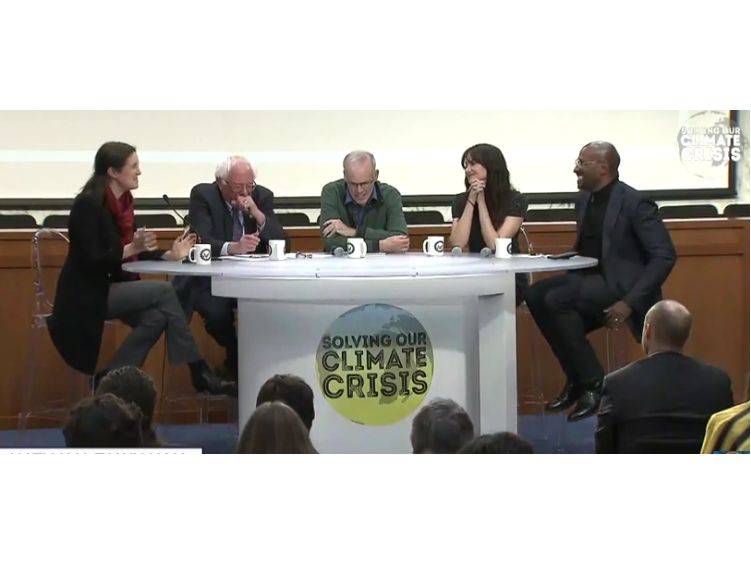
Panel discussion:Solving our Climate Crisis: Dr. Bausch at Senator Bernie Sanders' National Town Hall Meeting in Washington DC
- Date
-
- Location
- Washington, DC, United States
Speech:From Knowledge to Action: Global climate protection and local action
- Date
-
- Location
- Stuttgart, Germany
Chairing:Climate Protection and Artificial Intelligence – How can AI help us reach the Paris Agreement?
- Date
-
- Location
- Berlin, Germany
Chairing:Preparing the European Energy System for the Impacts of Climate Change
- Date
-
- Location
- Brussels, Belgium
Speech:What Does the European Green Deal Mean for Cities and Metropolitan Areas?
- Date
-
- Location
- Barcelona, Spain
Chairing:The International Governance of Geo-engineering
- Date
-
-
- Location
- Brussels, Belgium
Speech:Food and Climate Protection
- Date
-
- Location
- Berlin, Germany
Panel discussion:Poetry Talk: World Climate Summit of Poetry
- Date
-
- Location
- Berlin, Germany