The Berlin Senate Department for Mobility, Transport, Climate Protection and the Environment (SenMVKU) organised an online expert dialogue on the topic of "Promoting repair through networks and repair bonuses" on 6 June 2023. Good practice examples were presented and potentials, challenges and measures to promote repair were discussed with the participation of experts from business, civil society and politics.
Ecologic Legal is supporting the German Federal Foreign Office in the international climate negotiations, particularly on the identification and analysis of German, EU and international negotiation positions. This project builds on previous work conducted in the projects on "Scientific and Legal and Support of the Climate Negotiations".
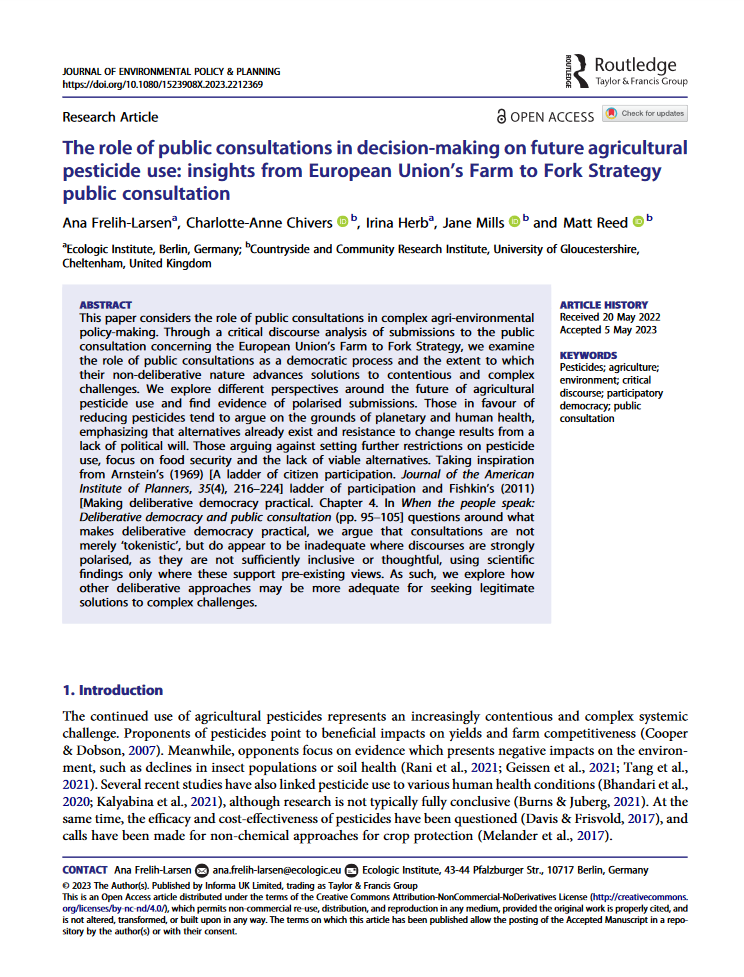
Newly published research from SPRINT explores the extent to which public consultations likely contribute to democratic decision-making surrounding agricultural pesticide use. Through a critical discourse analysis of submissions to the public consultation concerning the European Union’s Farm to Fork Strategy, the authors, among them Ecologic Institute's Dr. Ana Frelih-Larsen, examine the role of public consultations as a democratic process and the extent to which their non-deliberative nature advances solutions to contentious and complex challenges.
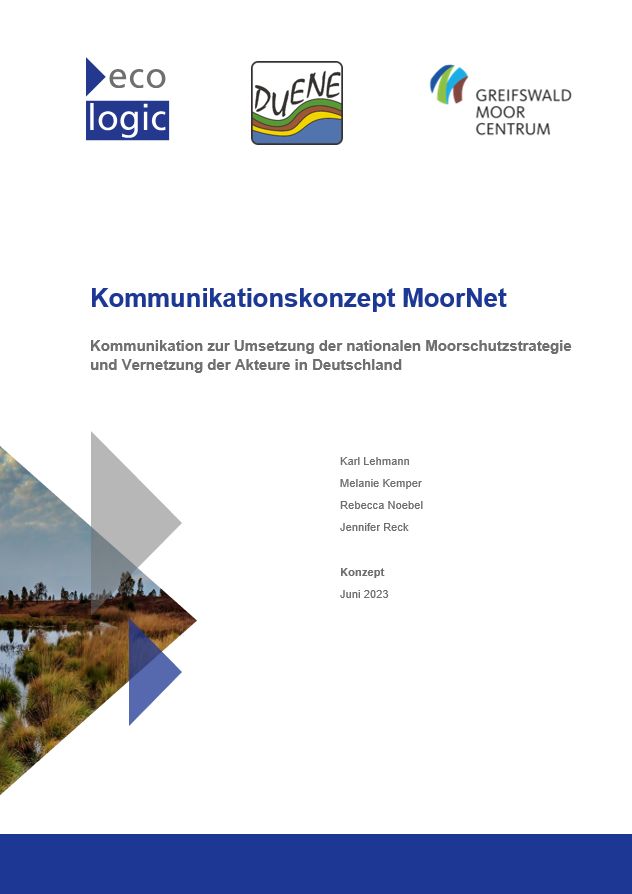
Lehmann, Karl, Melanie Kemper, Rebecca Noebel & Jennifer Reck 2023: Kommunikationskonzept MoorNet - Kommunikation zur Umsetzung der nationalen Moorschutzstrategie und Vernetzung der Akteure in Deutschland. Ecologic Institut. Berlin. Unpublished
CREDIBLE functions as a knowledge hub for driving carbon farming forwards. It is organised as a network of networks, involving existing research projects, initiatives, commercial sectors and public administrations.
Do not dispose of unused pharmaceuticals in the toilet or sink, as this is how they end up in water, soil and groundwater. This leaflet explains in various languages how to dispose of old pharmaceuticals correctly and why this is important.
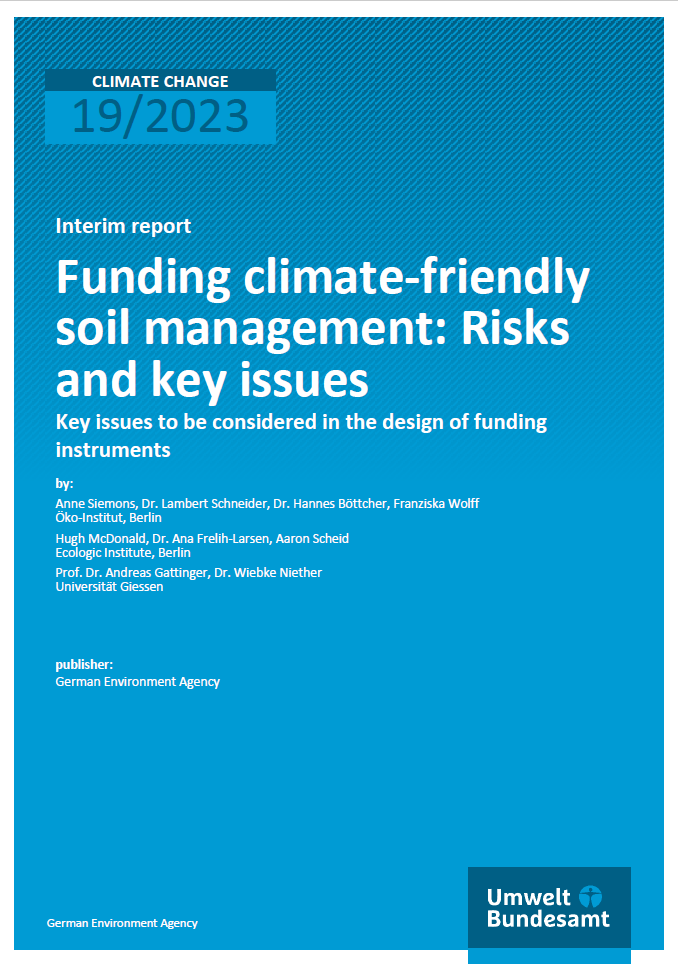
This report summarises key aspects that should be accounted for in the design of policy instruments to support the implementation of climate-friendly soil management measures. It outlines overarching aspects that need to be considered for any type of policy instruments, including land use competition, impacts on soil health, biodiversity impacts, ownership and rights to use of soils and social impacts.
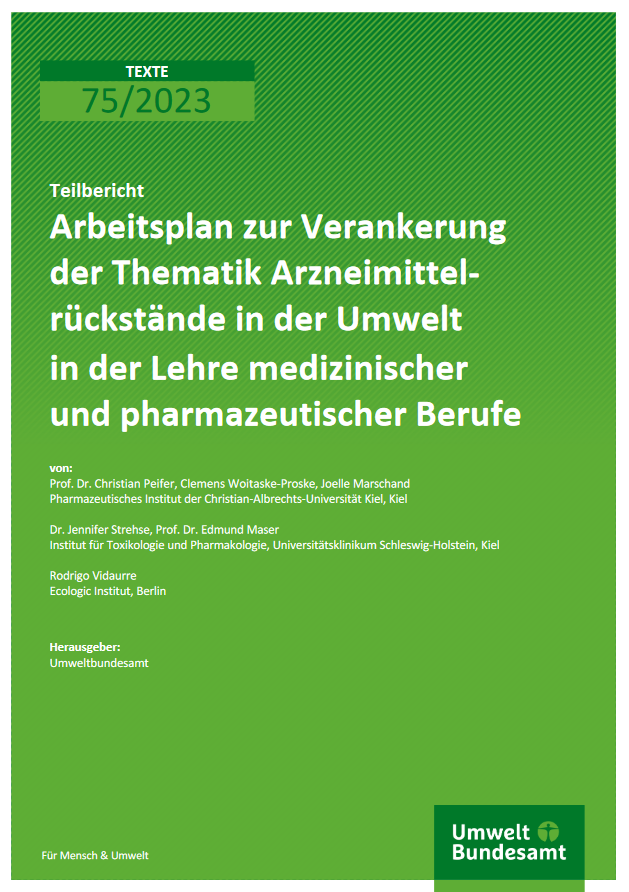
This report presents a work plan for incorporating the issue of pharmaceuticals in the environment into the education of the medical and pharmaceutical professions in Germany. It first presents an overview of the relevant German structures in the education and training of medical and pharmaceutical professions. In a second step, it provides concrete recommendations for the integration of the topic into teaching (studies and vocational training), continuing education and training.
The Commission's proposal on the Carbon Removals Certification Framework puts the EU on a dangerous track that facilitates replacing emission reductions with removals. Integrating carbon removals into the EU Emissions Trading Scheme carries similar risks. Effectively, the debate on the role of carbon removals puts EU climate policies at a cross-roads.
The discussion on the certification of carbon removals seems technical, but it is one of the central debates in EU climate policy. It is primarily intended to pave the way for the integration of CO₂ removals into emissions trading. In doing so, the EU risks to build its most important climate policy instrument on sand, writes Dr. Nils Meyer-Ohlendorf of Ecologic Institute in the Tagesspiegel Background Energie & Klima. He makes suggestions how to mitigate this risk.
After the euphoria had been dampened at the beginning of the negotiation week in Paris, there was a good result in the end: The Chair H.E. Mr. Gustavo Adolfo Meza-Cuadra Velasquez and the INC Secretariat were given a mandate to present a first draft ("zero draft") in the run-up to the next negotiations. This is an important next step. Doris Knoblauch accompanied the INC-2 negotiations in Paris for Ecologic Institute.
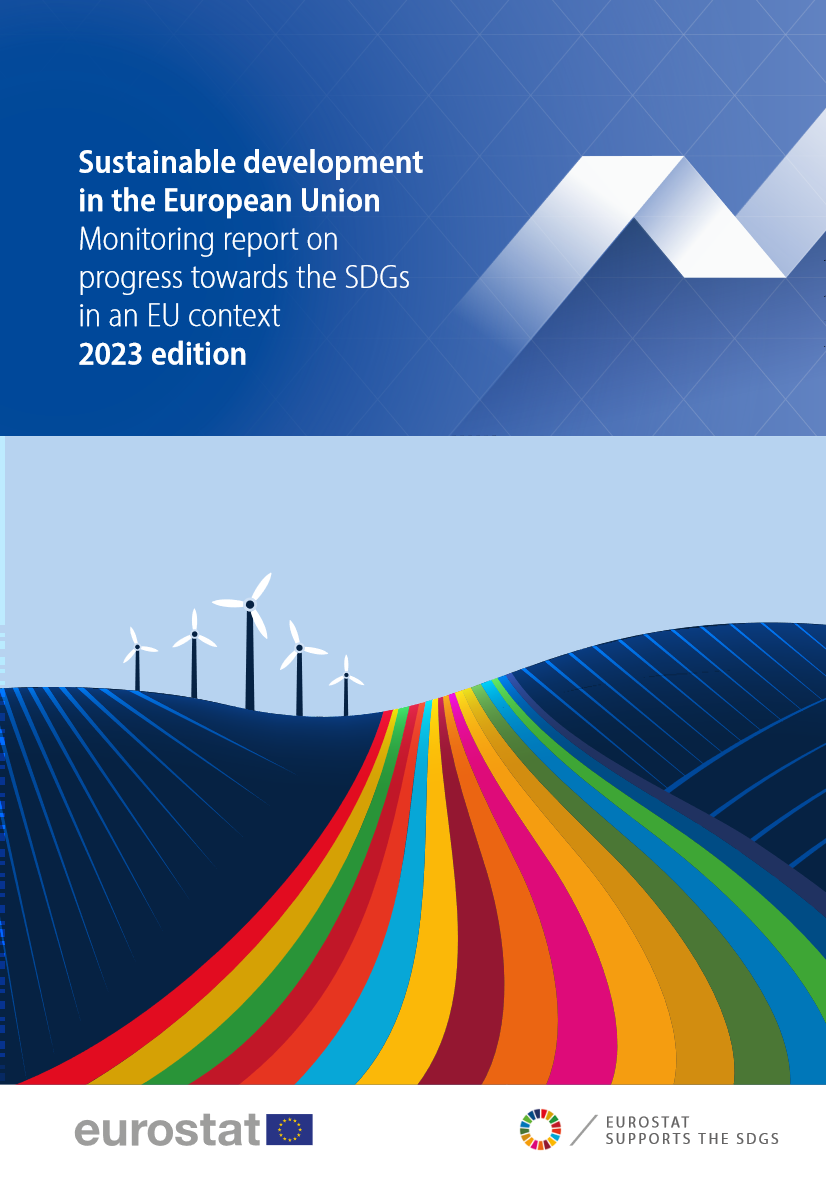
The 2023 publication is Eurostat's seventh regular report monitoring progress towards the SDGs in an EU context. Ecologic Institute's authors covered the chapters on Zero Hunger (SDG 2), Clean Water and Sanitation (SDG 6), Affordable and Clean Energy (SDG 7), Climate Action (SDG 13), Life Below Water (SDG 14), Life on Land (SDG 15) and Partnerships for the Goals (SDG 17). The publication is available for download.
The 2023 edition of the EU SDG indicator set consists of 100 indicators structured along the 17 SDGs and covering the social, economic, environmental and institutional dimensions of sustainability as represented by the 2030 Agenda. Ecologic Institute's authors covered the chapters on Zero Hunger (SDG 2), Clean Water and Sanitation (SDG 6), Affordable and Clean Energy (SDG 7), Climate Action (SDG 13), Life Below Water (SDG 14), Life on Land (SDG 15) and Partnerships for the Goals (SDG 17). The publication is available for download.