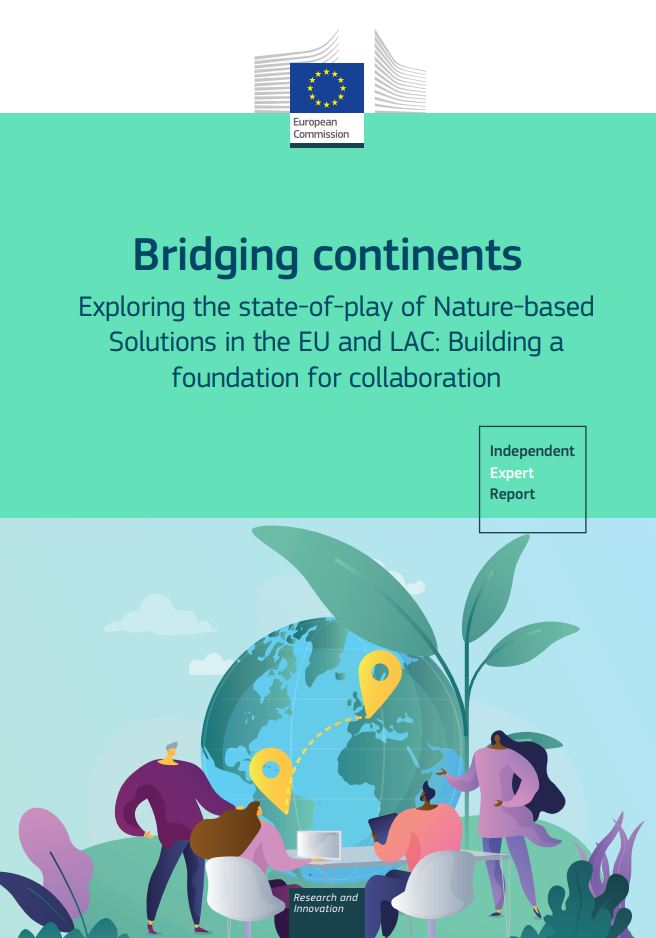
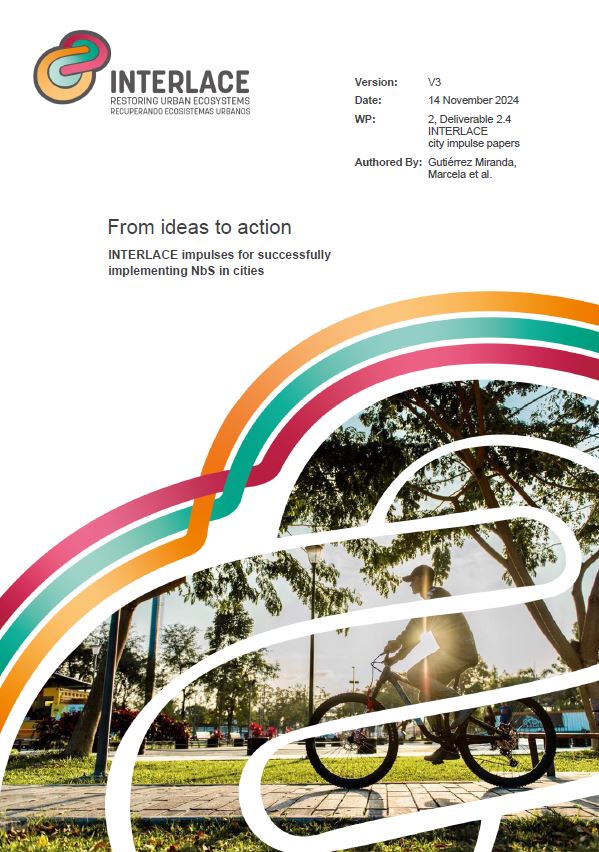
The Conference "Reimagining Urban Spaces: Nature-Based Solutions for Inclusive Transformations in Europe and Latin America," took place in Granollers, Spain on 2 and 3 October 2024. This two-day event brought together nearly 100 experts, policymakers, and city representatives to share insights and achievements from the four-year INTERLACE project led by Ecologic Institute.
This paper examines whether an EU-wide pricing mechanism should be introduced and explores feasible design options. It concludes that the EU should price CH4 emissions from the energy sector to complement the EU-MER, providing an economic incentive to reduce CH4 emissions beyond the mandated level.
The technical handbook of the PONDERFUL project shows how ponds and pond landscapes can be used as Nature-Based Solutions (NBS) to tackle societal challenges such as climate change, biodiversity loss and water scarcity. The PONDERFUL handbook provides practice-oriented guidelines for dealing with these valuable ecosystems and shows how ponds can be integrated into existing landscapes so that nature and people benefit equally.
Der Bericht "Integrating Nature-Based Solutions in Policy and Planning. Findings and Lessons from INTERLACE Cities" (dt.: Erkenntnisse und Lektionen aus den INTERLACE-Städten), fasst die Erfahrungen der sieben Partnerstädte in Europa und Lateinamerika zusammen. Er richtet sich an politische Entscheidungsträger:innen und Stadtplaner:innen, die naturbasierte Lösungen (NbS) systematisch in ihre städtischen Planungs- und Governance-Strukturen einbinden möchten. Dabei betont die Publikation die Bedeutung inklusiver Beteiligungsprozesse sowie den Einsatz moderner Daten- und Finanzierungsinstrumente, um NbS auf eine breitere Ebene zu skalieren.
The recently published guide "Using ponds and pondscapes as nature-based solutions" is a practical guide for policy makers. The guide provides detailed recommendations on using ponds and pondscapes as nature-based solutions, in particular to adapt to climate change and promote biodiversity. In addition to the policy dimension, it contains practical suggestions for monitoring, management and restoration of ponds.
On 25 and 26 September 2024, McKenna Davis and Natalia Burgos of Ecologic Institute contributed to two landmark nature-based solutions (NbS) events in Brussels, focusing on advancing NbS through collaborative efforts.
Urban areas across the globe are facing unprecedented challenges – pollution, climate change, urban sprawl – and traditional solutions are falling short. Join the Interlace project's free online course to discover how nature-based solutions offer a promising approach to help create resilient, sustainable cities.
The Climateurope2 Webstival will take place on 19 and 20 September 2024. This virtual event will provide a platform for exchange on the development, use and quality of climate services and their importance for innovation and policymaking. The Webstival ties in with the 2022 and 2023 editions and will once again address topics relevant to the application of climate services. Registration for the Webstival is still open. Take the opportunity to participate in exciting discussions on the future of climate services.
In recent discussions surrounding the Clean Industrial Deal, there has been growing recognition of the need to not only prioritize industrial transformation but also integrate social and environmental considerations. This approach is vital for ensuring that the green transition is inclusive, equitable, and sustainable in the long term. The blogpost, authored by members of the Think Sustainable Europe network, underscores that climate action must go hand-in-hand with social protection measures and environmental safeguards.
The first policy brief of the EU-funded RESTORE4Cs project highlights the importance of European coastal wetlands in reducing greenhouse gas emissions and removing carbon from the atmosphere, promoting their restoration as a climate change mitigation solution.
On 3 September 2024, Dr Stephan Sina, Senior Fellow at Ecologic Institute, held a presentation on ‘Legislation between Climate Action and Security of Supply - Challenges of the Energy Transition’ as part of a visit by a delegation from the Legislative Affairs Commission (LAC) of the Standing Committee of the National People's Congress of the People's Republic of China to the Federal Ministry of Economic Affairs and Climate Action. In addition to two further presentations by representatives of the Ministry, there was an exchange of views with the Chinese delegation.
A family farm in Brežice, Slovenia, took the leap into organic agriculture to overcome high input costs, low economic viability, and limited control over their business. The SPRINT project is studying this farm to understand how the transition to organic farming – by eliminating synthetic pesticides and fertilizers, introducing crop rotations, and experimenting with new feeding strategies – can lead to a more sustainable and profitable operation. This case study highlights the challenges and successes of the farm in adopting an organic approach.
In Slovenia, the Fruit Centre Maribor is dedicated to promoting sustainable fruit production practices while reducing reliance on synthetic pesticides. The SPRINT project studies the Centre's work to understand how the use of more resistant fruit varieties, self-developed plant-based pesticides, and improved soil quality can contribute to more sustainable cultivation. This case study explores the challenges and solutions the Centre has encountered in implementing sustainable methods in fruit production.
The city of Rennes in France faces the challenge of securing the quality of its drinking water, as intensive agricultural practices have led to significant pollution of water resources. As part of the "Terres de Sources" initiative, which was studied within the SPRINT project, sustainable solutions have been developed to improve drinking water quality through environmentally friendly agricultural practices while also promoting local food production and marketing. This case study illustrates how the initiative successfully implements measures to reduce pesticide use and promote sustainable value chains.
The vineyards of St. Emilion, France, face significant challenges due to the reliance on pesticides, particularly given the region's susceptibility to mildew. However, the winegrowers of St. Emilion have successfully committed to a sustainable future by implementing stringent environmental regulations and significantly reducing pesticide use. This case study highlights the initiatives and successes achieved in the region, which aims to promote sustainable practices in viticulture.