The research project analyses the need for integrated strategies in order to ensure sustainable development and preserve the basis of life. The project focuses on analysing the challenges and interactions between the three crisis areas and the question of how measures can be designed to create synergies between climate protection, biodiversity conservation and the reduction of environmental pollution. More crises are being added, e.g. land degradation and food security.
Rome, like many cities in Southern and Western Europe, is facing significant challenges from climate change, particularly in the form of Urban Heat Islands (UHI). To address these risks, PwC is leading a project funded by the EU's DG REFORM, with the Ecologic Institute playing a key supporting role. This project will develop a detailed UHI risk profile for Rome, integrating data on the city’s demographics, urban layout, transportation systems, and green spaces.
On 28 January 2025, the Directorate-General for Climate Action of the European Commission hosted a 1-day event on public funding for permanent carbon removal. The event focused on exploring and enhancing the financing landscape for climate action, with a specific emphasis on instruments supporting permanent carbon removal.
The aim of this project is to prepare a report that will serve as the basis for the evaluation report on the Federal Action Plan on Nature-based Solution for Climate and Biodiversity (ANK) to be submitted by the Federal Government in 2025. In March 2023, the Federal Ministry for the Environment, Nature Conservation, Nuclear Safety and Consumer Protection (BMUV) published the Federal Action Plan on Nature-based Solution for Climate and Biodiversity (ANK) with the aim of significantly improving ecosystems in Germany. It specifically counteracts the dual crisis of global heating and biodiversity loss.
The project NormTransform seeks to quantify emission reduction potentials and the impacts of reduced meat consumption (measured in kg/CO2) in Austria, induced through advertisement campaigns.
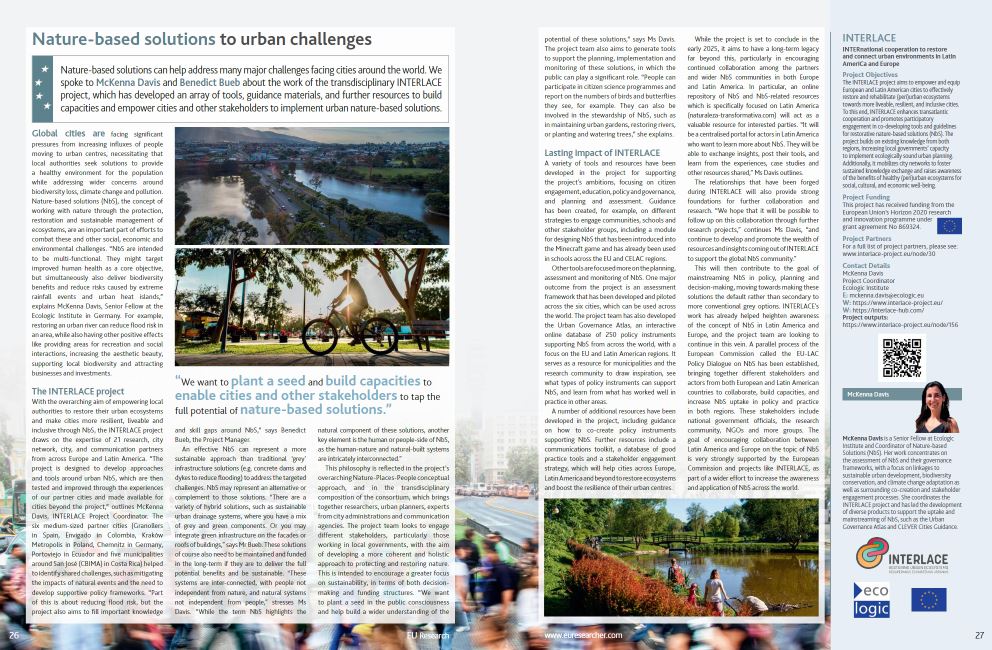
The INTERLACE project, funded by Horizon 2020, exemplifies innovative transdisciplinary approaches to tackling urban challenges through nature-based solutions (NBS). By fostering stakeholder engagement, developing practical tools, and supporting ecosystem restoration, the project empowers cities across Europe and Latin America to implement sustainable NBS. McKenna Davis and Benedict Buebfrom Ecologic Institute provided key insights into the project's progress and outcomes.
In the context of an increasingly globalized and urbanized world, regions are becoming more and more important as territorial organizational units. The book "De la ciudad a la región" examines the change from traditional nation-state dominance to more flexible regional structures. The study focuses in particular on the process of regional integration between the Colombian capital Bogotá and the surrounding department of Cundinamarca over the last ten years.
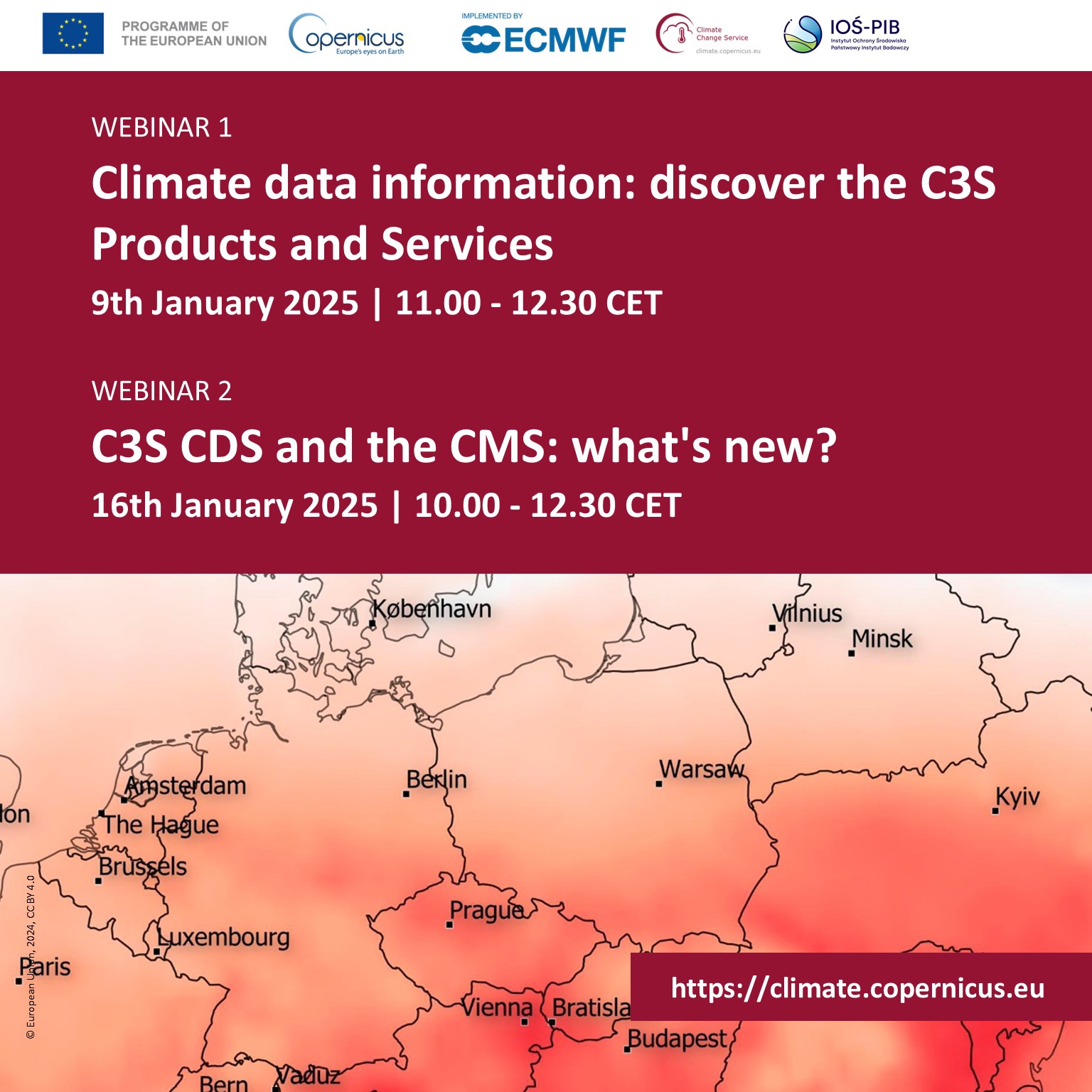
The Copernicus Climate Change Service (C3S), implemented by the European Centre for Medium-Range Weather Forecasts (ECMWF) on behalf of the European Commission, conducted two webinars which were aimed to deepen the understanding of C3S products and services in Poland.
On Tuesday, November 26, 2024, the webinar "Advancing Natural Climate Adaptation: Financing Options for Nature-Based Solutions in Municipalities" took place. The event provided municipalities with practical insights and information on innovative approaches to financing nature-based solutions.
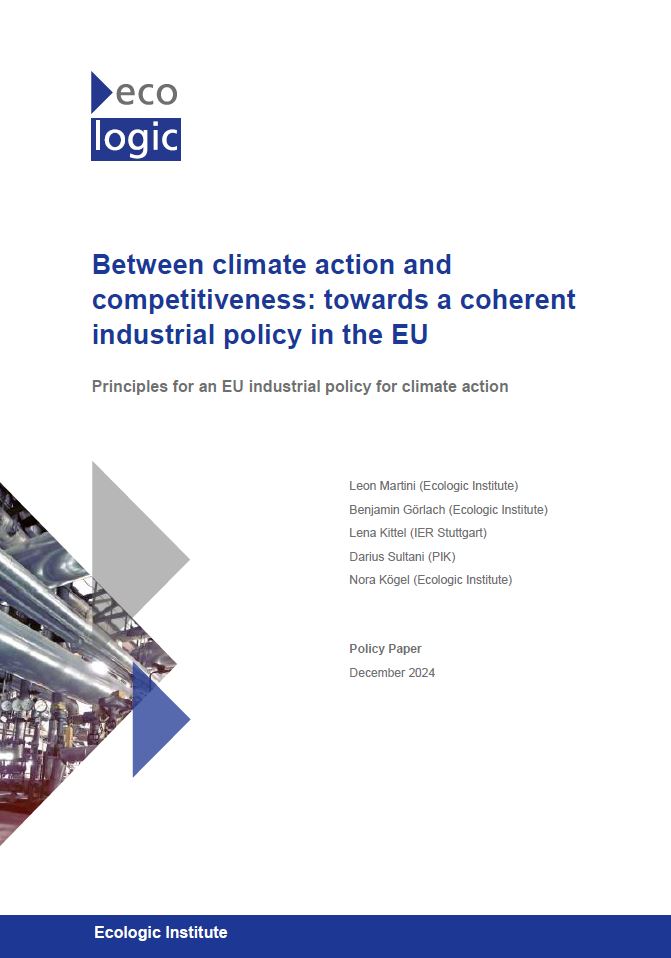
This new report from Ecologic Institute, PIK and IER discusses what EU industrial policy should look like, what principles it should follow and how it interacts with the set of existing EU climate and energy policies. The report proposes six principles for an EU industrial policy for climate action and discusses the 'industrial policy trilemma' of navigating goals in climate action, competitiveness, and security.
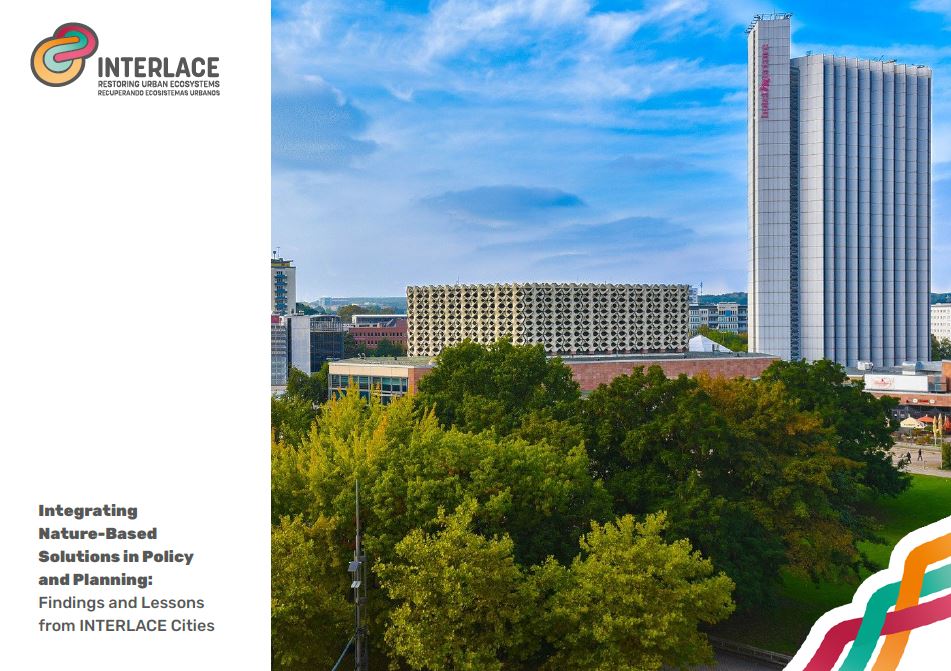
Der Bericht "Integrating Nature-Based Solutions in Policy and Planning. Findings and Lessons from INTERLACE Cities" (dt.: Erkenntnisse und Lektionen aus den INTERLACE-Städten), fasst die Erfahrungen der sieben Partnerstädte in Europa und Lateinamerika zusammen. Er richtet sich an politische Entscheidungsträger:innen und Stadtplaner:innen, die naturbasierte Lösungen (NbS) systematisch in ihre städtischen Planungs- und Governance-Strukturen einbinden möchten. Dabei betont die Publikation die Bedeutung inklusiver Beteiligungsprozesse sowie den Einsatz moderner Daten- und Finanzierungsinstrumente, um NbS auf eine breitere Ebene zu skalieren.
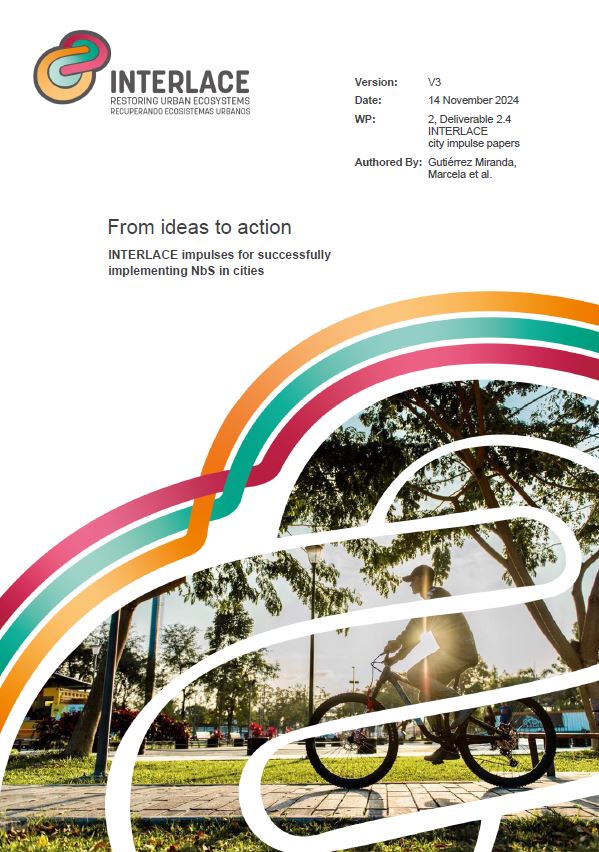
The report ‘From Ideas to Action’ presents the strategy papers of the seven INTERLACE partner cities, which were developed in close cooperation with local stakeholders in Europe and Latin America. These papers highlight tailor-made strategies for nature-based solutions (NbS), including the revitalisation of urban parks in Chemnitz and the development of a search engine for green infrastructure projects in Kraków. The aim is to effectively address the unique challenges of each city, such as climate change, biodiversity loss and social inequality.
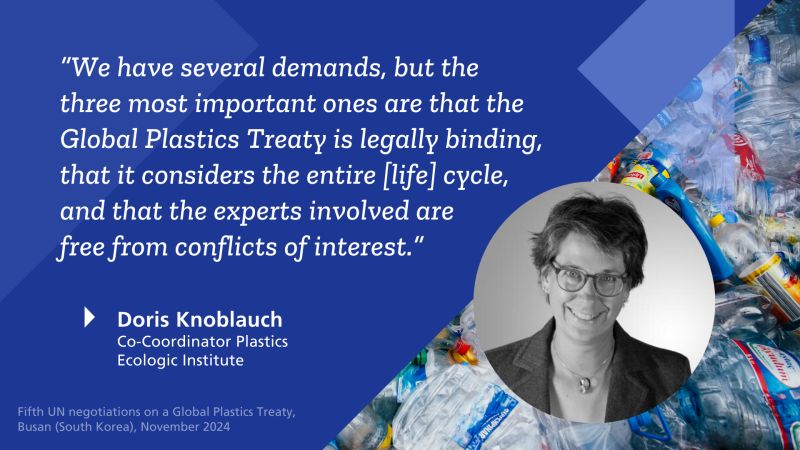
The fifth round of negotiations (#INC5) to agree on an international legally binding instrument (ILBI) to end plastic pollution took place from 25 November to 1 December in Busan, South Korea. Originally intended to be the last round of negotiations leading to a plastics treaty, UN member states failed to agree on such a treaty. Many stakeholders left disappointed, and both member states and observers will have to meet again at an INC5.2 in 2025 to continue their work to end plastic pollution.
The aim of this project is to examine how Climate-Resilient Agriculture can strengthen the capacity of European agricultural systems to withstand climate-related extreme weather events while maintaining productivity and supporting long-term sustainability. The project examines the evidence on these practices and their contribution to agricultural resilience in different European climate zones.