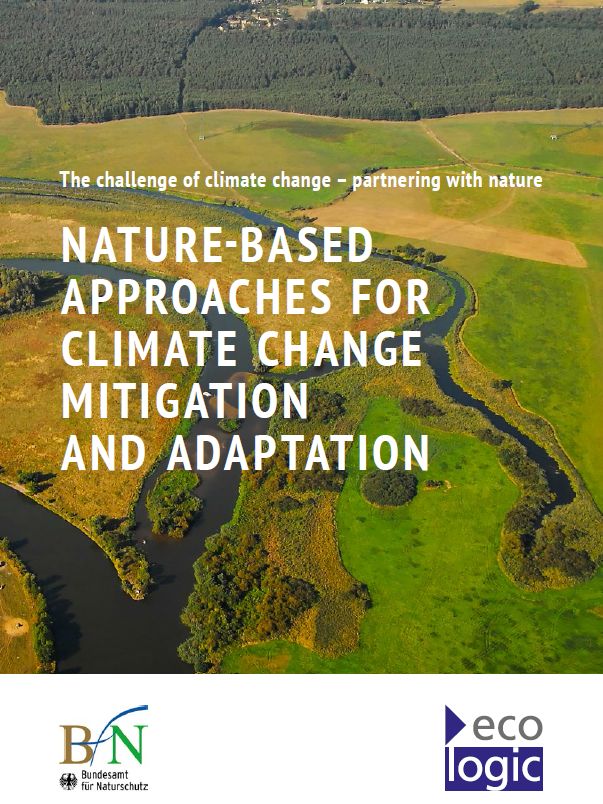
Climate change is a global phenomenon that poses risks to sectors across society and the economy. Nature-based approaches can offer sustainable solutions to cope with climate change mitigation and adaptation challenges. The brochure "Nature-based approaches to climate change mitigation and adaptation", developed by Ecologic Institute on behalf of the German Federal Agency for Nature Conservation (BfN), introduces the opportunities, challenges, and success factors of nature-based solutions and presents good practice examples. The brochure is available for download.
A new economic paradigm and its multiple facets for future development were intensively discussed at the international "Degrowth Conference" in Leipzig from 2. until 6. September 2014. The Ecologic Institute contributed through presentations, workshops and moderations. Dr. Martin Hirschnitz-Garbers and Susanne Langsdorf presented results obtained in a "Horizon Scanning"-exercise done as part of the SimRess-project. The presentation slides are available for download.
In this article, Ecologic Institute's Lena Donat and Ralph Bodle provide a structured approach for developing and evaluating options for a dynamic adjustment mechanism in the 2015 climate agreement. To ensure that the 2015 Agreement, that is currently being negotiated under the United Nations Framework Convention on Climate Change (UNFCCC), provides an effective response to climate change over time, it needs to encorporate flexible and dynamic elements. This should include a possibility for Parties to regularly adjust their mitigation commitments so as to increase the level of ambition and to reflect changing circumstances.
This report, created as part of the CECILIA2050 project, gives an overview of climate policy approaches in Germany, Poland, the United Kingdom, as well as the European Union as a whole. After highlighting the different legal and institutional structures, it provides conclusions and recommendations regarding the regulatory approach.
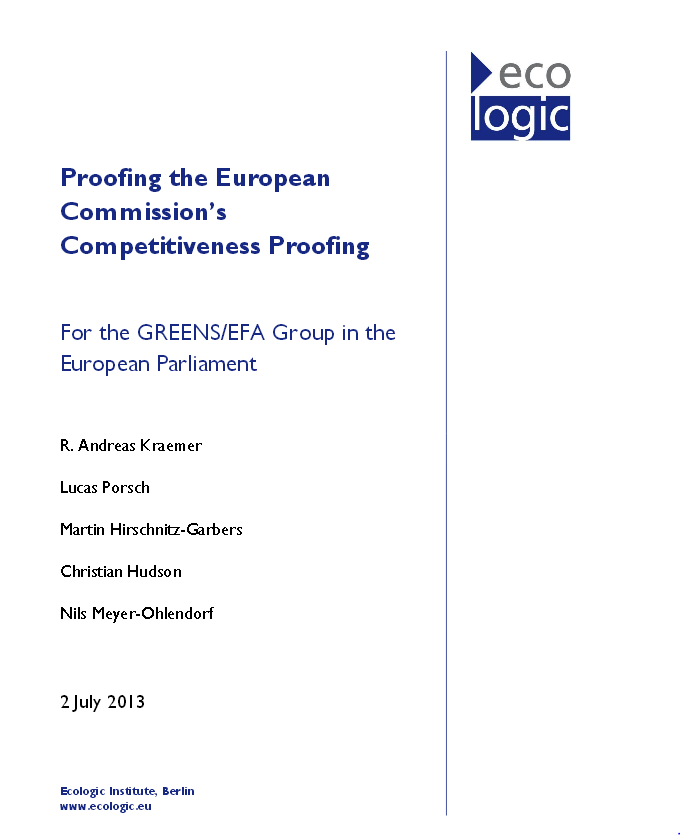
This report reviews the methodology of the European Commission's competitiveness proofing guidelines. Especially, it assesses if this methodology provides sufficient information to evaluate the impact of policies on the competitiveness of the European economy. Another focus is set on the question if the information collected can support long-term structural change and innovation in the European Union.
A study of leading city and community-level energy transitions demonstrates behavioral changes across personal, social, and external dimensions. Giovanni Caiati (Laboratory of Citizenship Sciences) and Adam Pearson, Transatlantic Fellow at Ecologic Institute presented research that shows social and behavioral aspects contribute strongly to energy transition processes.
In September 2014, the Ecologic Institute and the College of Liberal Arts and Science at the University of Colorado Denver (CU Denver) launch a new cooperation, the study program "Sustainability in Berlin". The program is unique as it combines actual coursework with an internship at relevant environmental institutions where students can experience first-hand what they have been learning. The two courses also combine academic reflections about global environmental challenges with field trips to local projects in and around Berlin.
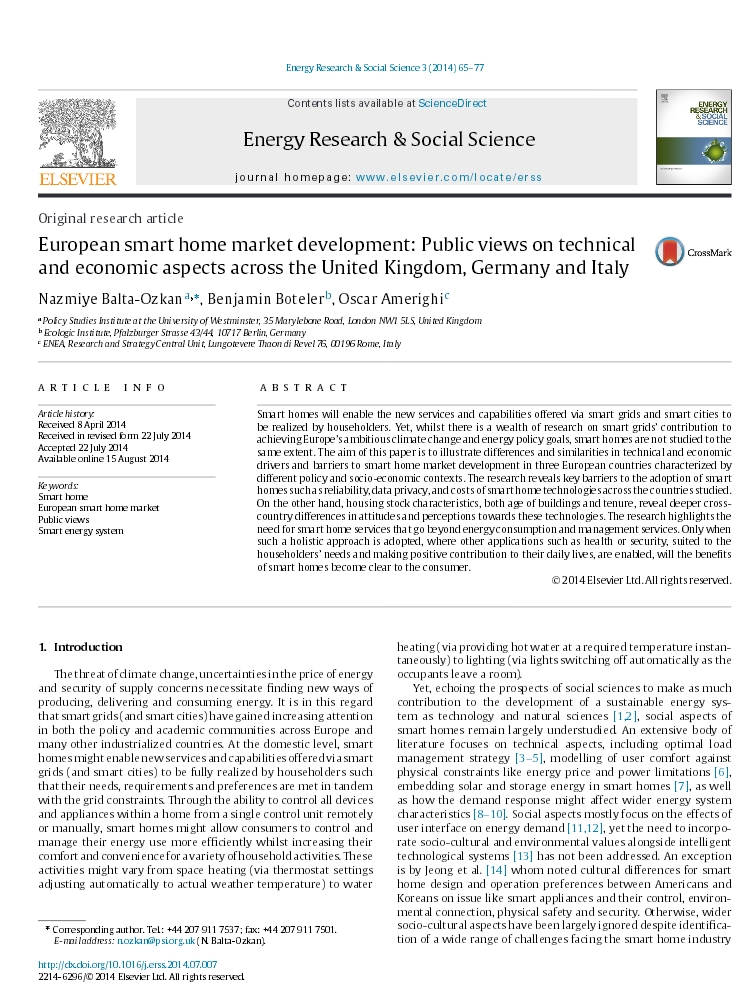
Smart homes offer significant potential to enable new energy saving services and capabilities offered via smart grids. However, research reveals that consumer perception regarding reliability and data privacy risks, as well as high costs of technologies act as significant barriers to consumer acceptance of smart homes. In a paper, published in Energy Research and Social Science, Benjamin Boteler and co-authors investigated the differences and similarities in technical and economic drivers and barriers to smart home market development in the UK, Germany, and Italy. The paper European smart home market development: Public views on technical and economic aspects across the United Kingdom, Germany and Italy is available for download.
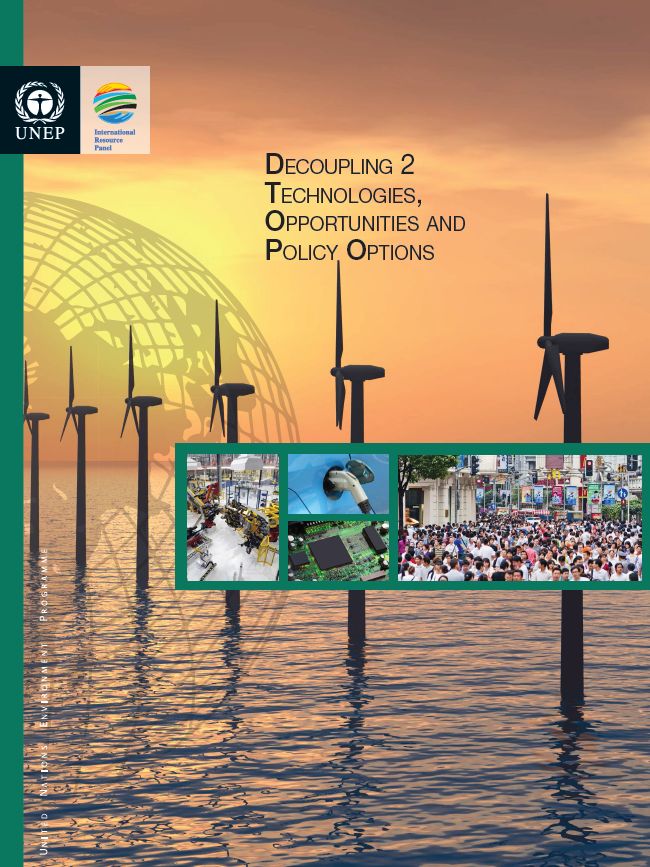
This report shows that much of the policy design "know-how" needed to achieve decoupling is present in terms of legislation, incentive systems, and institutional reform is also present. Many countries have tried these out with tangible results, encouraging others to study and where appropriate replicate and scale up such practices and successes.
Between September and December 2014, the first group of students from the University Colorado Denver successfully participated in the newly established semester abroad program "Sustainability in Berlin." In addition to two courses on "Environmental Politics and Policy" taught by Prof. Christoph Stefes and a course on "The Global Ecological Crisis" taught by Stephanie Wunder from Ecologic Institute, the students experienced firsthand what sustainability means in practice. During field trips to Berlin, Dessau (Germany), and Copenhagen (Denmark) they learned about alternative concepts for transport, energy, food waste, diets, housing, and climate change adaptation.
An invited poster presentation to the 2014 BEHAVE Energy Conference. Caiati, Giovanni and Adam Pearson 2014: The Role of Behaviours in Energy Transition: The holistic approach of Human Energy. Poster: Laboratory of Citizenship Sciences, Ecologic Institute.
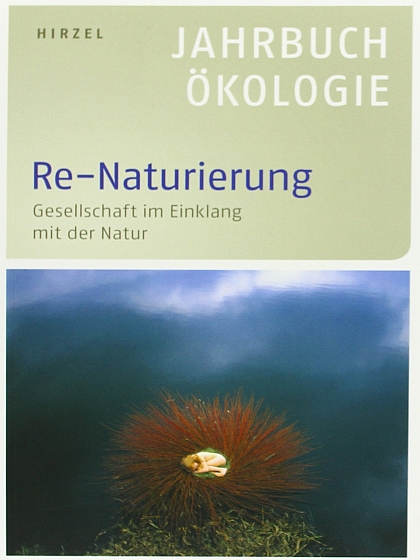
The Yearbook Ecology 2015 was published at the end of August 2014. This issue's focus is on re-naturation: society in harmony with nature, which is examined from economic, social, technical and ecological points of view. Ecologic Institute is one of the institutes supporting this yearbook and contributed three articles in the 2015 edition.