<p>
Climate change threatens the access to essential resources for millions of people. Moreover, climate change directly threatens the lives of people. The conflicts that might result from climate change could escalate into violent conflicts within and between states. In his presentation, Christoph H. Stefes, Senior Fellow at Ecologic Institute, discussed under which circumstances conflicts might turn violent and how the Western community could assist in preventing or solving these conflicts.</p>
As it implements policy reforms, China needs think tanks to work across traditional divisions of government, contest received wisdom, and produce new ideas. R. Andreas Kraemer of Ecologic Institute addressed the importance of environmental think tanks in jointly meeting global challenges at the conference on "Think Tanks in Global Comparison – Modes of Operations" convened by the Friedrich Ebert Foundation and Zhejiang University in Hangzhou, China, on 25 and 26 August 2010.
<p>
Hessen's State Ministry for Environment, Energy, Agriculture and Consumer Protection and its partners held a half-day conference on the themes of emissions trading and climate policy in the USA as part of a year-long series of events. Dominic Marcellino, Fellow, Ecologic Institute Washington, gave a presentation on the current political situation in the United States with respect to climate change.</p>
<p>
Civil society groups are spreading the word on the upcoming 2012 Earth Summit, a United Nations meeting on international environmental governance. Ecologic Institute’s Emily McGlynn stressed the importance of youth participation at a recent UNFCCC side event on preparation for the Earth Summit.</p>
<p>
Tanja Srebotnjak represented Ecologic Institute at the largest gathering of statisticians and practitioners of statistics in North America, the Joint Statistical Meetings, which this year took place in the Olympic City of Vancouver, Canada. Dr. Srebotnjak presented a paper on small area estimation of local health effects and risk factors illustrating her modeling and validation framework for the prevalent lack of health care insurance in the US.</p>
Ecologic Institute supports the German Federal Ministry for the Environment (BMU) in the implementation of both the targets defined in the coalition agreement for the 17th federal election period and the targets under European law for the promotion of renewable energies in the electricity and heat sector. Ecologic Institute provides both legal and technical support with regard to upcoming comprehensive amendments of the Renewable Energy Sources Act (EEG) and related statutory instruments, with respect to the production, processing and feed-in of biogas / biomethane, regarding the development and implementation of sustainability schemes for energetically used biomass, and with regard to the evaluation and further advancement of the Renewable Energies Heat Act.
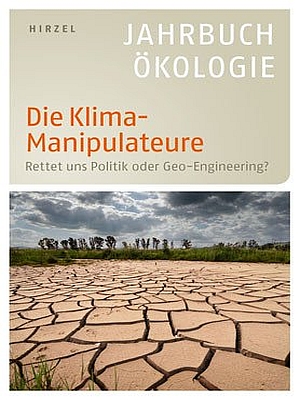
"Nobody wanted anything from Europe, nobody needed to negotiate with Europe." This is how Sascha Müller-Kraenner summarizes the role of the European Union at the Copenhagen climate summit. In his article "After Copenhagen – A new start for Europe’s climate diplomacy," published in "Jahrbuch Ökologie 2011," Ecologic Institute's advisor and co-founder analyzes the new distribution of power at international climate negotiations.
<p>
The 7th Greifswald International Summer Academy "Energy and the Environment" was put on by the University of Greifswald. Dominic Marcellino, Fellow at Ecologic Institute in Washington, spoke to the participants, delivering remarks on some of the ethical implications of expanded renewable energy production, specifically wind.</p>
Environmental policy-makers and stakeholders from the non-governmental, academic and private sectors convened in The Hague, The Netherlands from 26 July to 6 August 2010 as part of the second ICAP Summer School for Emerging and Developing Countries. The intensive two-week training event, designed and organised by the Ecologic Institute on behalf of and in collaboration with the International Carbon Action Partnership (ICAP), provided insights into the complexities of emissions trading systems to enable participants' countries to harmonise their environmental policies for full participation in a future global carbon market.
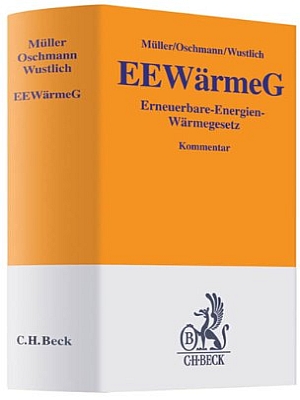
Lawyer Anke Rostankowski, who works as an Associate at Ecologic Institute, contributed to the latest commentary on the German Renewable-Energy-Heat-Law. This issue of the renowned commentaries EEWärmeG: Erneuerbare-Energien-Wärmegesetz of the Beck Verlag deals with the legal and technical experiences that have been gained with the law.
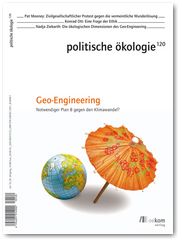
For some, geo-engineering (the large-scale alteration of the Earth's physical or bio-chemical characteristics) is a "plan B" to deal with climate change. The German policy journal "Politische Ökologie" dedicated a recent issue (no. 120) to this topic. Ralph Bodle and R. Andreas Kraemer of Ecologic Institute put the spotlight on the existing and desirable international legal framework.