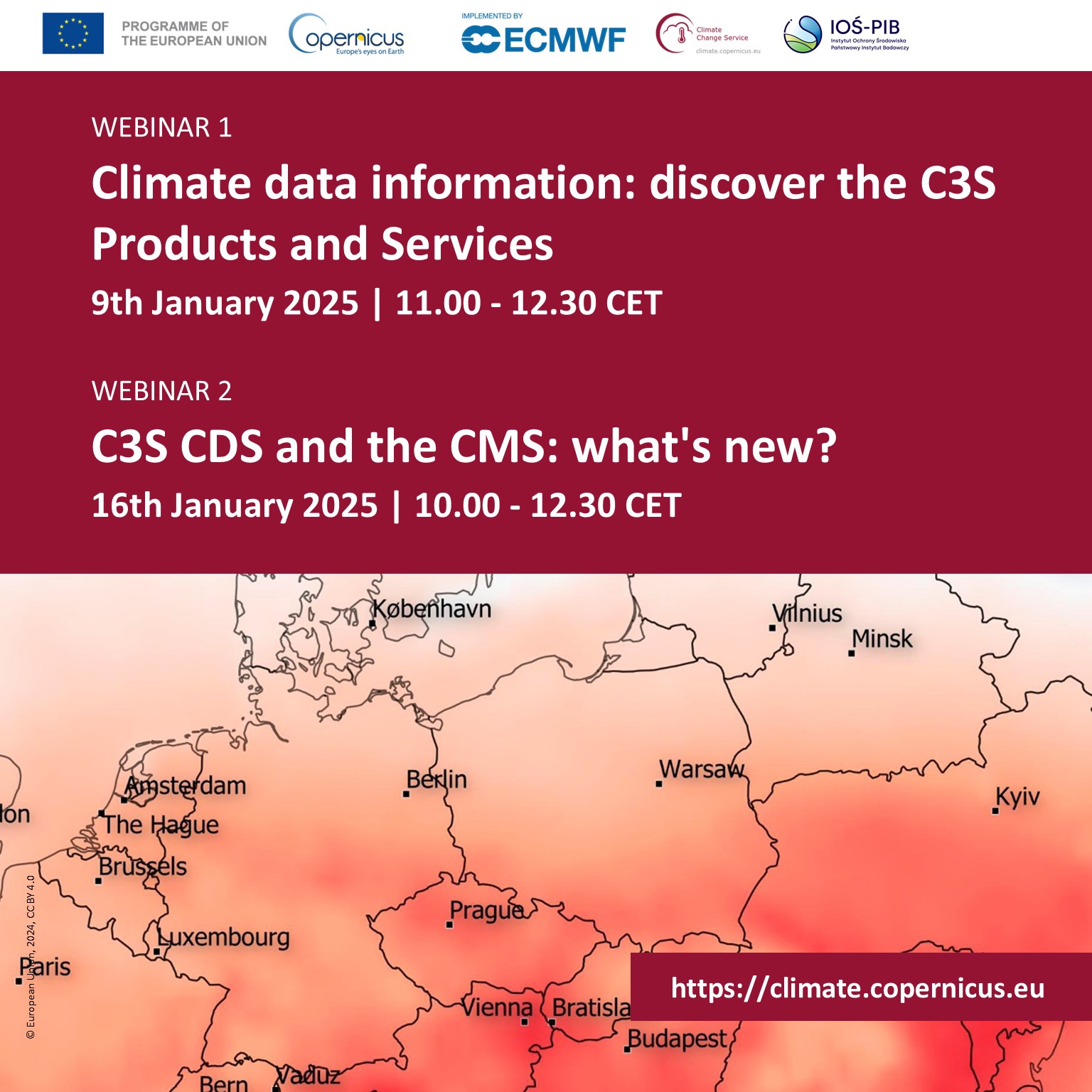
The Copernicus Climate Change Service (C3S), implemented by the European Centre for Medium-Range Weather Forecasts (ECMWF) on behalf of the European Commission, conducted two webinars which were aimed to deepen the understanding of C3S products and services in Poland.
This report, commissioned by the German Environment Agency and co-authored by Ecologic Institute, contains a detailed assessment of ten crediting methodologies on climate-friendly soil management measures. These crediting methodologies are examples of result-based payment and offsetting approaches to fund enhanced carbon sequestration and reduce greenhouse gas (GHG) emissions from agricultural practices. Our evaluation of these certification methodologies covers key aspects, including emission quantification, baseline setting, additionality, risk management, environmental and social impacts, and governance. We find many weaknesses with the assessed methodologies.
Soils are vital for climate mitigation, storing substantial carbon. This report, co-authored by Ecologic Institute's Hugh McDonald, Aaron Scheid and Dr. Ana Frelih-Larsen, examines funding approaches to promote climate-friendly soil management in Europe, focusing on two models: action-based and result-based. Action-based funding supports specific activities but doesn't ensure measurable outcomes, while result-based funding ties payments to verified results, encouraging innovation but involving higher costs and monitoring. Result-based funding approaches can be challenging in the context of soil carbon, with offsetting approaches found to be particularly risky.
On 12 December 2024, Work Stream 7 of the SCALE-UP training programme convened its final session. Seventy-two bioeconomy stakeholders from SCALE-UP's focal regions and beyond gathered to review key outcomes and identify priorities for the EU Bioeconomy Strategy update. Zoritza Kiresiewa (Ecologic Institute) opened the session by emphasizing two objectives: first, to examine critical topics – such as regulatory alignment, producer integration, and resource competition – that will shape the future EU Bioeconomy Strategy; and second, to reflect on the cumulative insights generated by SCALE-UP over the past months and their relevance for policy design.
On 10 December 2024, the Ecologic Institute and AquaEcology, on behalf of the German Environment Agency (UBA) under the MEER:STARK project, hosted a workshop exploring the critical role of Marine Protected Areas (MPAs) in climate adaptation and marine resilience. The online event brought together leading experts to discuss innovative strategies, cutting-edge research, and cross-sectoral approaches for strengthening marine protection in the face of climate change.
From Monday 9 to Wednesday 11 December 2024, the Ariadne project hosted a three-day event consisting of a series of workshops and discussion events in Brussels.
This new report from Ecologic Institute, PIK and IER discusses what EU industrial policy should look like, what principles it should follow and how it interacts with the set of existing EU climate and energy policies. The report proposes six principles for an EU industrial policy for climate action and discusses the 'industrial policy trilemma' of navigating goals in climate action, competitiveness, and security.
Nature-based solutions (NbS) hold immense potential to address global challenges such as climate change and biodiversity loss – but how can ambitious goals finally be translated into action? This article provides valuable insights into 250 practical policy instruments from 41 countries that successfully promote NbS. For the first time, a systematic evaluation of good practice examples is presented, aimed at helping cities and communities implement NbS effectively. From innovative approaches to long-term sustainable solutions, the authors highlight how policy design around NbS can be optimized globally. The article provides concrete recommendations and inspiring success stories to advance the implementation of NbS in your region!
With the European Green Deal, the European Climate Law, and the Governance Regulation the EU has built a strong governance framework for climate policy-making. These policies have been effective in linking national and EU-wide actions and enhancing a harmonized approach across EU Member States. They legally enshrine the binding goal of EU-wide climate neutrality by 2050 and embed five-year national policy planning cycles in line with the UNFCCC Global Stocktake.
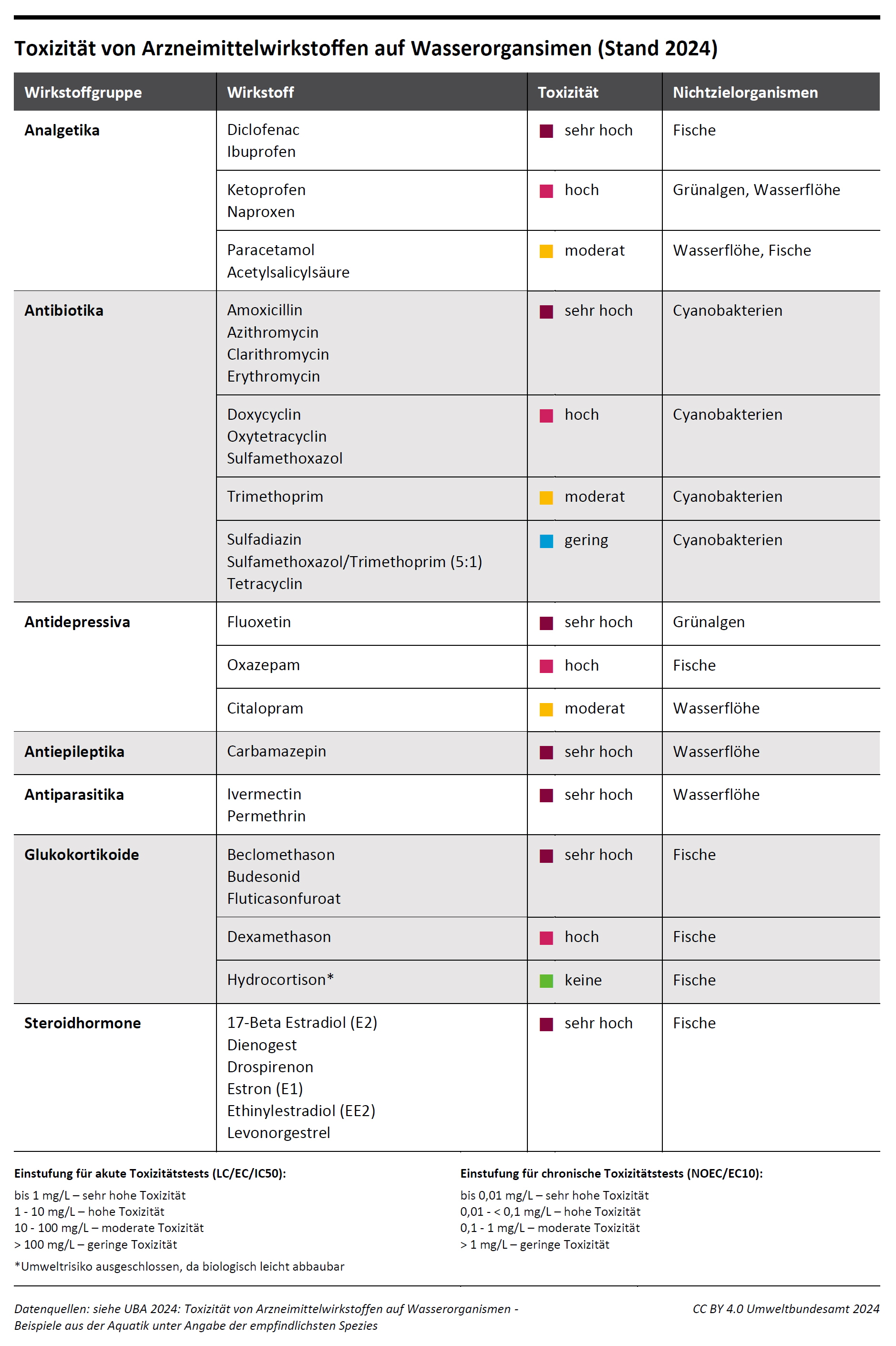
This infographic provides a brief overview of the toxicity of human pharmaceutical substances on non-target organisms observed in laboratory and case studies. A detailed version of the table, which also includes effect concentrations and literature sources, can be downloaded as a PDF.
Germany is under increasing water stress, despite rising precipitation and extreme weather. The core issue lies not in rainfall quantity, but in the inability of our anthropogenically modified landscape to retain water. The Handbook of Agricultural Measures for Enhancing Water Retention, Water Quality and Biodiversity addresses this challenge head-on. Developed with farmers and advisors in mind, it presents field-tested and scientifically evaluated nature-based solutions for agricultural water management. These measures do not compete with productivity—they ensure long-term agricultural viability in a changing climate.
This paper analyses relevant enabling and hindering factors for the implementation of subsoil management in a regional context, focusing on (i) geophysical conditions and (ii) relevant socio-economic criteria in selected regions of Germany.
The report, "Overcoming policy, financial, social, and economic barriers to pondscape NBS for climate change mitigation and adaptation", has been released as part of the PONDERFUL project. Commissioned under the European Union's Horizon 2020 Research and Innovation Programme, this synthesis report refines and presents the final PONDERFUL framework – a comprehensive strategy for scaling up pondscapes as effective nature-based solutions (NbS).
Carbon farming allows farmers to mitigate climate change, but these practices also impact other sustainability outcomes, including biodiversity, soil health, and water. In this brief, we propose how the EU's regulation establishing a Carbon Removal and Carbon Farming Certification Framework (CRCF) can ensure that carbon farming also delivers sustainability benefits, in the context of carbon farming on mineral soils.
Climate-friendly soil management measures generate climate impact through both temporary carbon removals and emissions reductions, posing a challenge for defining key terms such as "carbon removals", "emissions reductions," "avoided emissions," and "negative emissions". This brief reviews scientific definitions of these key terms to create a mini-glossary and discuss key definitional issues in the soil carbon context. A key conclusion is that different policy contexts require definitions to be adapted.