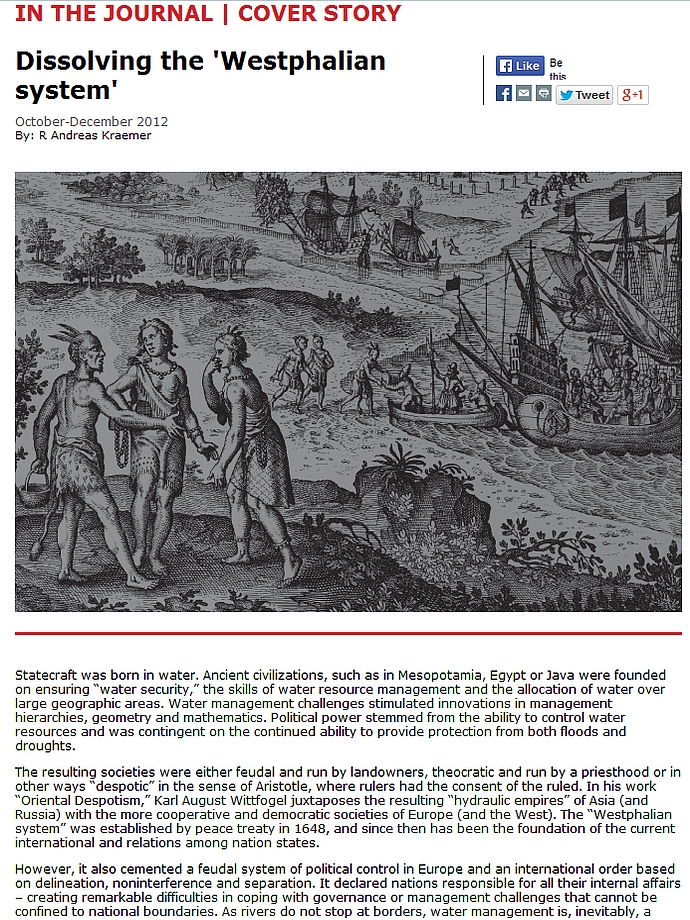
The "Westphalian system" of international relations, based on delineation, non-interference, and separation, hinders effective management of environmental resources, such as trans-boundary rivers. In this article, R. Andreas Kraemer of Ecologic Institute explains how cooperation and sharing responsibilities over watercourses between states provided the basis for the US Constitution and the institutional order of the EU, and now drive a new transnationalism that erodes the Westphalian system. The article is available for download.
This report contains the results of a survey of the EU Committee of the Regions about the impacts of the financial and economic crisis on SMEs. It points out how the affected regions and cities reacted to this challenge by supporting their local businesses in various ways. Furthermore it concentrates on the question, whether these steps were of any help and what could have been solved in a better way. The report is available for download.
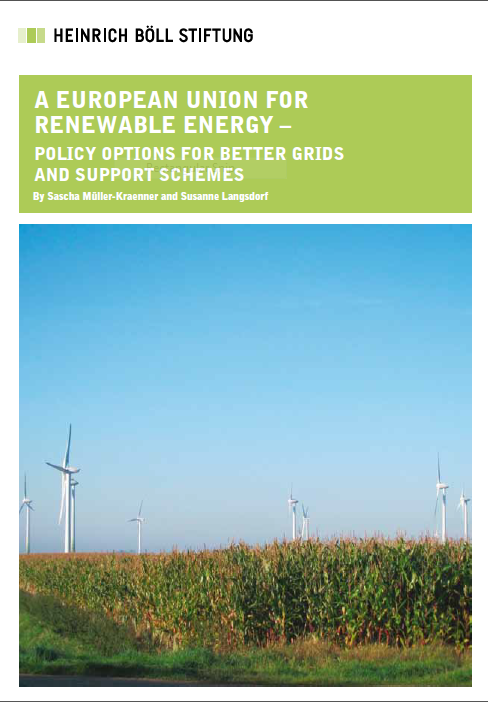
The European Union needs a common vision for its energy future. A shift towards renewable energy sources will increase security of supply, improve the competitiveness of the European economy, and put Europe on a path towards sustainability. The Heinrich Böll Foundation commissioned a working group of experts from different backgrounds to provide a collection of policy ideas for two key areas that will define the future of renewable energy development in Europe: grids, and support and remuneration schemes for renewable energy technologies. The report 'A European Union for Renewable Energy' was co-authored by Sascha Müller-Kraenner, Partner of Ecologic Institute and Susanne Langsdorf, researcher at Ecologic Institute. The study is available for download.
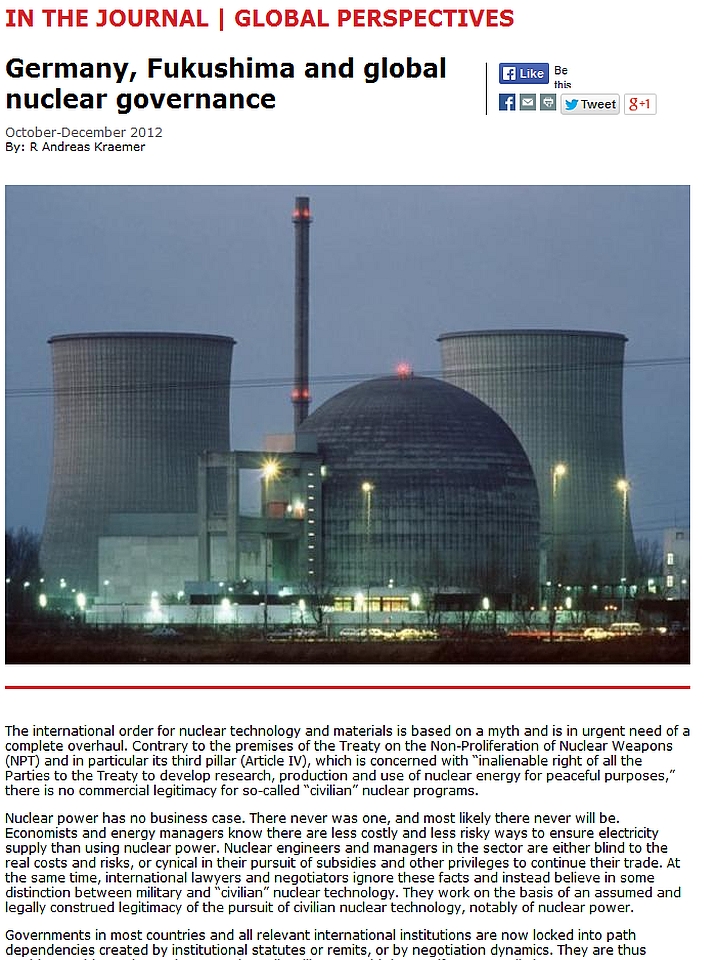
After the Fukushima incident, Germany was unique in being able to pass a law aiming to close all nuclear power plants by the end of 2022. Investments in the development, demonstration, and deployment of renewable energies over the past decades, along with the "feed-in tariff," which since 1991 has rewarded successful operators of renewable power plants, enabled Germany to do so.
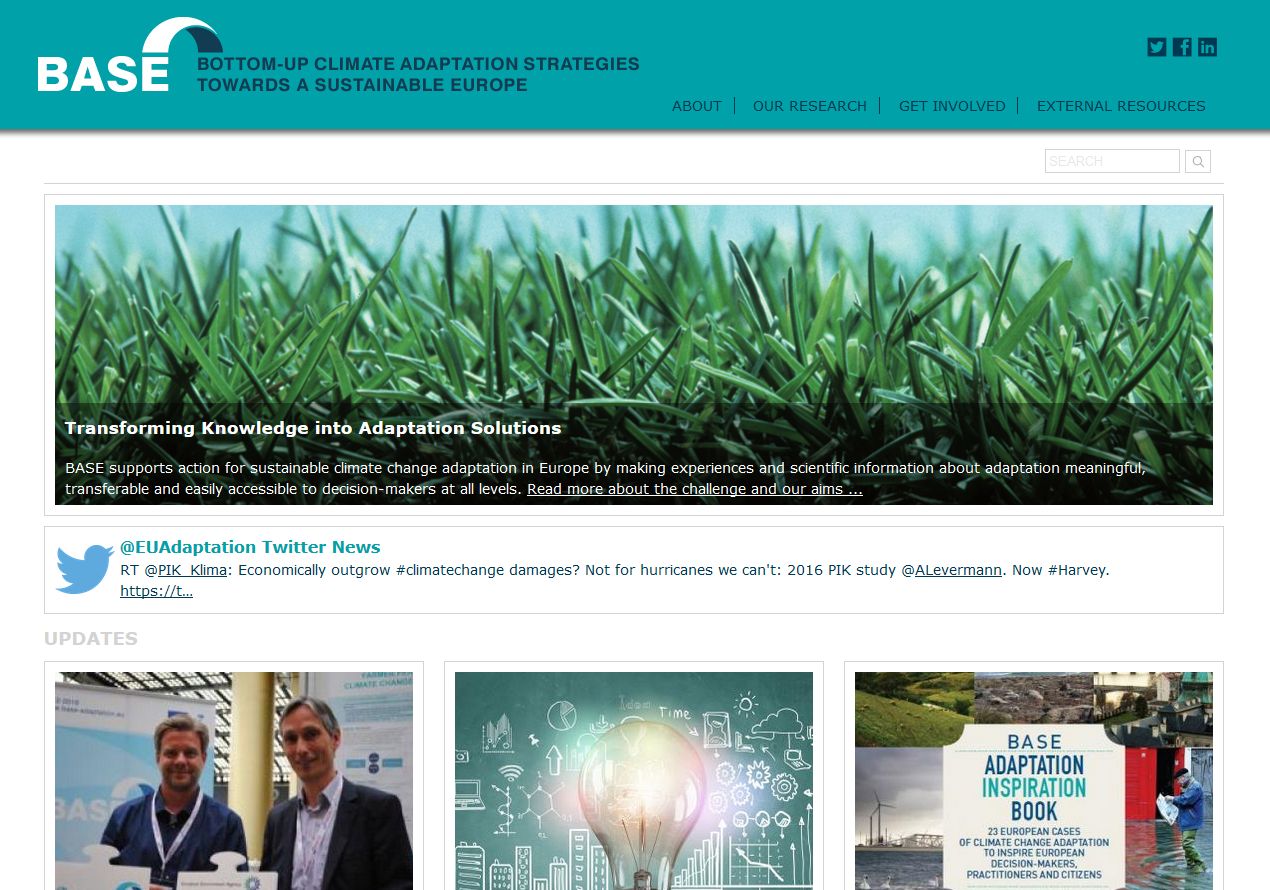
The EU research project BASE supports action for sustainable climate change adaptation in Europe. The Ecologic Institute designed and developed the project's website. It contains an interactive map, which gives an overview of the BASE case studies. Furthermore the webpage provides detailed information on the project and its events as well as publications for download. Users can also subscribe for the newsletter.
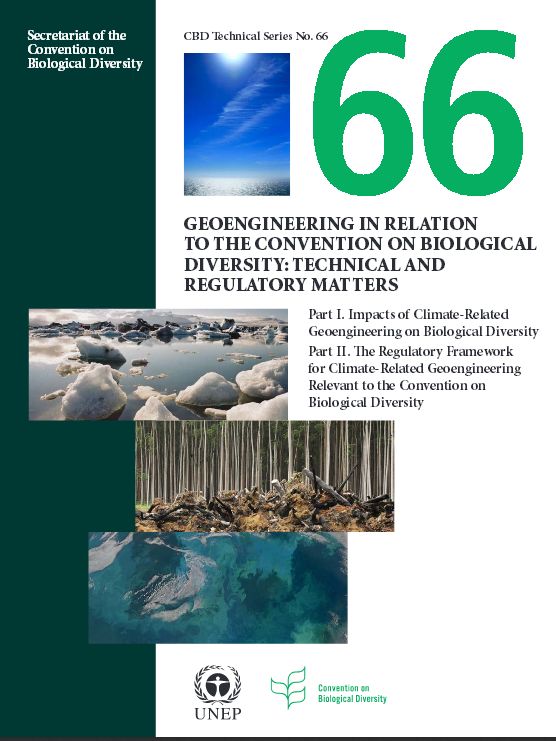
The Parties to the Convention on Biological Diversity (CBD) recognized that there remain significant gaps in the understanding of the impacts of geoengineering on biodiversity, while also noting the relevance of other treaties and organizations for filling such gaps. A highly authorative group of experts, among them Dr. Ralph Bodle, Senior Fellow at Ecologic Institute, contributed to the publication's first part, entitled "Impacts of Climate-Related Geoengineering on Biological Diversity." A team of authors from Ecologic Institute, consisting of Dr. Ralph Bodle as leading author, Gesa Homan, Simone Schiele, and Elizabeth Tedsen wrote the publications second part entitled "The Regulatory Framework for Climate-Related Geoengineering Relevant to the Convention on Biological Diversity." The publication is available for download.
This study follows the analysis of the role played by Local and Regional Authorities (LRA) in the first round of National Reform Programme (NRP) submissions in 2011. The 2012 study is based on the same set of questions and evaluation protocol used in 2011. Three additional assessment questions were added to reflect the dynamic nature of Europe's economic and policy landscape, including the pressing need to promote sustainable job growth and the fiscal consolidation of the public sector.
Geoengineering describes a range of techniques that are proposed to counteract some of the negative impacts of climate change at a global scale, without actually reducing emissions. This chapter provides an overview of geoengineering techniques and the existing international law applicable to them.
In a chapter for the edited volume Metropolitan sustainability: Understanding and improving the urban environment, Max Grünig from the Ecologic Institute discusses non-technical approaches for developing sustainable transport and mobility plans in urban areas. The chapter 'Sustainable urban transport planning' emphasizes that it is important to understand consumer behavior and the characteristics of different urban transport choices in order to find the best solution for different urban areas.
The Ecologic Institute report is based, inter alia, on over 70 interviews conducted with policy-makers and experts in Ethiopia, Morocco, Israel and the occupied Palestinian Territories (oPT), as well as representatives of the EU and the UN. The report assesses not only the effectiveness of existing measures for addressing hydro-climatic risks, but also collects perspectives on how these policies should develop.
This case study for Ethiopia is a contribution to the study "Current policy frameworks for addressing climate-induced risks to human security and conflict – an assessment of their effectiveness and future perspectives".
This case study analyses policy-frameworks in Israel and the occupied Palestinian Territory (oPT) which are relevant for addressing water-related impacts of climate change that could have negative impact on human security and conflict. The effectiveness of these policy frameworks is analyzed, based mainly on interviews with Israeli and Palestinian experts. The case study is available for download.