This policy brief is the first in a series of briefs presenting results of the CLICO project. This first policy brief presents CLICO's research agenda regarding policy responses to climate change-induced hydro-conflicts; a second policy brief showcasing preliminary results of the project will be available at the end of 2010. The policy brief is available for download.
Evolutionary branching has been suggested as a mechanism to explain ecological speciation processes. In this article, the authors use a mechanistic ecological model to examine the influence of demographic stochasticity and environmental fluctuations on the branching process.
The Clean Development Mechanism (CDM) should remain in place beyond 2012 and be improved to facilitate more meaningful participation by developing countries in climate mitigation efforts. This is the conclusion reached in an article written by, inter alia, Michael Mehling, President of Ecologic Institute Washington.
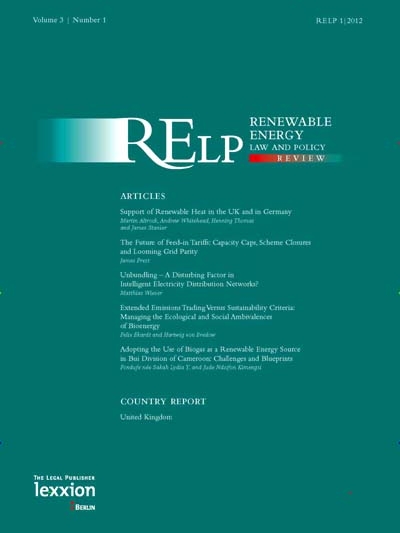
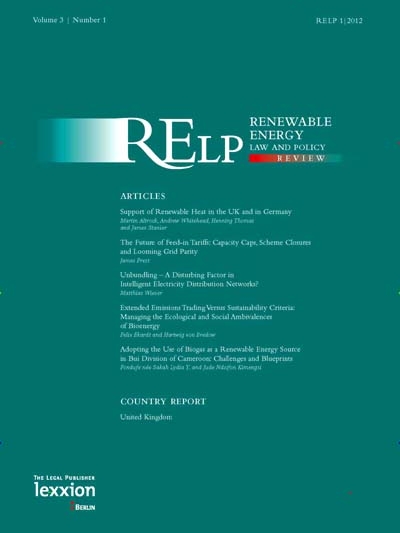
In the first issue of the Renewable Energy Law and Policy Review for 2010, Dominik Müller, fellow at Ecologic Institute and member of Ecologic Legal, reviews "The Renewable Energy Yearbook", edited by Christopher Jones. This yearbook deals with the current state and developments of European politics in the field of renewable energies.
Survey of the policy background and the existing regulatory framework for the use of renewable energies in the electricity, heat and transport sectors in Germany.
In March 2010, Dr. Camilla Bausch and Benjamin Görlach of Ecologic Institute hosted the 14th Climate Talk, together with Dr. Susanne Dröge of the German Institute for International and Security Affairs, where questions concerning the governance of the international climate finance were discussed.
The RADOST project brought together roughly 100 participants to its first annual conference, which took place in Schwerin. The focus of the conference was set on the challenges of climate change in the German Baltic Sea region. Discussions were held about the current state of scientific knowledge and approaches and practical examples of adaptation measures. The conference took place under the auspices of the Ministry of Economy, Labour and Tourism Mecklenburg-Vorpommern.
The implementation of Germany's highly effective Feed-in-Tariff model (FITM) for the promotion of renewable energy (RE) is a remarkable achievement given the rigid structure of the German political system. The many veto points in the political system cause certain policy inertia -Reformstau- in Germany, making comprehensive policy changes a rare occurrence. In this article, Prof. Dr. Christoph Stefes, Senior Fellow at Ecologic Institute, addresses how Germany's FITM was nonetheless passed in the 1990s, leading to a boom for renewable energy in Germany.
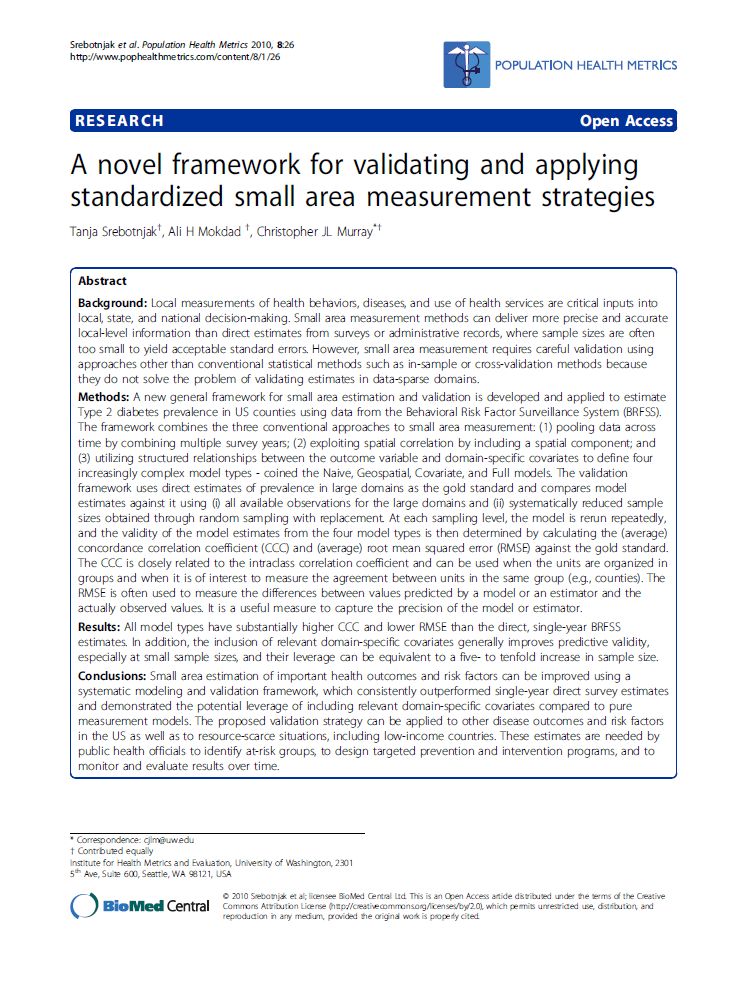
Tanja Srebotnjak, Senior Fellow at Ecologic Institute, with co-authors Professor Christopher Murray and Professor Ali Mokdad from the Institute for Health Metrics and Evaluation at the University of Washington in Seattle, USA, published a methods paper in Population Health Metrics on small area estimation.
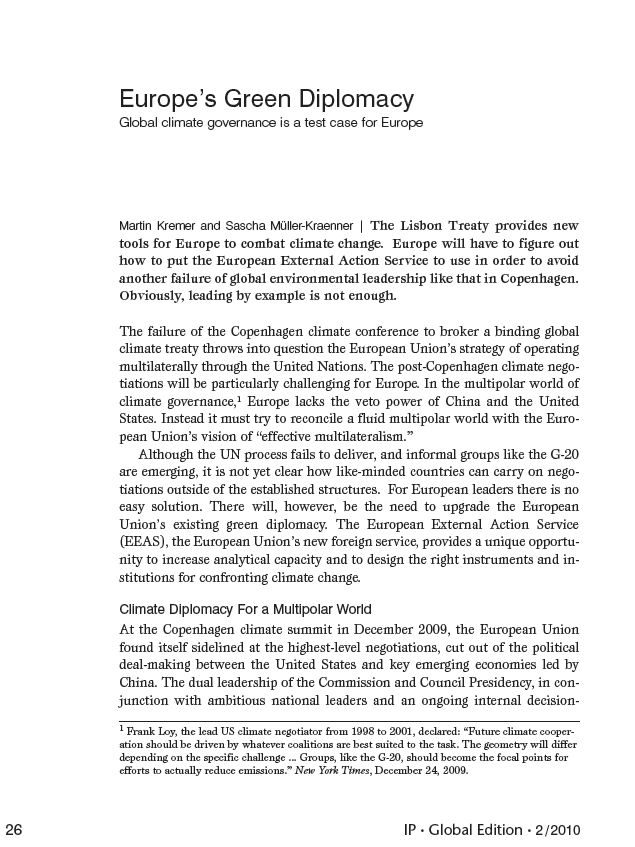
In this article in Internationale Politik, Germany's leading foreign policy magazine, Martin Kremer of the Stiftung Wissenschaft und Politik (SWP) and Sascha Müller-Kraenner, Senior Policy Advisor of Ecologic Institute, discuss the new tools for EU climate foreign policy under the Lisbon Treaty and the possible role of the European External Action Service.
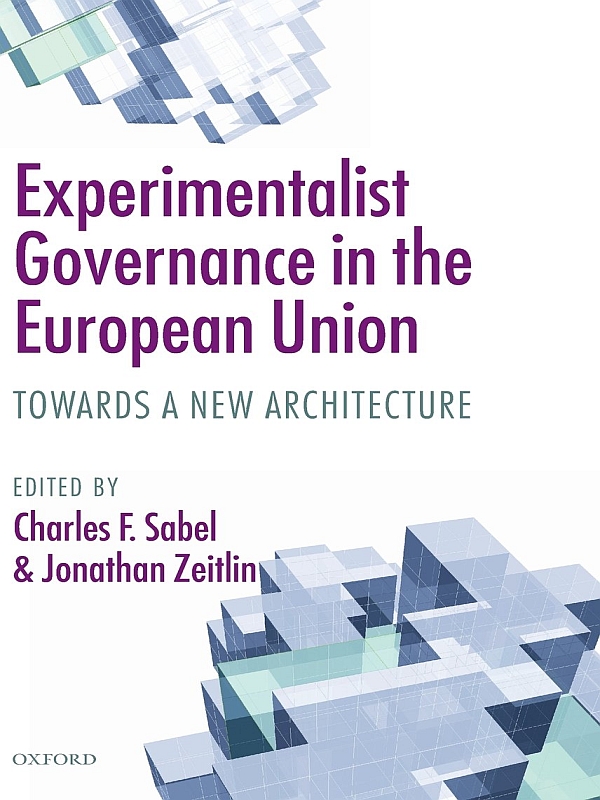
In this chapter, Ecologic Senior Fellow Ingmar von Homeyer argues that the institutional structures and processes underlying EU environmental governance have undergone a significant transformation in recent years. Important characteristics of this emerging "experimentalism" in EU environmental governance include the transition of many important decisions into the implementation stage, trans-nationally networked implementation, and the creation of indicators and reporting requirements for regular review and revision of policies.
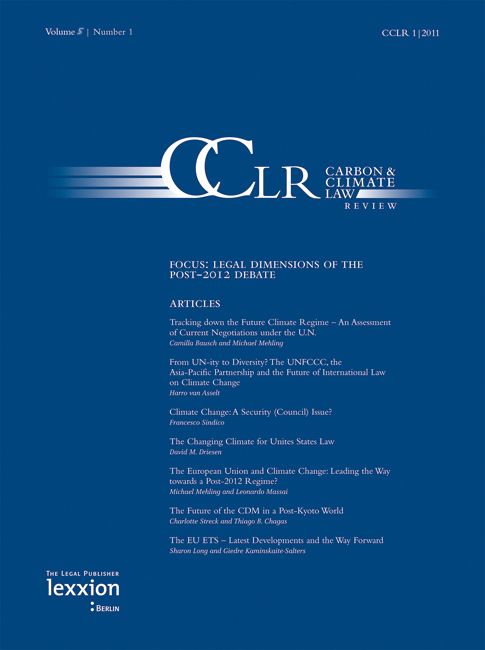
This article by Christiane Gerstetter, Dominic Marcellino, and Elena von Sperber explores the state of the climate technology transfer negotiations following the COP 15 meeting in Copenhagen in December 2009. The article appears in the Spring 2010 edition of the journal Carbon and Climate Law Review.
In this article, Ecologic Institute's Max Grünig provides an overview of different definitions of "green jobs" and describes advantages and problems connected with this concept. He emphasizes that it is not enough to create new green jobs, but that every job has to become more environmentally-friendly.