The international conference "Beyond GDP" brought together over 650 participants to discuss how measures of progress, true wealth, and well-being can be improved and integrated into decision-making. Ecologic Institute led the project team organising the conference, which took place in November 2007 within the main chamber of the European Parliament and featured several high-level speakers, including Hans-Gert Pöttering, President of the European Parliament, and José Manuel Barroso, President of the European Commission.
Dworak, Thomas; Anna Leipprand 2007: Climate Change and the EU Water Policy. Including Climate Change in River Basin Planning. Support to the CIS working group on Climate change and Water. Ecologic Institute: Vienna, Berlin.
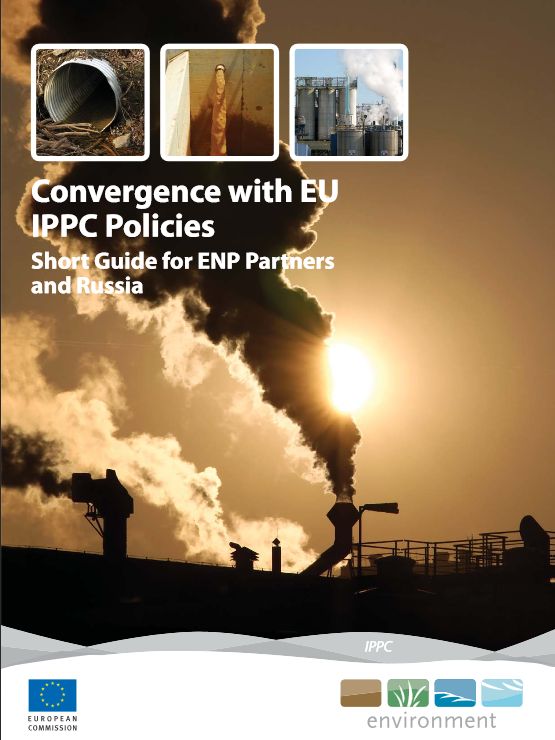
Human activities exert pressure on water. Overexploitation and water pollution, especially in Eastern European countries, threaten future availability of clean water. Willing to complement the EU’s efforts to halt this trend, the European Neighbourhood Policy (ENP) promotes water policy cooperation between the EU and its Eastern and Southern neighbours. To support the effort, the European Commission has issued a guide to sustainable use and management of water for its European neighbours and Russia.
The ongoing decline in biodiversity threatens fundamental ecosystem functions. An increased fragmentation of habitats in continental Europe has yielded a gradual loss in animal species and plants which jeopardizes human utilization of natural resources. Willing to complement the EU’s efforts to halt this trend, the European Neighbourhood Policy (ENP) promotes nature protection cooperation between the EU and its Eastern and Southern neighbours. To support the effort, the European Commission has issued a guide to nature protection for its European neighbours and Russia. The guide is available for download in four different languages.
The International Treaty on Plant Genetic Resources for Food and Agriculture (ITPGRFA) is the most recent piece in the current regime complex on plant genetic resources. In their article for the Journal of World Intellectual Property, Christiane Gerstetter, Benjamin Görlach, Kirsten Neumann and Dora Schaffrin investigate the legal relationship between the ITPGRFA, the Convention on Biological Diversity, the TRIPS Agreements of the World Trade Organization (WTO) and the Acts of the International Union for the Protection of New Varieties of Plants (UPOV).
Access to information on the environment is an indispensible precondition for effective environmental policies. If this access is denied, neither the public sector nor the private sector is capable of making environmentally sound decisions. Willing to complement the EU's efforts to grant such access, the European Neighbourhood Policy (ENP) promotes environmental policy cooperation between the EU and its Eastern and Southern neighbours. To support the effort, the European Commission has issued a guide to EC horizontal environmental legislation for its European neighbours and Russia.
Uncontrolled landfills, excessive littering and an increasing share of electronic waste pose a threat to human health and the environment. To address these problems, the EU has established a waste hierarchy which prioritises the management and treatment of waste. The prevention of unnecessary waste production and the utilization of waste as a source of energy rank at the top of the list. Willing to complement the EU's efforts to improve waste management practices within the Union, the European Neighbourhood Policy (ENP) promotes cooperation between the EU and its Eastern and Southern neighbours. To support the effort, the European Commission has issued a guide to environmentally sound waste management for its European neighbours and Russia.
Recent G8 summits have taken up the issue of climate change. Climate change featured high on the agendas of the 2005 summit in Gleneagles and the 2007 summit in Heiligendamm. Henrike Peichert and Nils Meyer-Ohlendorf analyse in this paper the recent G8 Summit outcomes and their practical impacts on international climate change negotiations under the UNFCCC. The paper argues that G8 Summit outcomes seem to yield overall positive influence on the UNFCCC processes, although more ambitious action needs to be taken and – most importantly – implemented. The paper was presented at the 2007 annual Conference of the British International Studies Association in Cambridge (BISA) and is available for download.
On 9-19 August 2007, a transatlantic Farmer-to-Farmer exchange program brought together 30 farmers, policy makers, scientists, and journalists from the United States and Europe with an agricultural background. The program included field visits to farms and biomass processing facilities in Germany and the U.S. as well as visits to research institutes to see experimental bioenergy cropping, climate friendly agricultural practices and to discuss the link between climate and agricultural policy.
Both the USA and Germany are currently engaged in a battle over the respective rights of the federal government vs. the states in determining environmental standards and regulations. In the United States, California and a number of other states are endeavoring to introduce emissions regulations, either singly or in regional partnerships. In Germany, reform of federalism could lead to exceptions from country-wide environmental regulations. In both instances, this tug of war could lead to disparate environmental regulations and standards from region to region, an outcome that could pose significant challenges for industry. An AICGS Policy Report focuses on the federalism debate as it relates to environmental regulation in Germany and the United States and its implications for business. This contribution of R. Andreas Kraemer focuses on federalism and environmental regulation in Germany and the EU.
Germany has a very good record on water services. Despite high connection rates and almost full cost recovery, the total annual costs for consumers are at the same level or even cheaper than in other countries. This is an outcome of the specific way in which water management is organised in Germany. This contribution by R. Andreas Kraemer, Britta Pielen and Colette de Roo endeavours to explain the practice of municipal enterprises embedded in Germany’s federal structures, the levels of water services, and reveals why water services can be as good and as cheap as they are.