The Water Directors of European countries agreed to set up a specific Ad-hoc Task Group (ATG) on best practice and guidance to deal with hydromorphology. One of the core activities of the Working Group (WG) ECOSTAT of the WFD CIS has been to compare the ecological quality expected by different countries for water bodies impacted by water storage. This report is based on information collected via a template on mitigation measures for water bodies impacted by water storage, which was completed by 23 countries.
<p>Ecologic Institute's Lena Donat provided the European perspective on the Paris Agreement and the outcomes of COP22 in Marrakesh at the 45th Cairo Climate Talks, titled "COP22: Fostering Climate Change Resilience in Egypt". The event brought together decision-makers as well as representatives from business, academia and civil society.</p>
<p>Ecologic Institute is a core partner in the Framework contract for services to move towards good environmental status of the European marine waters by implementing the Marine Strategy Framework Directive (MSFD). The objective of the framework contract is to support DG Environment, the Members States, and the Regional Sea Conventions with the implementation of the MSFD.</p>
<p>A group of 17 representatives from think tanks, policy and business as well as journalists from various European and non-European countries were invited to Germany as part of the Visitors Programme of the Federal Republic of Germany. During their stay, the group explored green technologies in the water and resources sector as well as the policies that shaped the legal framework for innovative products and technologies. Participants could speak with representatives from ministries, research institutes, think tanks, public-private partnerships and businesses in Berlin, Freiberg and Leipzig.</p>
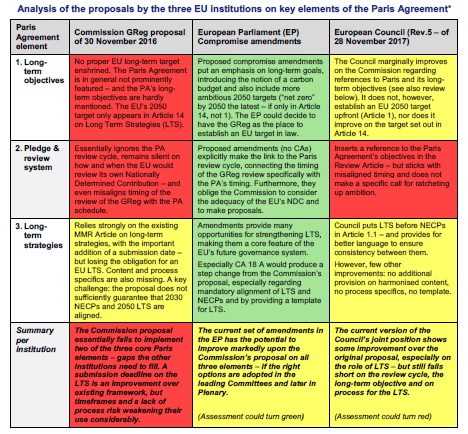
This paper analyzes the proposal of the European Commission for a new regulation on the "Governance of the Energy Union". The analysis is framed around two questions: Is the proposed system adequate for supporting the implementation of the 2030 targets? Will it help Europe to get on a long-term pathway to a zero carbon economy? The paper focuses on the National Energy and Climate Plans (NECPs) as well as compliance and contains concrete proposals in legal language on how to improve the Commission's proposal. This paper builds on related papers by the Ecologic Institute and takes inspiration from intense discussions with colleagues in the ECF Governance cluster.
AQUACROSS consortium published a report describing an analytical Assessment Framework, which aims to integrate and understand these complex interlinkages between natural and social systems, to be applied in real-world case studies in the project. The Assessment Framework covers the various steps needed to assess local aquatic management examples in a holistic manner—from the definition of policy challenges and the setting of objectives to the identification of opportunities, the screening of innovative responses and the design, implementation and assessment of alternative courses of action. All these elements are integrated into the comprehensive framework, which aims to capture all relevant interactions at stake. The report is available for download.
<p>In the project "Scientific coordination of research projects on a sustainable economy" (Wissenschaftliche Koordination der Fördermaßnahme Nachhaltiges Wirtschaften, NaWiKo), Ecologic Institute and its partners coordinate 30 research projects, which deal with a more sustainable economy and are supported by the Federal Ministry for Education and Research (Bundesministerium für Bildung und Forschung, BMBF).</p>
<p>The Ecologic Institute is writing a brief study on the topic "the energy transition as a European project" on behalf of the Heinrich Böll Foundation. The study focuses on the electricity sector and the policy measures and objectives, which the EU and Germany's neighbouring countries pursue in this policy field.</p>
In January 2017, the Ecologic Institute hosted a group of students from the University of Maryland for a Seminar on Energy, Climate Change and Options for a Low-Carbon Economy. Berlin was the host city for the first leg of the two-week seminar – followed by a week in Venice, hosted by the Fondazione Eni Enrico Mattei (FEEM)
<p>The sixth workshop of the Forum was marked by the beginning of the 2nd management cycle of the Water Framework Directive. At the event, the results of the first management cycle with regard to the status of the fish fauna and the envisaged measures to improve this quality element were reflected. In this context, the assessment methods for the fish fauna in surface water bodies and the passability of barriers and the resulting measures were considered.</p>
The EU Action Plan against Wildlife Trafficking adopted by the European Commission on 26 February 2016 is the most recent EU initiative to tackle wildlife crime. On 8 September 2016, the Committee on the Environment, Public Health and Food Safety of the European Parliament (ENVI) held a workshop in Brussels on ‘Delivering and enforcing the EU Action Plan Against Wildlife Trafficking’. With support from the Institute for European Environmental Policy (IEEP), Ecologic Institute organized the workshop and compiled the proceedings for this publication. The proceedings summarize the presentations and discussions.
Pederson, R., A. Frelih-Larsen, Z. Lukacova A., Crook, N., S. Naumann, C. Bowyer, C. Keenleyside, S. Nanni (2016). 'Soil Stakeholders Conference, 5 December 2016 – Conference Report.' Annex 2 to the report Updated Inventory and Assessment of Soil Protection Policy Instruments in EU Member States. Final Report to DG Environment. Berlin: Ecologic Institute.
This movie gives an overview of the five tools developed within the EU-funded collaborative FP7 project RISC-KIT: 1) a Storm Impact Database, 2) a Coastal Risk Assessment Framework, 3) a Web-based Management Guide, 4) a Hotspot tool and Early Warning System and 5) a Multi-Criteria Analysis Guide. These products will enhance forecasting, prediction and early warning capabilities, improve the assessment of long-term coastal risk and optimize the mix of prevention, mitigation and preparedness measures. The movie, animated by Ecologic Institute's visual designer Beáta Vargová, is available via Ecologic Institute's YouTube channel.
This handbook by Ecologic Institute is intended to provide the reader with the necessary information how to guide the participatory development of a River Basin Adaptation Plan. The handbook begins with more general contextual information about the BeWater project before highlighting the importance of adaptation, the state of the art in river basin planning, society's role in the process and finally the need for resilient social-ecological systems. The handbook is available for download.
<p>The aim of the conference is to present and discuss the results of the stakeholder engagement activities in BioSTEP and its value to the current policy discussions on the bioeconomy and the circular economy. BioSTEP has analysed in three policy workshops the participation processes that are necessary to build and strengthen the new value chains of the bioeconomy. The policy workshops discussed how bioeconomy strategies can be developed in a participatory way, ensuring that the change of economic value chains, necessary for a transition to a bioeconomy, is understood and supported by all stakeholders.</p>