The present report describes and analyzes the legal and regulatory frameworks for ecological and environmental flows (eflows) in six European countries. This analysis contributes to an improved understanding of national policies and challenges for setting up and implementing eflows in Europe.
The present report, led by EU research project partner SYKE, focuses on the challenges and opportunities that relate to designing and implementing sustainable water governance in value chains in six Eur. It contributes to the ongoing policy discussions on the role of sustainable water management in the context of corporations’ value chains.
This publication provides a comprehensive analysis of the legal and regulatory frameworks governing water allocation across six European countries, highlighting the varying degrees of complexity and formalization.
The EU agri-food sector is central to achieving EU climate neutrality, but emissions from agriculture have not fallen fast enough and the sector also faces growing climate risks, as well as environmental, social and economic pressures. Against this backdrop, the European Scientific Advisory Board on Climate Change (ESABCC) commissioned technical support to help assess how EU policy can better strengthen mitigation, adaptation and resilience in the agri-food system.
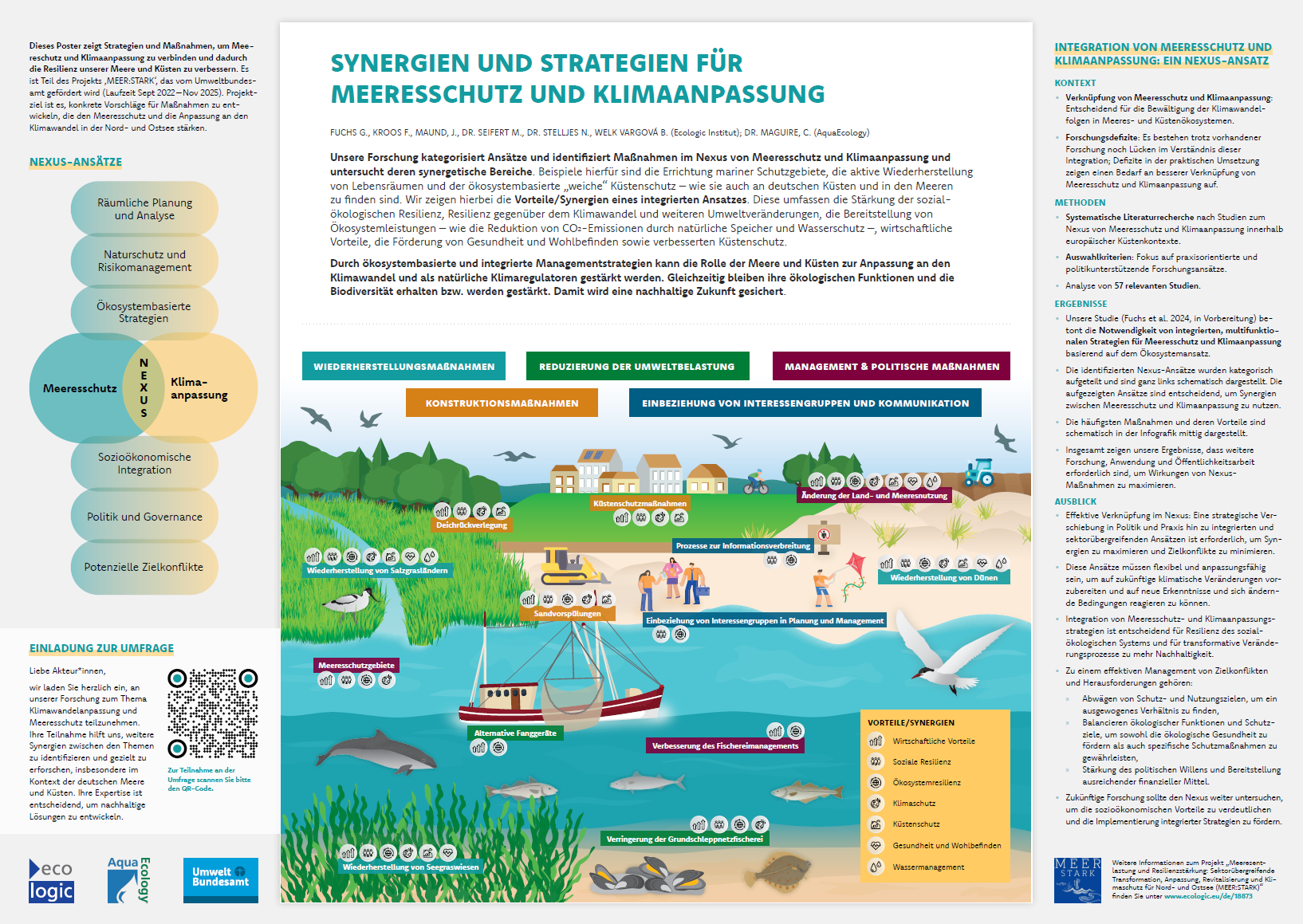
The poster ‘Synergies and Strategies for Marine Protection and Climate Adaptation’ presents key results and approaches of research on the integration of marine protection and climate adaptation. It shows how these two areas can be linked in order to effectively meet the challenges of climate change in marine and coastal ecosystems.
Over the past two decades, Europe has witnessed a concerning trend of escalating water scarcity and more frequent drought events, with projections indicating a continuation of this trend into the future. Europe must confront water stress risks and adapt its governance to build water resilience. In a series of three reports, Ecologic Institute, together with partners from the EU project GOVAQUA, examine three topics of critical importance for water resilience.
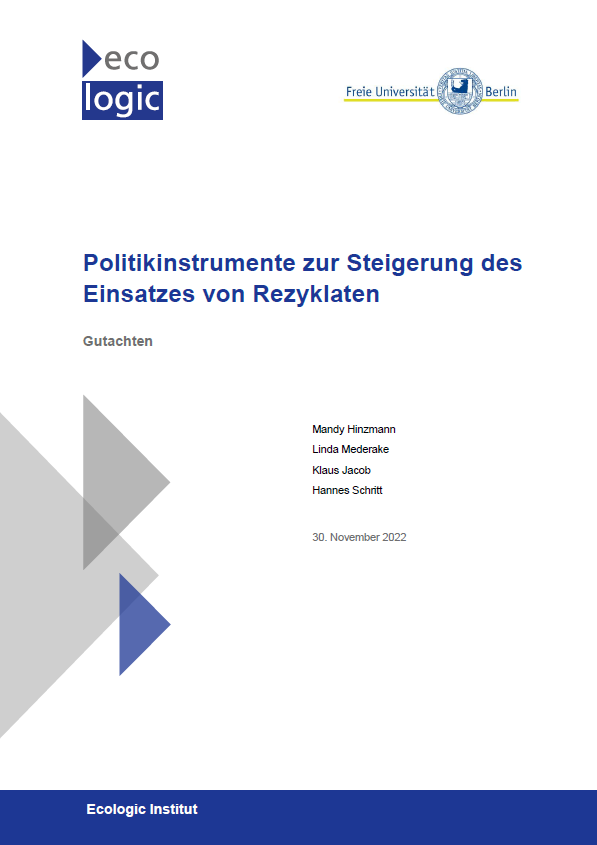
This analysis shows that there is considerable potential in Germany to facilitate, stimulate, and ultimately increase the use of recycled materials through political regulation and incentivization. It provides recommendations for a successful policy mix to increase the use of recyclates.
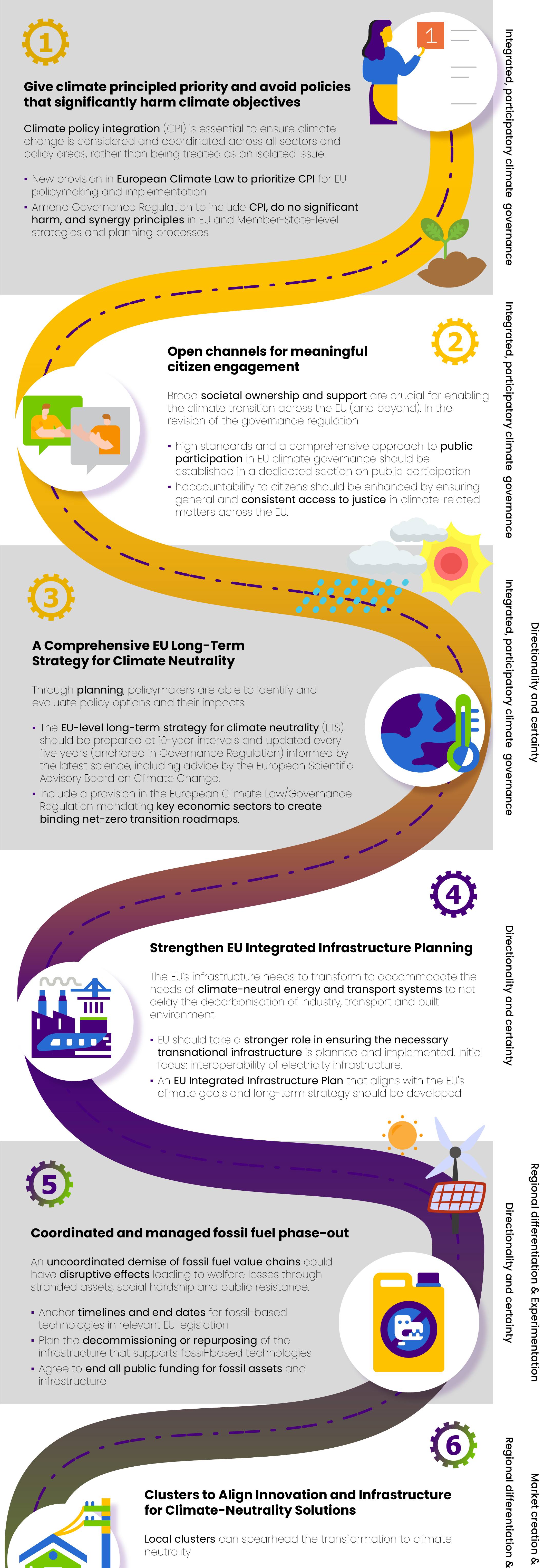
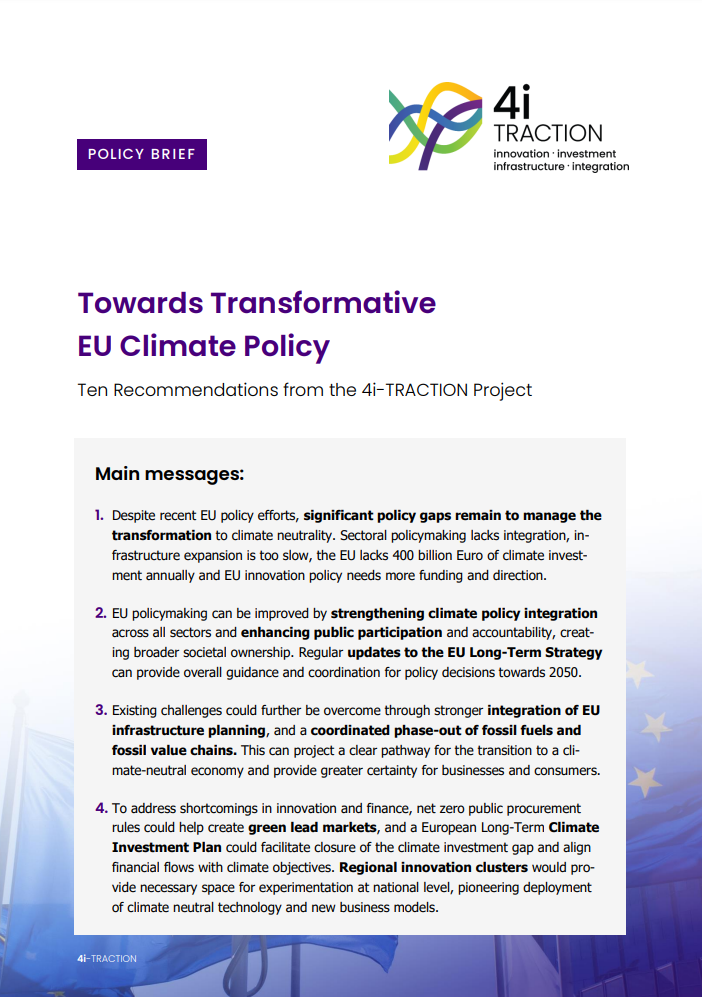
To achieve climate neutrality, a whole-of-government approach, increased public funding, and strategic policy support are essential. The 4i-TRACTION project outlined ten policy recommendations for future EU climate action. This infographic, conceptualised and designed by Ecologic Institute, outlines ten policy recommendations for future EU climate action.
The podcast "Polski Kongres Klimatyczny 2024" features highlights from the discussion that took place at the Polish Climate Congress in March 2024. In the podcast, Ewa Iwaszuk, Fellow at Ecologic Institute, discusses the importance of "green synergy" in municipal cooperation and emphasizes the role of nature-based solutions (NbS) in the development of sustainable cities. Ewa Iwaszuk highlighted how the work of Ecologic Institute and its partners supports cities to effectively integrate these approaches into their infrastructure projects in order to tackle climate change and improve quality of life.
In this project Ecologic Institute supported the European Climate Foundation (ECF) in strengthening EU and Member State climate governance frameworks to better deliver on the EU's climate-neutrality objective. Building on more than a decade of collaboration, the project combined scientific analysis and targeted convening to help identify priority options for 'levelling up' national governance standards and to inform the upcoming revision of the EU Governance Regulation expected in 2025–2026.
Ecologic Institute evaluates the Commission's assumptions on industrial carbon removals, analyzing the feasibility of BECCS and DACCS in achieving the 2040 target. It analyzes energy demand, resource availability, and sustainability risks, comparing the Commission's projections with alternative scenarios and scientific studies.
Within the DDP project, Ecologic Institute contributed a detailed analysis of the EU’s climate governance architecture and its role in connecting short-term policy cycles with the long-term goal of climate neutrality. The project team examined how instruments such as the European Green Deal, the European Climate Law, and the Governance Regulation enable coordination between Member States and support a shared trajectory toward 2050 targets.
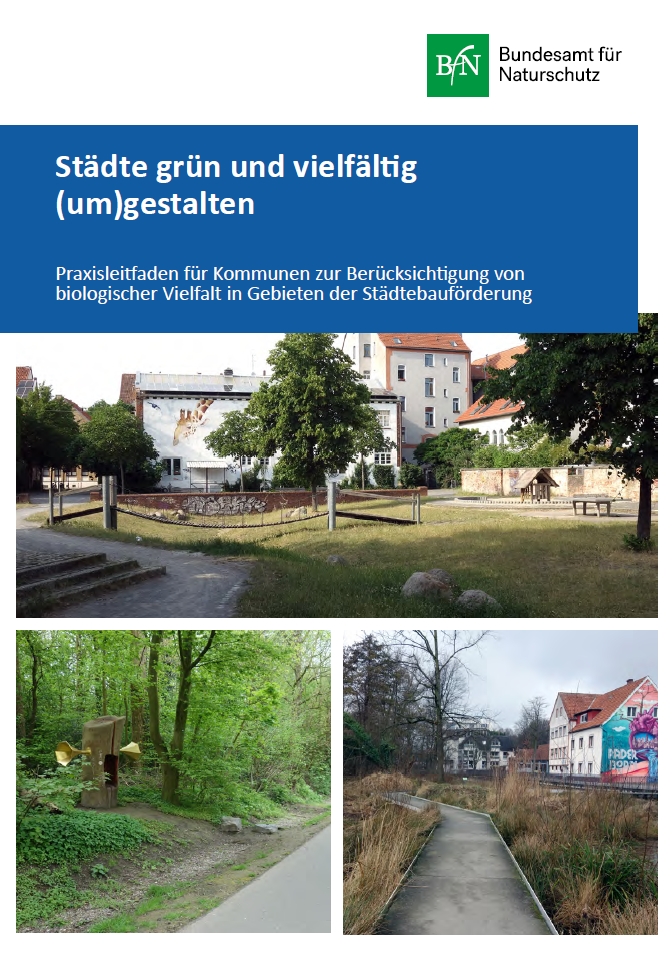
The practical guidance "Green and diverse urban (re)design" shows how local authorities can implement concrete measures to promote ecological diversity in urban areas. From the creation of new green spaces and the naturalization of bodies of water to the greening of roofs and façades, the guide offers practical recommendations and illustrative examples.