As a last step of the project, the RECIPES team has developed a Guidance for application of the precautionary principle in the EU. The guidance advises on how to deal responsibly with uncertain risks in the development and implementation of technology in the EU. Target groups of this guidance are primarily EU policy makers, EU agencies, and EU policy support organisations and bodies that are concerned with risk regulation or the governance of science, technology and innovation. Ecologic Institute made the layout of the eBook.
How do we classify which investments are the right ones to power the transition to a climate and nature-friendly economy? This is a pretty big question, and one that is crucial to a successful implementation of the European Green Deal. The EU taxonomy – the subject of our latest episode – specifies the various criteria that investments will need to fulfil to be considered sustainable. In practice, the taxonomy is a long list of economic activities with benchmark performance standards.
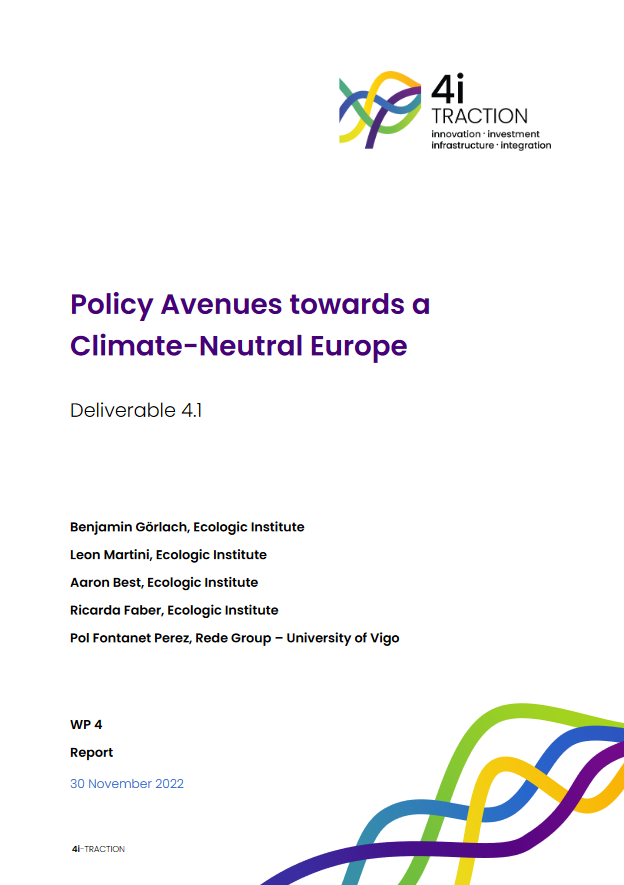
The report maps out four policy avenues for how the EU could attain climate neutrality. The policy avenues consist of a mix of policy instruments sequenced over time, and the institutional arrangements to deliver them. Each policy avenue embodies a different paradigm, i.e., a different approach to (climate) policymaking. They thus sketch different paths that the EU could follow to align its climate policy with the goal of climate neutrality by 2050.
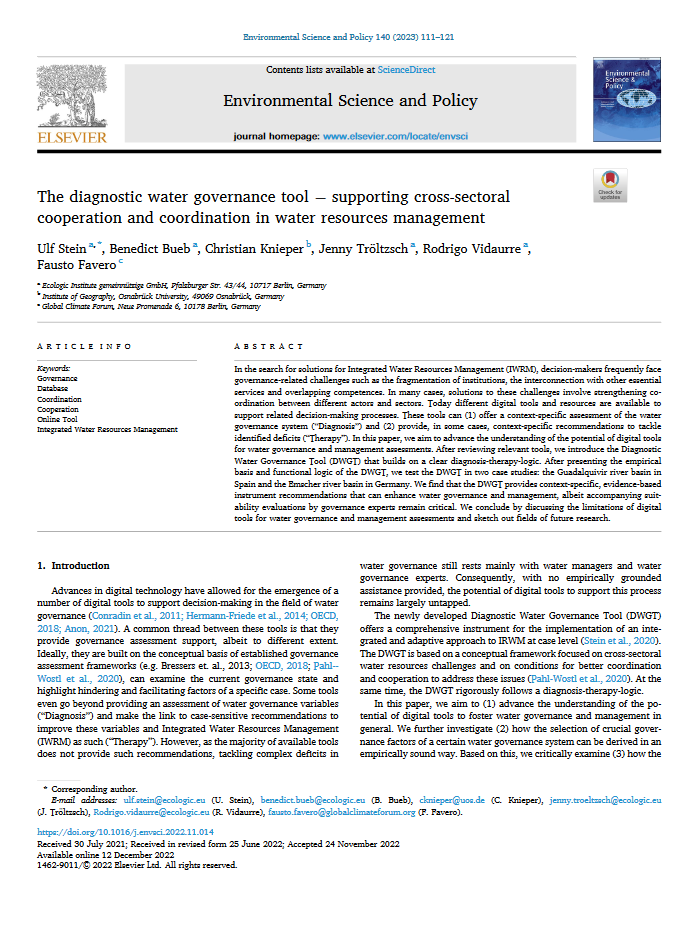
This article written by several researchers from Ecologic Institute provides a review of different digital tools and resources available to support related decision-making processes in the search for solutions for Integrated Water Resources Management (IWRM). Furthermore, it introduces the Diagnostic Water Governance Tool (DWGT) that builds on a clear diagnosis-therapy-logic.
Microplastics can find their way into the environment via various pathways. It can also be detected in living organisms. But what dangers can microplastics pose? What effects does it have on animals and plants? And how can this risk be assessed? The results video of the research focus "Plastics in the Environment" was designed and produced by Ecologic Institute.
Germany is striving for a circular economy, which aims to use products, components and materials for as long as possible and to reuse, repair and recycle them as often as possible. In this way, raw materials are to be saved and the life cycle of products is to be designed in such a way that hardly any waste is generated. But how exactly can the circular economy be implemented for plastics? What contribution can recycling and biodegradability of plastics make to waste prevention? What is technically possible? And where are the limits? The results video of the research focus "Plastics in the Environment" was designed and produced by Ecologic Institute.
Most packaging for many consumer goods is thrown away after a very short period of use. In Germany, plastic packaging accounts for the largest share of plastic waste at almost 60%. How can the amount of packaging be reduced? Where exactly does the packaging waste occur? How can it be avoided and who should bear the main responsibility for it? The results video of the research focus "Plastics in the Environment" was conceived and produced by Ecologic Institute.
On 13 September 2022, the online workshop "Strengthening supply chain resilience: identifying climate risks and taking adaptation measures" was held as part of the Climate Adaptation Week organized by the BMUV. The workshop documentation summarizes further information on the various presentations and recommendations, including further links.
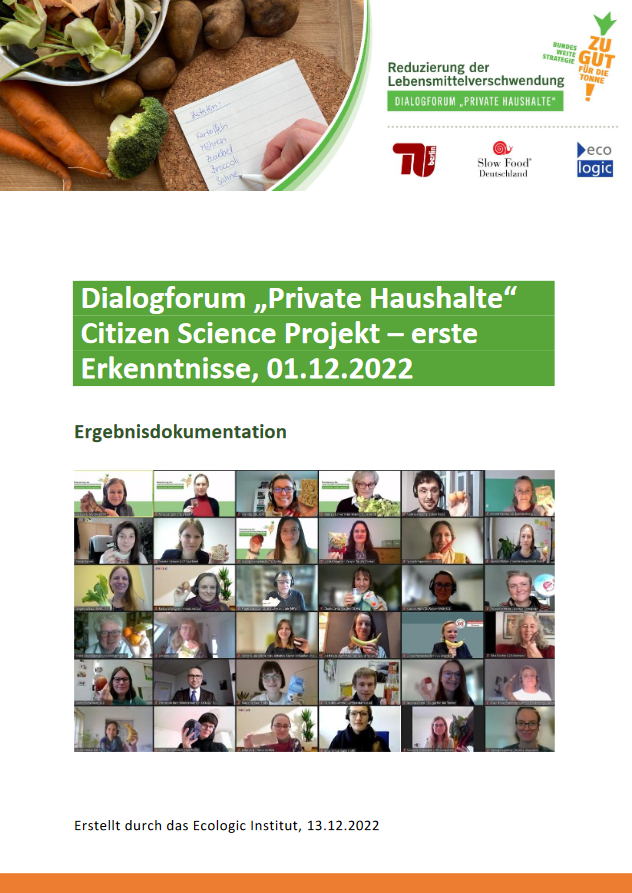
As part of the "Private Households" dialog forum project, a fourth online dialog forum was held on December 1, 2022. The event focused on the Citizen Science project "Germany saves food!". This results report provides an overview of the core content of the presentations, the survey results and the discussion content. The results report is available for download.
This info film shows in seven minutes how to use the Clearingstelle EEG|KWKG's database. How to make a request, what types of procedures there are and how a procedure is carried out at the Clearingstelle EEG|KWKG. The film was produced by Ecologic Institute.
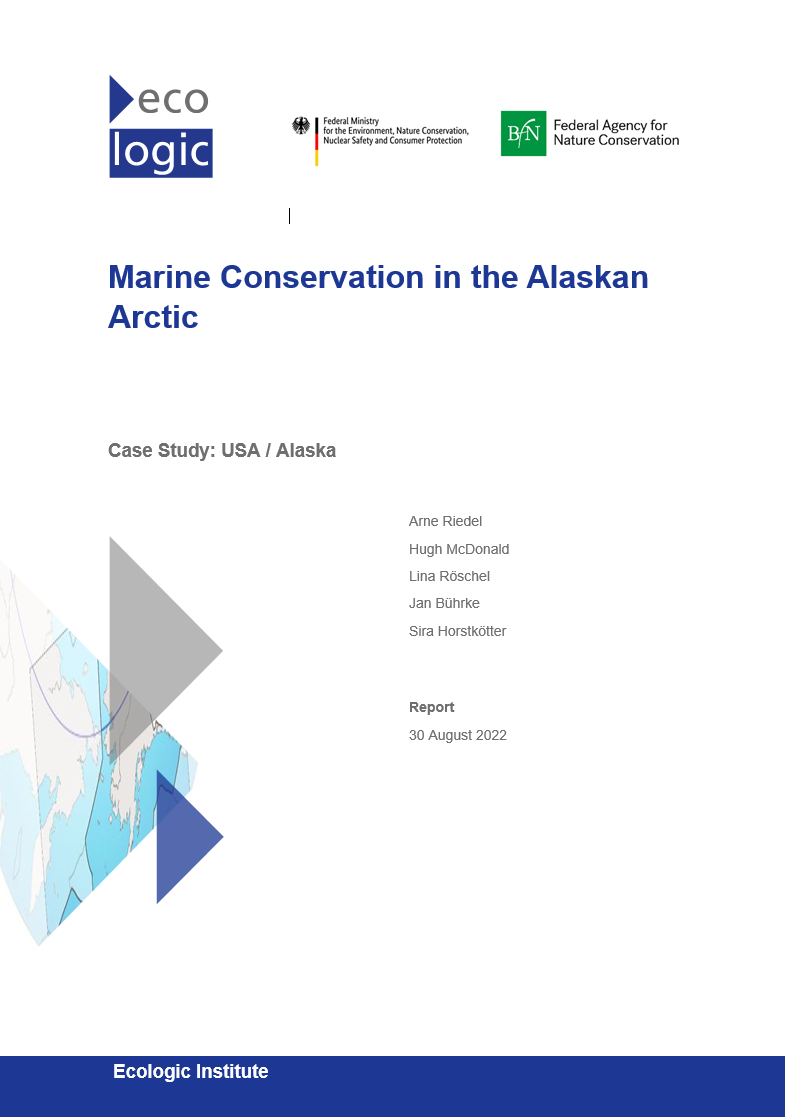
The case study provides an overview of the Alaskan marine Arctic environment in terms of: 1) the state and status of its ecosystems and their biodiversity; 2) the drivers and associated pressures that impact marine ecosystem health, as well as 3) the policies in place to protect the marine environment, in particular through marine protected areas.