This guide shows how municipalities can systematically identify, assess and compare the costs and NbS. It takes users through a stepwise process on how to go about assessing costs and benefits. Documentation tables and guiding questions help apply each step to a specific project.
This ACCREU policy brief sets out a research agenda for the economics of transformational adaptation, identifying where established approaches can contribute and where new or extended methods are needed.
How should economics assess adaptation when responding to climate change, which may require fundamental changes to economies and societies rather than incremental adjustments? This ACCREU technical report examines this emerging research field and identifies eight priorities for developing the economics of transformational adaptation.
Researchers at Ecologic Institute have developed a new tool to help governments to produce socially just climate adaptation strategies. The Just2Adapt tool allows the user to analyse the justice dimensions of Heat Action Plans at the strategic level as well as at the level of individual measures. It is important that heat adaptation strategies integrate social justice considerations because of the unequal way in which the heat-health effects of climate change are distributed across the population.
MEER:STARK provides practical recommendations and an integrated framework for strengthening the resilience of the North Sea and Baltic Sea to climate-related impacts. The project demonstrates that effective marine conservation and climate adaptation should be addressed jointly rather than as separate policy domains. By linking ecological restoration, adaptive governance, nature-based solutions, and participatory management approaches, the project offers a foundation for developing more coherent and resilient marine policies in the future.
Mangroves, coral reefs and other coastal ecosystems can play a crucial role in reducing climate-related risks while supporting biodiversity and local livelihoods. A new discussion paper reviews the current state of Ecosystem-based Adaptation (EbA) in tropical coastal regions and explores financing instruments that can help scale up and sustain coastal resilience measures over the long term.
Nature-based solutions (NbS) at the landscape scale are increasingly recognised for their role in supporting biodiversity, enhancing ecological connectivity and contributing to climate change adaptation. However, their assessment and implementation remain complex. This article examines these challenges using the concept of pondscapes – networks of ponds and their surrounding terrestrial habitats – as a case for landscape-scale NbS.
Cities are increasingly facing challenges from heat, heavy rainfall, and drought. Nature-based measures offer a wide range of approaches to address these developments while simultaneously improving quality of life in urban areas. This infographic series developed by Ecologic Institute illustrates ten key nature-based adaptation measures and highlights their effects on the urban climate, water balance, and biodiversity.
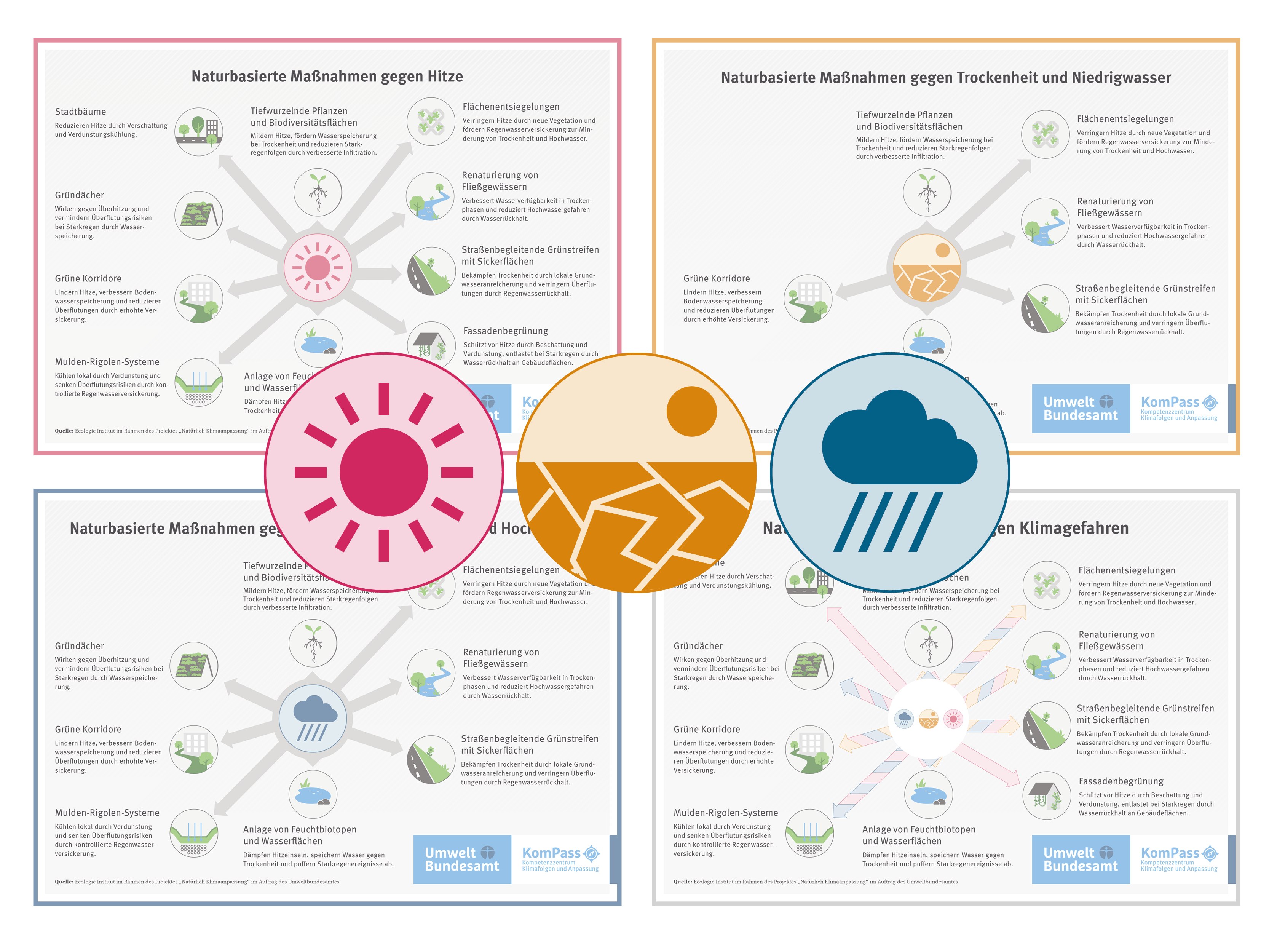
Climate change is affecting cities in various ways: heatwaves are becoming more frequent, flooding is occurring more often, and prolonged periods of drought are putting pressure on water resources. This series of infographics provides an overview of key climate-related risks and shows how nature-based solutions can help mitigate them.
The European Scientific Advisory Board on Climate Change (ESABCC) has published the report “Climate Change Mitigation and Adaptation in the Agri-food Sector – Recommendations for a Coherent EU Policy”. The report calls on the EU to better integrate climate mitigation and adaptation across the entire value chain. Its aim is to safeguard food security, strengthen farmers’ livelihoods and align the agri-food system with the EU’s climate goals.
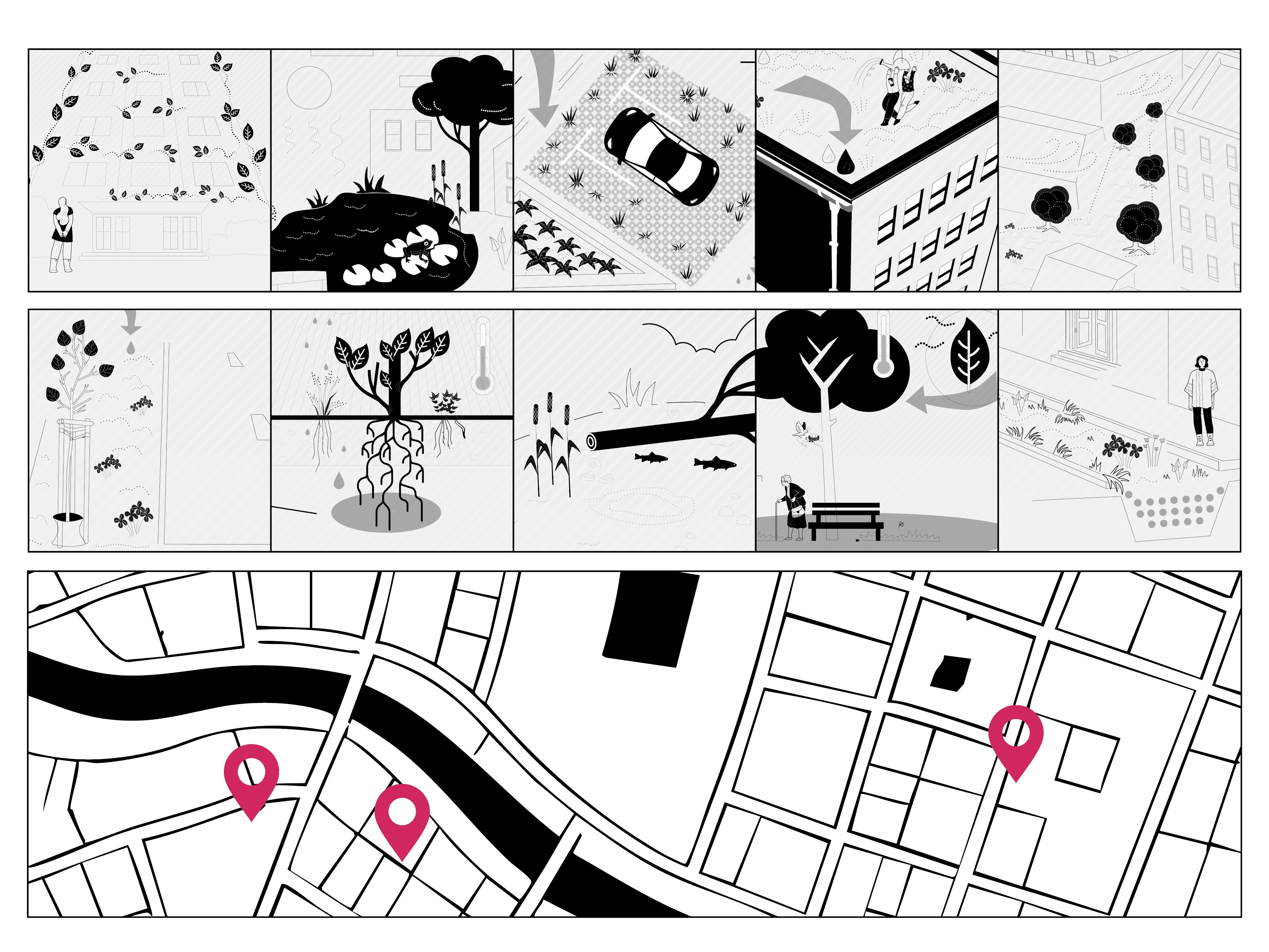
What do shaded paths, green roofs and restored waterways have in common? In many cities, they are already part of the urban landscape – yet often remain unnoticed. This guide, published by the German Environment Agency, focuses on these existing measures. It explains how municipalities can use city maps to make nature-based climate adaptation visible, place it in context and communicate it in a transparent and accessible way.
Nature-based climate adaptation unfolds not only in urban space but also in public perception. Measures such as urban greening, water retention or heat action plans require clear and targeted communication in order to be understood, accepted and supported. A new short guide published by the German Environment Agency outlines how municipalities can use press work strategically to communicate nature-based climate adaptation in a clear and structured way.
Nature-based climate adaptation can only be effective if it reaches the people it is meant to serve. Inclusive public communication plays a key role in this process: it helps ensure that nature-based solutions are not only planned and implemented but also understood, accepted and shaped by a wide range of communities. This guide, published by the German Environment Agency, provides practical guidance on how municipalities can design inclusive communication strategies for nature-based climate adaptation.
This policy brief examines how current climate-action rewarding mechanisms address – or fail to address – organic farming as a systemic and climate-resilient approach. It analyses existing monetary, regulatory and supportive instruments at EU level, with a particular focus on the Common Agricultural Policy (CAP) and the Carbon Removal and Carbon Farming (CRCF) Regulation.
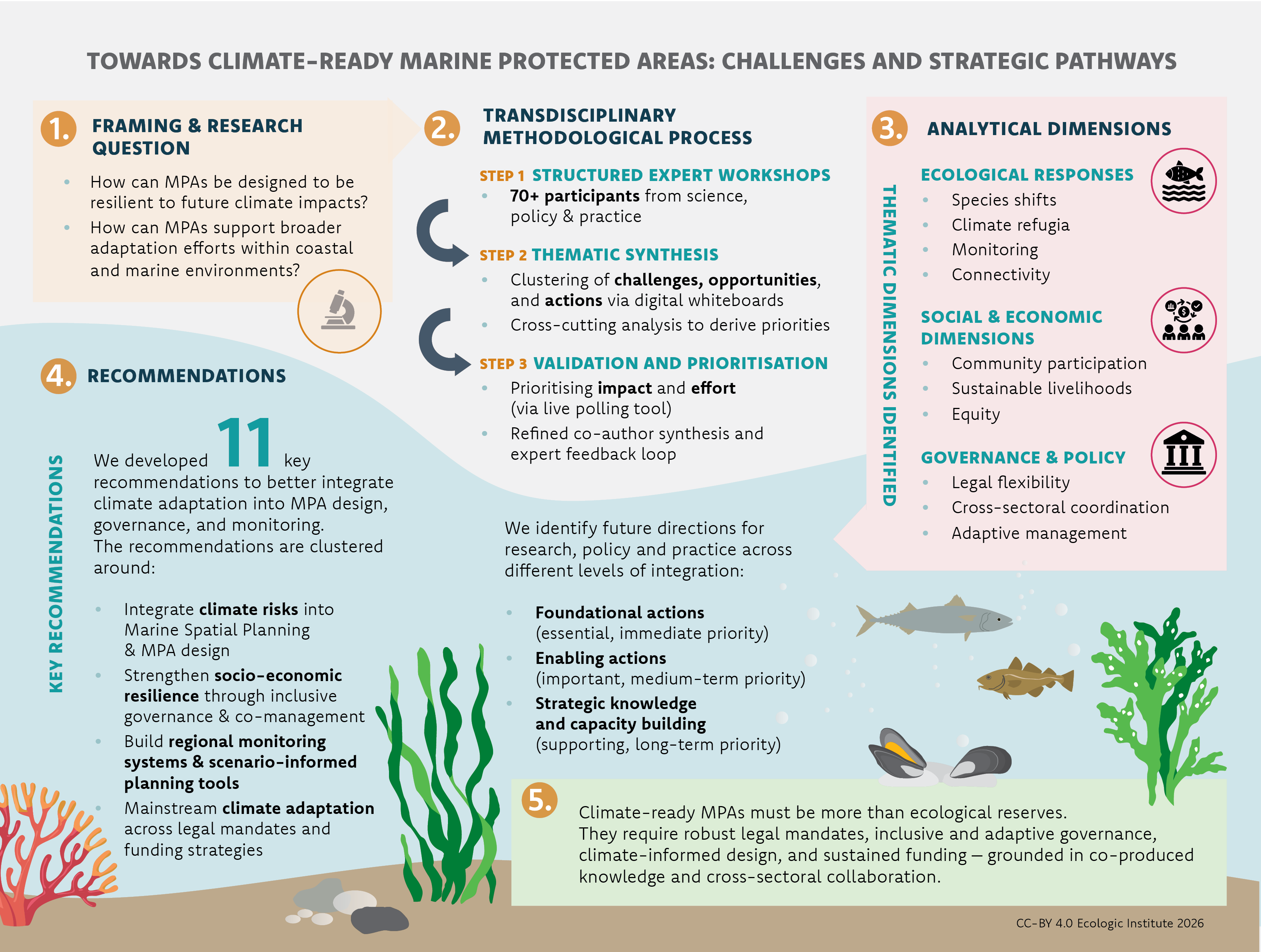
Marine Protected Areas (MPAs) are key to conserving biodiversity and strengthening the resilience of marine social-ecological systems. As climate change intensifies, their effectiveness increasingly depends on integrating climate considerations into design, management, and governance. The infographic, "Towards Climate-Ready Marine Protected Areas: Challenges and Strategic Pathways," visualises the conceptual approach of the underlying study. It combines ecological, governance, and socio-economic aspects and shows how they work together to evaluate and improve the climate-readiness of MPAs.
Drawing on structured expert workshops across Europe, this study identifies key scientific, governance, and socio-economic conditions for making MPAs “climate-ready”. The findings highlight that resilient MPAs must be ecologically robust, socially inclusive, supported by coherent governance frameworks, and adaptable to changing ocean conditions.
The aim of the analysis is to assess stormwater management measures not only in terms of their hydraulic performance and costs but also to systematically capture their additional ecological, social and economic benefits.
This pilot roadmap is designed to support national authorities and stakeholders in Romania in develo ping a strategic framework for planning coastal wetland restoration, for example in the context of National Restora tion Plans. It draws on the latest scientific data, tools and methods developed by the EU-funded project RESTORE4Cs.