Related content for project "Tackling Urban Heat Islands in Rome" (project ID 50181)
Publication:Report
This intervention manual supports the City of Rome in integrating heat adaptation into urban planning and regeneration. Developed within the project Tackling Urban Heat Islands in Rome, it provides a practical framework for selecting measures that can reduce surface and air temperatures, improve shading and ventilation, and create more climate-resilient public spaces.
This report presents practical action plans for mitigating urban heat in two pilot areas of Rome: Centocelle–Alessandrino and the historic city centre. The two areas reflect contrasting urban conditions, from residential neighbourhoods facing socio-economic challenges to densely used public spaces and tourist routes in the city centre.
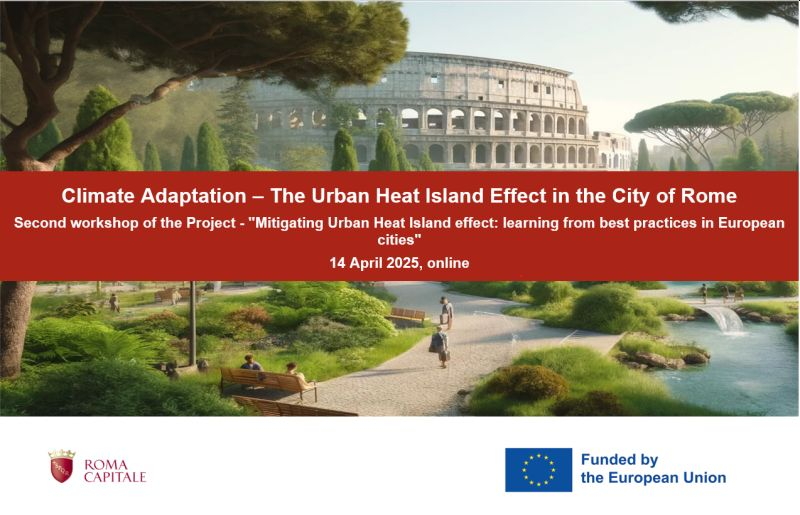
On 14 April 2025, 80 municipal representatives, researchers and urban planning experts came together to explore practical approaches to mitigating the Urban Heat Island (UHI) effect. The workshop featured case studies from Athens, Milan, and Vienna, highlighting local adaptation strategies, analytical tools, and implementation mechanisms that support urban resilience.
Rome, like many cities in Southern and Western Europe, is facing significant challenges from climate change, particularly in the form of Urban Heat Islands (UHI). To address these risks, PwC is leading a project funded by the EU's DG REFORM, with the Ecologic Institute playing a key supporting role. This project will develop a detailed UHI risk profile for Rome, integrating data on the city’s demographics, urban layout, transportation systems, and green spaces.