
© AquaEcology
The Potential of Seagrass Ecosystems as Carbon Sinks
Modelling, eutrophication and the transferability of results
- Event
- Date
-
- Location
- Berlin, Ecologic Institute, Germany
- Speaker
On 12 October 2026, the specialist workshop “The Potential of Seagrass Ecosystems as Carbon Sinks” took place at Ecologic Institute in Berlin. More than 30 participants came together to connect ongoing projects on the carbon storage potential of seagrass in the North Sea and Baltic Sea. The aim was to systematically compare methods, data and findings to date. The workshop was held as part of the ANK thematic week.
Focus on modelling and eutrophication
The workshop opened with project presentations: “Potential Seagrass” (AquaEcology), Seaguard (IOW) and CEASolF (University of Oldenburg). The German Environment Agency gave an overview of eutrophication as one of the biggest problems in the North Sea and Baltic Sea. Further contributions addressed sediment transport and morphodynamics (HEREON), AI-supported monitoring of seagrass meadows (WWF Baltic Sea) and the ANK model project on peatland climate protection on the Baltic coast (Ostseestiftung).
The moderated discussions showed that there is no single best model type. Depending on whether the focus is on carbon budgets, cumulative pressures or the selection of specific restoration sites, different approaches and data are needed. Participants stressed that assumptions, uncertainties and model limits must be presented transparently, and that long-term monitoring provides a reliable data basis. On eutrophication, reduced nutrient inputs and better light conditions are an important precondition for seagrass to return, but they do not guarantee it, as other pressures also play a role. Participants also discussed conflicts of objectives, for example with different uses of coastal waters, and how carbon from seagrass can be distinguished from inputs from other ecosystems.
Towards joint key messages
In the second part of the workshop, participants collected key topics for a joint policy brief in table groups. Discussions covered how far complexity can be reduced for decision-makers and what role biodiversity and coastal protection should play alongside climate mitigation. Participants also wanted the brief to build on existing projects and recommendations and to offer clear added value.
Contact
- Funding
-
German Environment Agency (UBA), Germany - Organizer
-
Ecologic Institute, Germany - Partner
-
AquaEcology, Germany - Speaker
- Team
- Date
-
- Location
- Berlin, Ecologic Institute, Germany
- Language
-
German
- Project
- Project ID
- Keywords
-
Seagrass; Blue Carbon, Eutrophication,North Sea, Baltic SeaWorkshop, Modelling
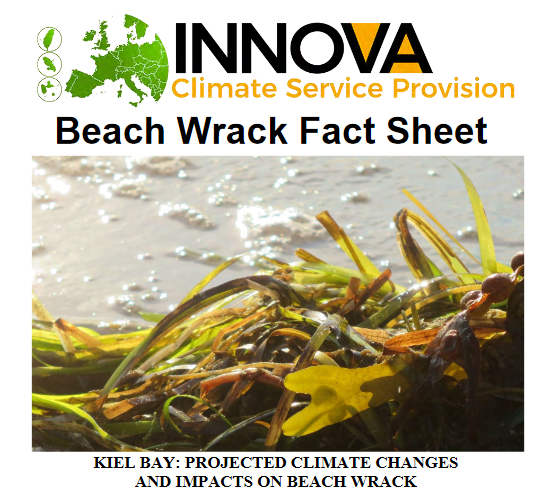
Nico Stelljes (2021): INNOVA Beach Wrack Fact Sheet. Ecologic Institute. 10p.
Stelljes, Nico (2021): Using seagrass as insulation material. In: Baltic Stories Magazine, 2. Page 16-17. https://issuu.com/pomorskieregion/docs/baltic_stories_magazine_issue_2_…