Research Priorities for the Coupled Arctic Land–Ocean Carbon Cycle
Integrating Scientific and Policy Perspectives
- Publication
- Citation
Giesse, C., and Coauthors, 2026: Research Priorities for the Coupled Arctic Land–Ocean Carbon Cycle: Integrating Scientific and Policy Perspectives. Bull. Amer. Meteor. Soc., 107, E1159–E1169, https://doi.org/10.1175/BAMS-D-26-0089.1.
The Arctic is undergoing profound environmental change. Temperatures across the region are rising three to four times faster than the global average, affecting not only sea ice, glaciers, and ecosystems but also the cycling of carbon between land, freshwater systems, and the ocean. Because the Arctic stores vast amounts of carbon in permafrost soils, vegetation, inland waters, and marine sediments, these changes have implications that extend far beyond the polar region. To assess current knowledge and identify future research priorities, approximately 40 experts from academia, policy institutions, and the science–policy interface convened in Berlin in September 2025 for an international workshop on the Arctic land–ocean carbon cycle. The outcomes of these discussions have now been published in a meeting summary co-authored by Arne Riedel Escobar of Ecologic Institute, providing a roadmap for future research and policy engagement.
Understanding Carbon Fluxes Across the Land–Ocean Continuum
A central conclusion of the workshop is that the Arctic carbon cycle must be understood as a tightly connected system. Carbon is continuously exchanged among terrestrial ecosystems, rivers, coastal zones, and the Arctic Ocean, yet these linkages remain insufficiently quantified. Particular attention was given to permafrost regions, which store approximately 1,500 billion tonnes of organic carbon, representing roughly one-third of the world's soil carbon reservoir. As permafrost thaws, previously frozen organic matter becomes available for microbial decomposition, potentially releasing carbon dioxide (CO₂) and methane (CH₄) into the atmosphere. At the same time, rivers transport large quantities of dissolved and particulate carbon from terrestrial environments into coastal waters and the Arctic Ocean, where this carbon may be stored, transformed, or returned to the atmosphere. Workshop participants emphasised that these cross-system interactions remain one of the largest sources of uncertainty in current Arctic carbon budgets and climate projections.
Disturbances and Extreme Events Are Reshaping Arctic Carbon Dynamics
In addition to gradual warming trends, a growing number of abrupt disturbances are influencing the Arctic carbon balance. These include wildfires, coastal erosion, thermokarst formation, abrupt permafrost thaw, and the drainage of Arctic lakes. Recent increases in boreal and Arctic wildfires provide a particularly striking example. Such events can release large amounts of carbon that have accumulated over decades or even centuries, while simultaneously altering vegetation cover, soil properties, and hydrological conditions. The workshop highlighted the need for improved monitoring and modelling of these disturbances, which are still under-represented in many large-scale carbon assessments. Methane emissions constitute an additional challenge. Arctic wetlands, peatlands, and thermokarst landscapes are among the region's most important natural methane sources. Small changes in hydrological conditions can substantially alter methane emissions, complicating efforts to predict future greenhouse gas fluxes.
From Scientific Evidence to Climate Policy
Beyond identifying research gaps, the workshop addressed the question of how scientific knowledge can more effectively inform climate policy. Although the importance of Arctic change is widely recognised, Arctic carbon feedbacks remain insufficiently represented in many international climate-policy processes. Participants stressed the need for clear, concise, and policy-relevant communication that translates complex scientific findings into actionable information without obscuring uncertainties. They also emphasised the importance of involving Indigenous Peoples and local communities as equal partners in research activities. Indigenous knowledge systems provide long-term, place-based observations that can complement scientific data and enhance the relevance of research for local and regional decision-making. Strengthening the science–policy interface was identified as a prerequisite for ensuring that emerging knowledge about Arctic carbon feedbacks contributes effectively to international climate governance and adaptation planning.
Key Recommendations for Future Research
The publication outlines several priorities for advancing Arctic carbon-cycle research. These include expanding long-term observation networks, harmonizing measurement protocols and data standards, improving understanding of abrupt thaw processes and climate extremes, and strengthening the integration of terrestrial, freshwater, coastal, and marine research efforts. The authors also highlight the importance of coordinated international initiatives, including the upcoming International Polar Year 2032–2033, which offers a unique opportunity to advance observations, improve modelling capabilities, and reduce uncertainties in assessments of Arctic carbon dynamics. Taken together, the workshop findings underscore that understanding the future of the Arctic carbon cycle will require sustained international collaboration, improved observational capacity, and closer engagement between researchers, policymakers, and Arctic communities.
This publication summarises the outcomes of the workshop "Arctic Land–Ocean Carbon Cycle and Its Role in the Remaining Global Carbon Budget", held in Berlin, Germany, on 22–23 September 2025. The workshop brought together experts from Arctic carbon-cycle research, policy institutions, and science–policy organisations to assess current knowledge, identify critical research gaps, and develop recommendations for future research and policy dialogue. Among the co-authors is Arne Riedel Escobar (Ecologic Institute, Berlin).
Contact

- Language
-
English
- Authorship
- Published in
- Bulletin of the American Meteorological Society, Volume 107 (2026): Issue 5 (May 2026)
- Published by
-
American Meteorological Society (AMS), United States - Year
- Dimension
- 11 pp.
- ISSN
-
0003-00071520-0477
- DOI
- Keywords
-
Arctic carbon cycle, permafrost, climate change, carbon budget, greenhouse gases, methane emissions, carbon dioxide, Arctic Ocean, land–ocean interactions, climate policyArctic, Arctic Ocean, Greenland, Alaska, Canada, Siberia, Barents Sea, Europe, North AmericaExpert workshop, science–policy interface, carbon budgeting, Earth system modelling, long-term monitoring, remote sensing, atmospheric inversions, scenario analysis
Dynamic Protection and Adaptive Management – Arctic marine protection facing climate change (DynArc)
- Duration
-
-
- Funding
-
Federal Agency for Nature Conservation (BfN), Germany
Year-round EcoSystem Study on Svalbard (YESSS)
- Duration
-
-
- Funding
-
Federal Ministry of Education and Research (BMBF), Germany
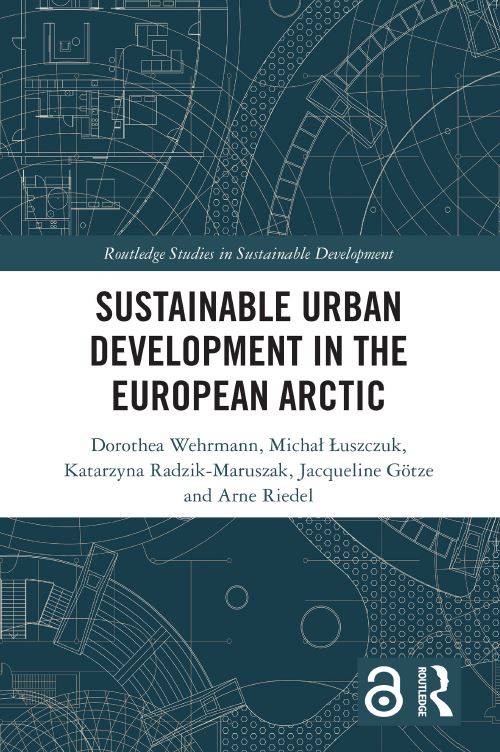
Wehrmann, D., Luszczuk, M., Radzik-Maruszak, K., Götze, J. & Riedel, A. (2025). Sustainable Urban Development in the European Arctic. Routledge.
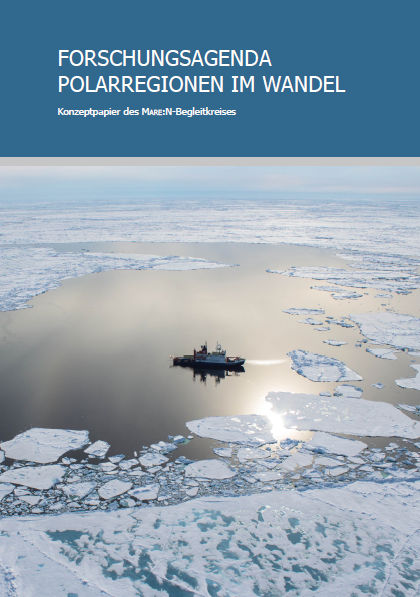

Wissenschaftlicher Begleitkreis Mare:N "Forschungsagenda Polarregionen im Wandel" (Ed.) 2021: Forschungsagenda Polarregionen im Wandel. Konzeptpapier des Mare:N-Begleitkreises.