
Image by Gaby Stein from Pixabay
Einheitliche Zertifizierung, Umstrittene Regeln
Der neue EU-Rechtsrahmen für dauerhafte CO₂-Entnahme
- Publication
- Citation
Meyer-Ohlendorf, N. (2026). CDRSynTra Policy Brief "Einheitliche Zertifizierung, umstrittene Regeln: Der neue EU-Rechtsrahmen für dauerhafte CO₂-Entnahme". Zenodo. http://doi.org/10.5281/zenodo.23527474
The European Union has introduced detailed certification rules for permanent carbon removals for the first time, laying important groundwork for their future integration into EU climate policy. However, key provisions remain legally contested. This policy brief examines the requirements of the new regulation and explores its potential implications for European climate policy.
Common Standards for Three Carbon Removal Methods
The Commission Delegated Regulation (EU) 2026/285, which entered into force on 7 May 2026, sets out detailed certification methodologies under the EU Carbon Removals and Carbon Farming Certification Framework (CRCF). It covers three methods: direct air carbon capture and storage (DACCS), biogenic carbon capture and storage (BioCCS), and biochar carbon removal.
The regulation specifies sustainability requirements, how net carbon removals must be calculated and what evidence is needed to demonstrate permanent storage.
Implications for EU Climate Policy
The regulation could have implications well beyond the certification of individual projects. In July 2026, the European Commission proposed integrating up to 250 million tonnes of certified carbon removals from DACCS and BioCCS projects within the EU into the EU Emissions Trading System (EU ETS) between 2031 and 2040, through a centralised purchasing mechanism. The certification rules could therefore play a key role in determining which carbon removals may be recognised under the EU ETS.
Legal Challenges to the Certification Rules
While businesses welcome the greater planning and investment certainty, environmental organisations have raised concerns about how net removals from biomass-based methods are calculated. They argue that the rules do not adequately account for all relevant emissions or the impacts on existing carbon stocks. The requirements for ensuring permanent carbon storage in biochar are also contested.
Several environmental organisations have therefore requested an internal review of the regulation. A potential court ruling could have far-reaching implications for the future regulation of permanent carbon removals.
Contact

- Language
-
German
- Authorship
- Funding
-
Federal Ministry of Research, Technology and Space (BMFTR), Germany - Published by
-
Ludwig Maximilian University of Munich (LMU), Germany - Year
- Dimension
- 5 pp.
- DOI
- Project
- Project ID
- Keywords
-
Carbon Dioxide Removal (CDR), Carbon Removal Certification, EU Carbon Removals Framework, Negative Emissions, BECCS, Carbon Farming, Carbon Credits, Carbon Accounting, Carbon Balance Accounting, CCS Directive, Aarhus Regulation, Climate Law, Carbon Removal MarketEuropeLegal Analysis, Regulatory Analysis, Document Analysis, Comparative Analysis, Policy Analysis
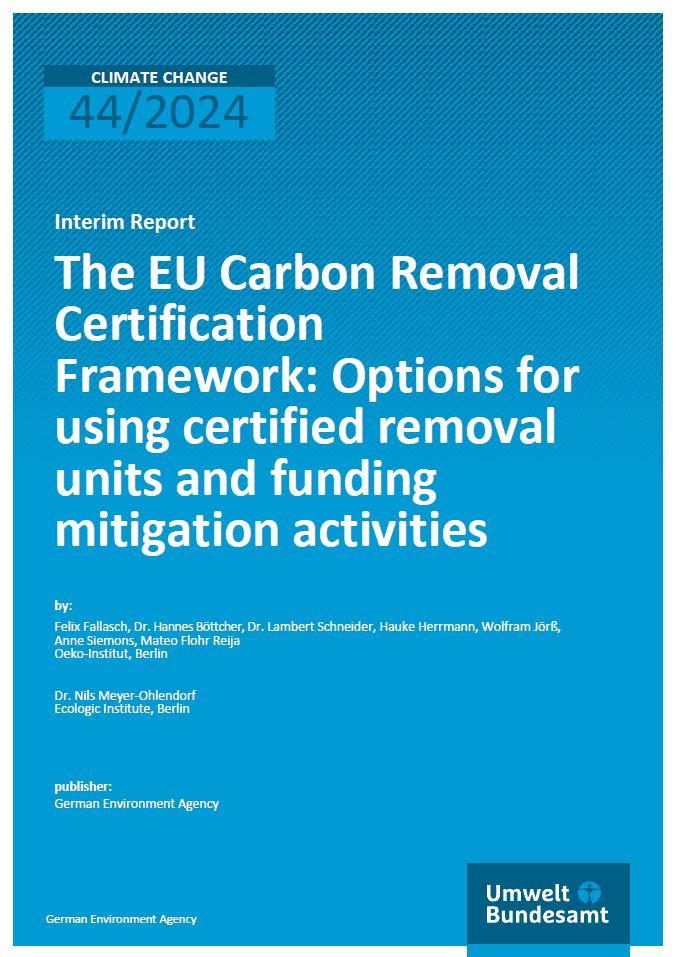
Fallasch, Felix et al. 2024: The EU Carbon Removal Certification Framework: Options for using certified removal units and funding mitigation activities. Interim Report. German Environment Agency: Dessau-Roßlau.
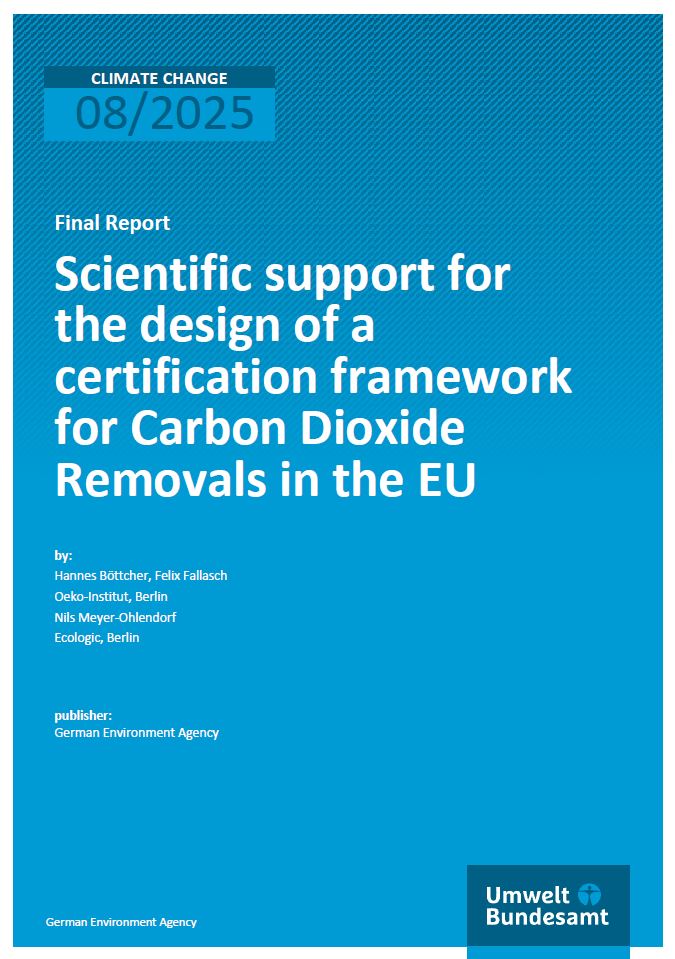
Böttcher, Hannes et al. 2025: Scientific support for the design of a certification framework for Carbon Dioxide Removals in the EU. Final report. German Environment Agency: Dessau-Roßlau.
Meyer-Ohlendorf, Nils (2023): Making Carbon Removals a Real Climate Solution. How to integrate carbon removals into EU Climate Policies. Berlin: Ecologic Institute.
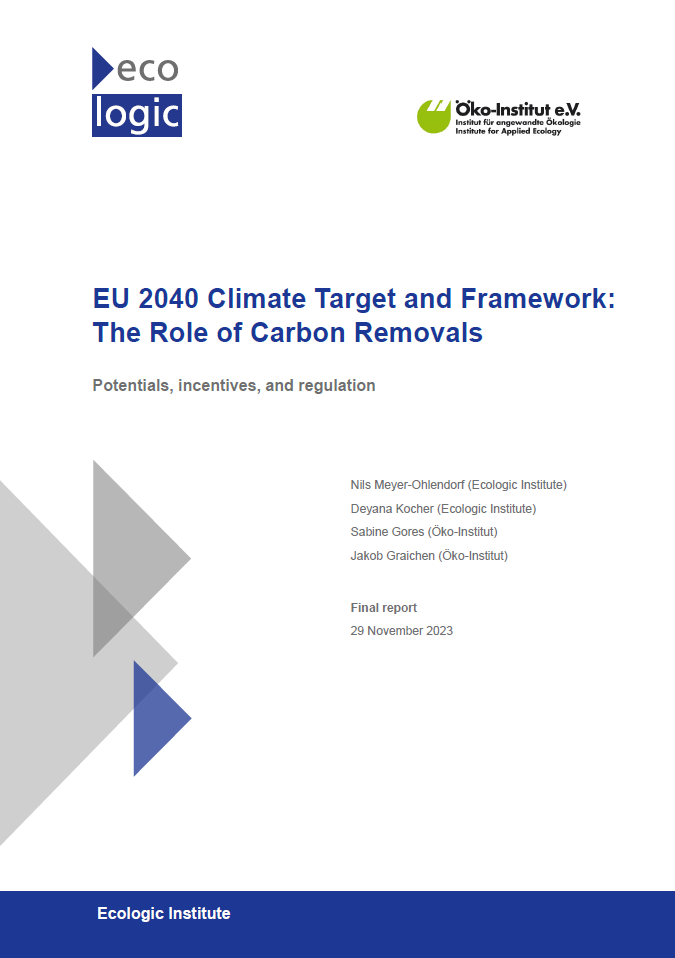
Meyer-Ohlendorf, Nils, et al. (2023): EU 2040 Climate and Framework: The Role of Carbon Removals. Ecologic Institute, Berlin
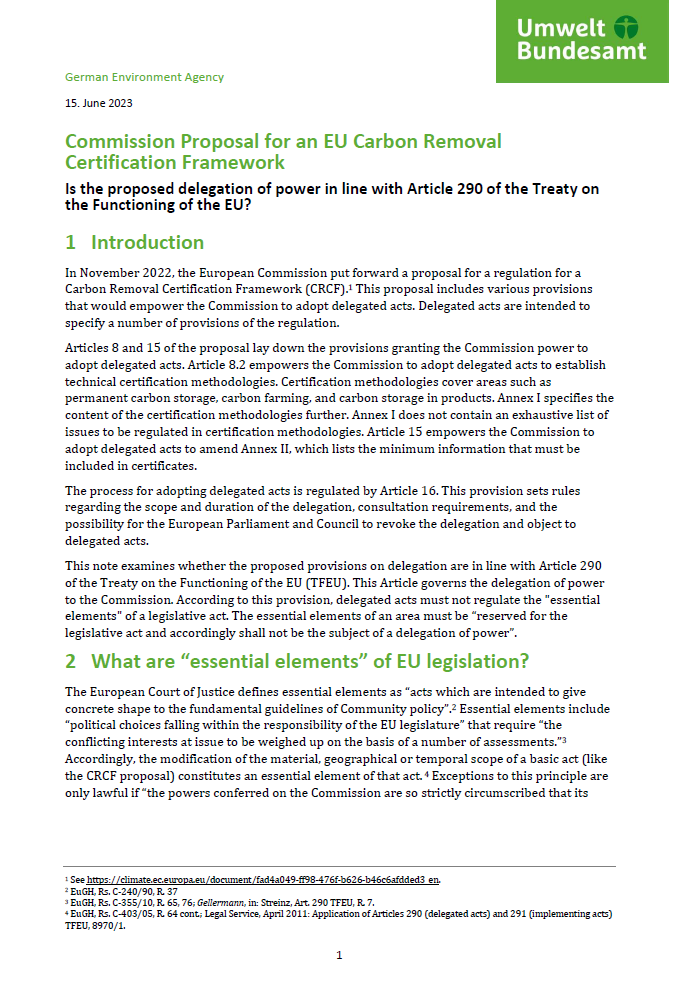
Meyer-Ohlendorf, Nils and Anne Siemons 2023: Commission Proposal for an EU Carbon Removal Certification Framework – Is the proposed delegation of power in line with Article 290 of the Treaty on the Functioning of the EU? Dessau-Roßlau: German Environment Agency.