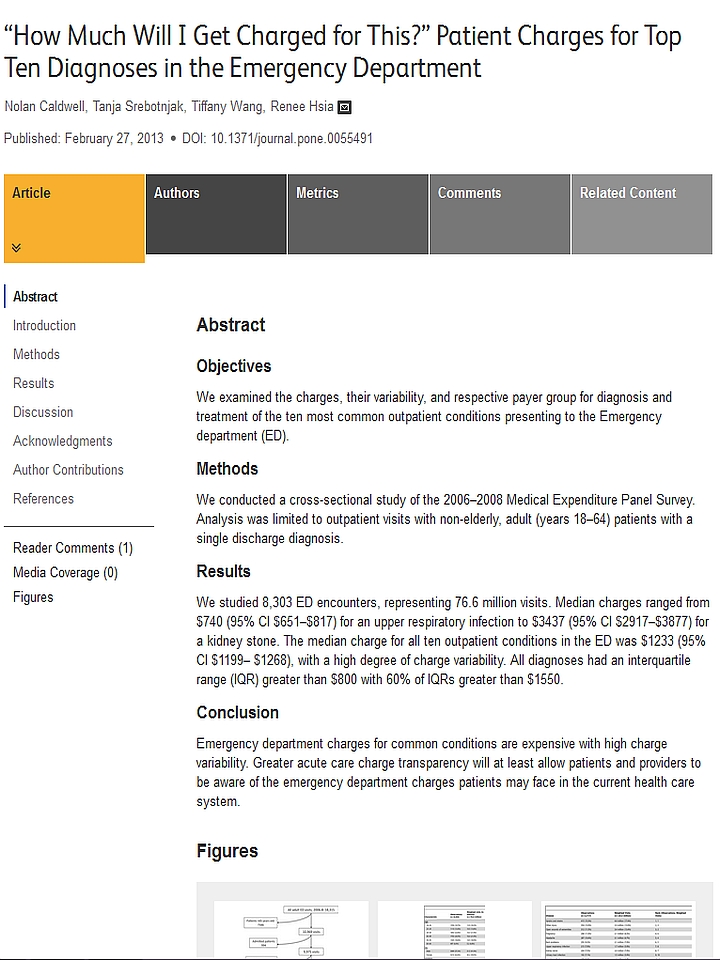
The study examined the charges levied on patients for the diagnosis and treatment of the ten most common outpatient conditions handled in the emergency department (ED). The results of research undertaken by scientists and faculty at the University of California, San Francisco, Stanford University, the University of Minnesota, and Ecologic Institute have been published in the scientific journal PLoS One. Based on a cross-sectional study of the 2006–2008 Medical Expenditure Panel Survey, the analysis was limited to outpatient visits with non-elderly, adult (years 18–64) patients with a single discharge diagnosis. A sample of 8,303 ED encounters was analyzed, which is representative of a total of 76.6 million ED visits during the studied 3-year period. It was found that charges varied significantly by diagnosis and across EDs for the same diagnosis. The study is available for download.
This study investigates the importance ascribed to the actions taken by water providers to ensure the protection of water bodies and human health in current benchmarking approaches of drinking water utilities. New indicators to improve the representation of these services are also suggested. Additionally, light is shed upon the risks these measures may face should centralized economic regulation, such as that currently implemented in England and Wales, be introduced. Finally, the study summarizes the possible role benchmarking approaches can play in price oversight as well as in creating a transparent presentation of the actions taken to ensure the protection of water bodies and human health. The results of the study are available for download.
Görlach, Benjamin. 2013. What constitutes an optimal climate policy mix? Defining the concept of optimality, including political and legal framework conditions. CECILIA2050 WP1 Deliverable 1.1. Berlin: Ecologic Institute.
The Mediterranean, Middle East, and Sahel regions form a climate change "hot spot" that is expected to experience large climatic changes, with negative consequences for human security in the region. A new report by Ecologic Institute provides insights and recommendations on the policies and institutions needed to address water-related risks to human security and also prevent or reduce potential conflicts over water that may be caused or exacerbated by climate change. Effective climate change adaptation approaches are identified, and recommendations are given for policy makers at the EU and national level as well as for donors and actors at the international level. The report is now available for download.
The 24th edition of the Climate Talk, held on 25 February 2013, discussed the future of the European Emissions Trading Scheme (EU ETS). The event, jointly organised by the Ecologic Institute and the German Institute for International and Security Affairs (SWP), featured as discussants Dr. Jochen Diekmann (DIW Berlin), Dr. Uwe Neuser (Ministry of the Environment) und Dr. Joachim Hein (Federation of German Industries).
As its first outreach activity, the research project CECILIA2050 staged a stakeholder workshop on future directions for EU climate policies on 20 February 2013. Sixty researchers, EU officials, and NGO and Member State representatives came to Brussels to discuss the path to an optimal 2050 EU climate policy mix. Initial results from country case studies (Germany, Spain, Italy, and the UK) were presented. A panel of five distinguished experts discussed current trends in EU climate policy. The presentations are available for download.
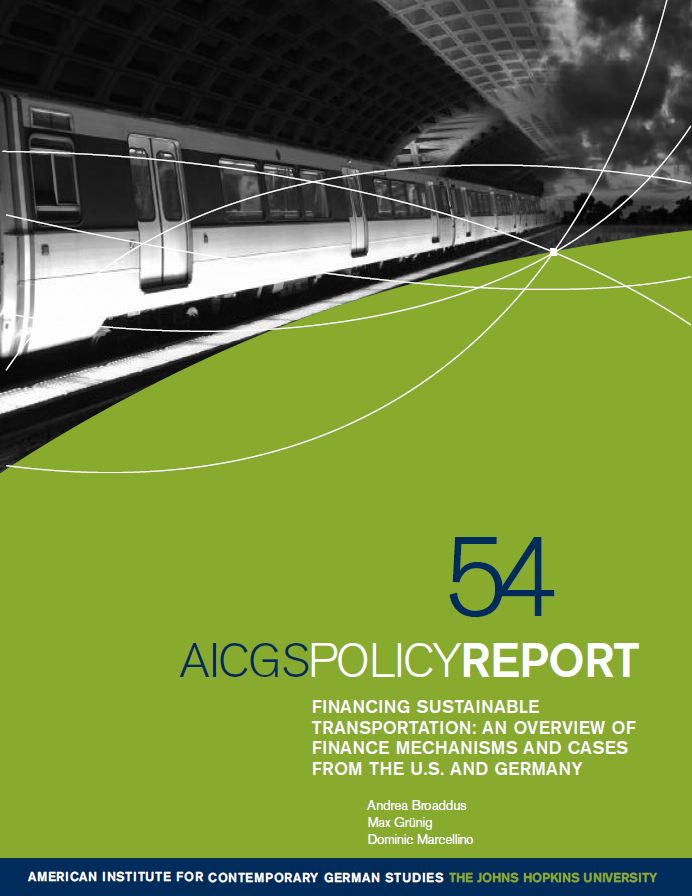
This policy report compares approaches to sustainable transportation financing in the U.S. and Germany, with a focus on Northern Virginia and the Stuttgart region. Max Gruenig and Dominic Marcellino, Senior Fellow Ecologic Institute Berlin and Fellow Ecologic Institute Washington DC respectively, are co-authors with Andrea Broaddus, PhD Candidate at the University of California at Berkeley. The policy report is available for download.
Elbersen, B.S. (Ed.); Andersen, E.; Frelih‐Larsen, A.; Jones, P.; Kuikman, P.; Naumann, S.; Oñate, J; Staritsky, I.; Von Toggenburg, J. (2013). EU wide Farm‐level Carbon Calculator. Lot 2: Testing the Carbon Calculator Deliverables 2.1 and 3.2. to the Institute of Environment and Sustainability (JRC/IES). Alterra‐Wageningen.
In this study, Ecologic Institute researchers Timo Kaphengst and Lucy Smith summarize the advantages and disadvantages of the increasing share of genetically modified organisms (GMOs) in developing countries. The accrued benefits and/or disadvantages vary widely across the reviewed countries and depend on the governance structures of each country. On the one hand, GM crops can increase export revenues; on the other hand, developing countries' resulting dependency on Western biotechnology companies could grow and threaten local farmers, especially smaller ones. Moreover, GMOs are leading to a reduction in biodiversity. In light of this, the authors recommend that GM crops no longer be promoted in developing countries. The study is available for download.