The Laeken Declaration, which constitutes the mandate for the European Convention, calls for institutional reforms to improve the EU’s efficiency, democratic accountability and transparency. Although the Convention adopted the draft Constitutional Treaty in June/July 2003, its environmental implications remain highly uncertain. Ecologic published a Brief that analyses the draft Constitutional Treaty. Furthermore, it considers the potential environmental merits and shortcomings of the broader reform options which have provided the backdrop for the Convention’s discussions: What are the basic options for improving the EU’s efficiency, democratic accountability and transparency? How do they fare from the point of view of the environment?
The Yearbook Ecology will be published in the end of September 2003. Ecologic is one of the institutes supporting this yearbook. Like its predecessors, the Yearbook Ecology 2004 will present contributions on ecology that inform about trends in environmental pollution, analyze and criticize governmental environmental policy, document historical environmental events and draft visions of a sustainable world.
The Laeken Declaration, convening the Convention on the Future of Europe, submitted a broad mandate to it, requesting it to reorganise the distribution of tasks between the EU and the Member States. However, the Convention did not consider reallocation of competencies, but rather concentrated on the task of ensuring transparency for the delimitation of competencies. Ecologic published a Brief that presents the system underlying the constitutional division of competencies, points out consequences of the system, and assesses them from an environmental point of view.
Soil is the basis of all economic and cultural activities; however, this "fundamental" economic value of soil is barely recognised. As part of a project for the European Commission, Ecologic and the French Geological Survey (BRGM) will therefore estimate the economic consequences that the continued degradation of European soils implies.
The European Parliament's Environment Committee often needs to rapidly react to Commission proposals, and at the same time often needs a solid basis to develop own initiatives within its field of responsibility. Short written briefing notes help to improve the legislative assistance to its Members and strengthen the Committee’s competence in this respect.
In response to Article 2.2 of the Kyoto Protocol, the International Maritime Organisation (IMO) and the International Civil Aviation Organisation (ICAO) have begun to consider greenhouse gas (GHG) emissions from international aviation and shipping. However, neither ICAO nor IMO have taken any effective action on the issue yet and progress can be characterised as slow. But there are options for furthering the progress within ICAO and IMO.
Businesses, cities, states, universities and churches are striving to reduce greenhouse gas emissions to protect the Earth's climate. A new transatlantic survey by Michael Northrop reveals a multitude of initiatives, both in the U.S. and in Europe. Michael Northrop directs the Sustainable Development grantmaking program at the Rockefeller Brothers Fund (RBF) in New York City and is the author of this paper.
Each spring, the European Council meets in order to discuss Europe's progress towards becoming the most competitive economy in the world. At the same time, progress in the area of sustainable development is reviewed. The Working Group on Sustainable Development of the European Environmental Advisory Councils (EEAC) is preparing recommendations as an input to the spring meetings. Ecologic helped the Working Group in drafting the EEAC recommendations for 2004.
The Doctoral Thesis of Simon Marr, lawyer with Ecologic Legal, has been published. The purpose of this study is to examine the present status of implementation of the precautionary principle in the law of the sea and to extract evidence of its acceptance as part of customary international law. The thesis examines the precautionary principle in the law of the sea. The precautionary principle is a risk management tool for policy makers which has been broadly implemented in international environmental law in a variety of different sectors and formulations.
Labour unions have a significant impact on consumption and production patterns. By means of case studies from Germany, Great Britain, the USA, South Africa and Indonesia, Ecologic examines the current attitude of unions towards sustainable consumption and production patterns. The final report identifies labour unions' potential future contribution to advancing sustainable development and ways to further strengthen their involvement in the respective national and international governance processes.
In order to comply with the European directive on emissions trading the Member States have to establish so-called national allocation plans within a very short time frame which state the total number of allowances to be allocated and the rules of allocation. To establish such a plan in Germany, it is necessary to conduct an extensive data collection in order to understand the emissions of each installation which is covered by the directive.
Ecologic experts on private sector participation and regulatory oversight in the water sector contribute to an OECD publication on "Social Issues in the Provision and Pricing of Water Services". This book explores the interface between environmental and social elements of water pricing policies in OECD countries. It focuses on the affordability of water services, as well as on the social measures aimed at resolving these affordability problems.
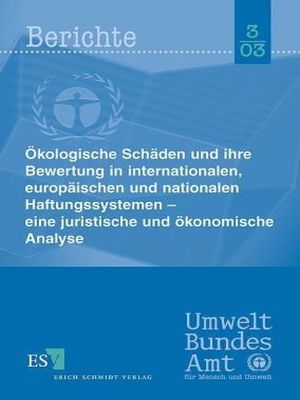
The interdisciplinary team of lawyers and economists, headed by Prof. Dr. Dr. Juliane Kokott and consisting of Dr. Axel Klaphake, Dr. Simon Marr, Dr. Peter Beyer and Ute Beckert, recently finalized its study on international, European and national liability systems in relation to ecological damages, i.e. damages to water, soil and biodiversity. The study was commissioned by the German Federal Environmental Agency.
2003: Deliverable 1 - EUROMARKET Water Liberalisaion Scenarios - Analysis of the European Unions Explicit and Implicit Policies and Approaches in the Larger Water Sector. ENGREF/IHE/EPFL/Paris VIII/Delft UT/University Bocconi/University of Birmingham/Ecologic/UCL/University of Zaragoza.
Hamada, Ana-Mari M.; Eduard Interwies; R. Andreas Kraemer 2003: Water Governance & Private Sector Participation in OECD Countries. Ecologic-Institut für Internationale und Europäische Umweltpolitik, Berlin.