The Urban Development Funding Day on 13 May 2023 is a nationwide event where cities and municipalities provide information about their urban development projects.
This report, co-authored by Aaron Scheid from Ecologic Institute, summarises the results of a series of assessments of the climate and environmental ambition of the Common Agricultural Policy's (CAP) Strategic Plans. It is based on the detailed study of four Member States (France, Spain, Poland and Germany). The analysis suggests that, while the new CAP structure provides more flexibility to Member States, countries did not take this opportunity to significantly increase support for environmental and climate action.
This article, co-authored by Mandy Hinzmann and Linda Mederake from Ecologic Institute, assesses the potential of the EU "Single-Use Plastics Directive" (SUPD) to reduce litter pollution in the environment with three scenarios. The scenario analysis revealed that the success the current SUPD can be an important first step, yet further legislative actions are needed to effectively prevent plastic waste pollution - bans alone are not sufficient. The success of the Directive is therefore highly dependent on implementation and enforcement.
Financing has been identified as a key barrier that limits the upscaling of nature-based solutions (NBS), including pondscapes. This report aims to address this challenge by supporting pondscape developers to answer a simple question: how can I pay for my pondscape project?
This report is the final report on seven national case studies (NCS) performed in the 4i-TRACTION project. It presents outcomes of the analysis carried out in task 2.3 'Evaluation of 4i dimensions at the national level – case-study analysis'.
This case study shows that to achieve the digitalization of our energy systems and reach climate neutrality by 2050, policymakers must take a truly transformative approach and simultaneously address the core challenges of innovation, infrastructure, integration, and social acceptance. Future research should also include investment needs and the costs that relate to a smart meter rollout, e.g. the digitalization of our energy networks and the extension of supporting infrastructures.
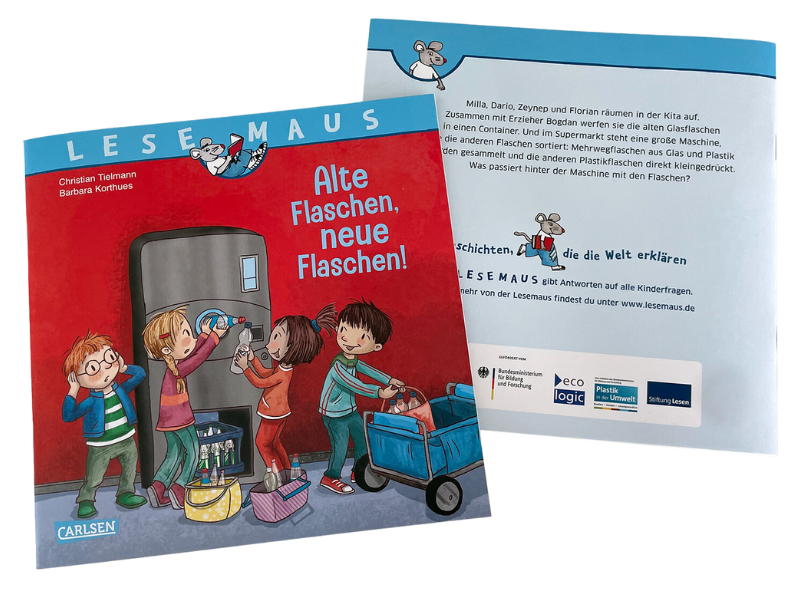
Plastics shape our modern life like hardly any other material. They are flexible, light, and versatile. At the same time, they also represent one of the greatest ecological challenges of our time. To make this topic clear and understandable for children and to convey the relevant knowledge, Ecologic Institute and Stiftung Lesen, together with Carlsen Verlag, have developed this special edition of Lesemaus.
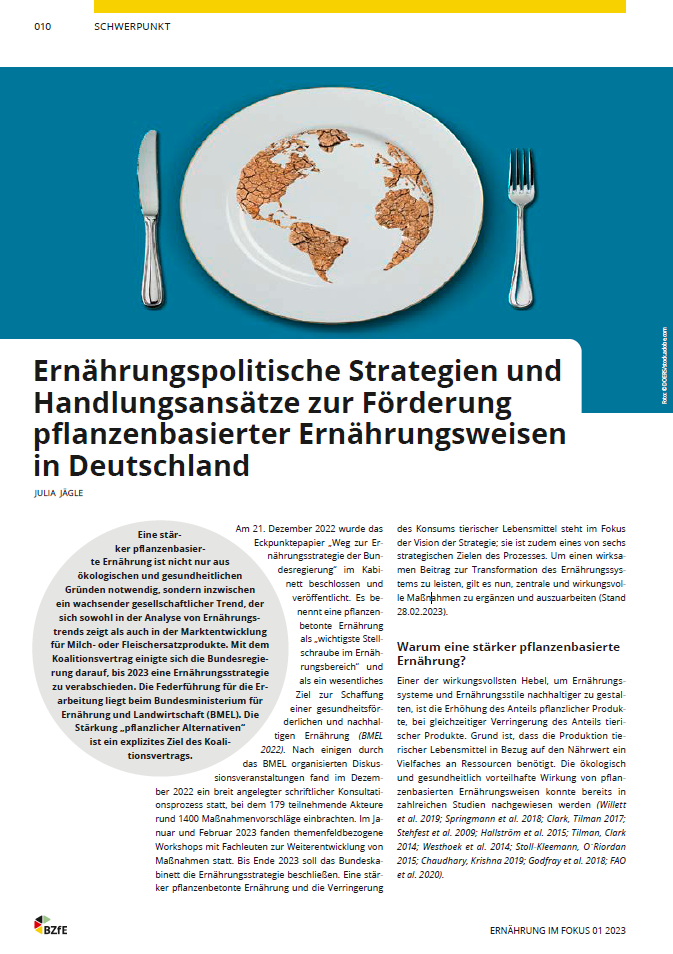
What role do policies play in driving plant-based solutions for more sustainable food systems? In this article, Julia Jägle from Ecologic Institute explores policy strategies and approaches to foster plant-based solutions in Germany and offers an international comparison. She shows that Germany has potential for improvement and introduces political instruments to further promote plant-based food systems and diets.
A key objective of the Interlace project is strengthening cooperation, learning, and peer-to-peer interactions between regions and projects. As part of this process, Natalia Burgos from the Interlace team was invited to take part in a knowledge exchange Task Force organized by Clearing House Project. The Task Force took place in Bogotá (Colombia) on 30 and 31 March 2023 and focused on discussing strategies for urban forest management and implementation, with an emphasis on governance and community participation.
In the latest "Green Deal – Big Deal?" podcast episode, the hosts Ewa Iwaszuk and Aaron Best from Ecologic Institute speak with interview guests Margherita Tolotto (Senior Policy Officer for Air and Noise at the European Environmental Bureau) and Agnieszka Warso-Buchanan (Senior Lawyer in ClientEarth). They discuss the problem of air pollution, the important role that lawsuits have played in forcing action, the current effort to bring the law in line with the science – and what citizens can do to have their voices heard in this debate.
What does EU climate policy need to look like to achieve the transformation to a net-zero emissions economy by 2050? Tune into our podcast and learn about the four essential cross-cutting challenges on this path.
On 29 March 2023, Doris Knoblauch and Mandy Hinzmann gave a lecture on "Plastics and the Environment" in a postgraduate course, where 19 experts from ministries, authorities, municipalities, non-governmental organizations and industry from low-income countries and emerging economies were represented and exchanged. The focus was on reducing plastics in the environment, on different responsibilities and concerns from a global perspective on the one hand, and on the textile sector on the other hand.
The German CAP Strategic Plan has the potential for an ambitious CAP 2023 to 2027. While the debate on the next CAP post-2027 is already starting, in this article Aaron Scheid and Sophie Ittner from Ecologic Institute argue that the German government needs to exploit all potential in the current CAP to increase the ambition towards more climate change mitigation and the protection and enhancement of natural resources and biodiversity. The coalition agreement gives them the mandate to do so.