Over the past two decades, Europe has witnessed a concerning trend of escalating water scarcity and more frequent drought events, with projections indicating a continuation of this trend into the future. Europe must confront water stress risks and adapt its governance to build water resilience. In a series of three reports, Ecologic Institute, together with partners from the EU project GOVAQUA, examine three topics of critical importance for water resilience.
The research project “Feasibility Study on the Establishment of an Environmental Information and Classification System for Pharmaceuticals in Germany”, led by Ecologic Institute, developed a concept for an environmental information and classification system for Germany and conducted a feasibility analysis for this concept, evaluating organizational, technical, legal, financial and political feasibility. The project results were presented to a wide range of interested parties at a final presentation held at the beginning of March 2025. Over 110 participants, including representatives from the pharmaceutical industry, health insurance companies, doctors, pharmacists and environmental authorities, took part in the online event.
On 6 March 2025, the 4th EU Blue Parks Community Workshop convened in Brussels as part of the European Ocean Days, bringing together marine conservation experts including researchers, policymakers, MPA managers, conservation practitioners, and other stakeholders to discuss the transition towards 10% strict protection in European seas. The workshop was co-organized by Ecologic Institute as part of its role in the Mission Ocean & Waters Implementation Support Platform, supporting the EU’s ambition to restore ocean health and strengthen marine protection.
On 4 March 2025, over 100 stakeholders from administration, agriculture, civil society, NGOs, and academia convened in Hamburg to kick off the participatory process for developing the city's Zukunft Agrar+ 2045 strategy. The aim: to jointly develop a long-term vision for Hamburg's agricultural sector that will inform practical measures and shape the city's transition toward sustainability and climate neutrality.
The Report on Regional Biomass Availabilities, Nutrient Balances and Ecological Boundaries was produced under the EU‐funded SCALE-UP project, which seeks to accelerate community‐driven bioeconomy development across six European regions: Northern Sweden, Mazovia (Poland), the French Atlantic Arc, Upper Austria, Andalusia (Spain), and Strumica (North Macedonia).
The bioeconomy concept presents an attractive framework for policymakers in Europe, as it holds the potential to foster innovations that match specific community needs with regionally available resources. The SCALE-UP project aims to enhance the capacity and expertise of multi-actor partnerships to accelerate the development of market-ready bio-based products and services while facilitating their successful market deployment. Additionally, SCALE-UP strengthens collaboration among primary producers, SMEs, industry clusters, social actors, and policymakers, promoting a cohesive approach to innovation.
The Plastic Pirates Plus project focuses on where participation in education needs to be particularly promoted: in school classes with a higher proportion of pupils from socially disadvantaged households. The aim is to give these young people access to the world of science through a low-threshold, practical programme – regardless of their financial or social circumstances. Participation in the project is free of charge and thus deliberately designed so that no child is excluded.
In spring 2025, the Plastic Pirates were active on the Danube River once again. School classes and extracurricular youth groups were invited to collect their own data on plastic pollution and get to know the Danube better as an important habitat and transport route. The aim of the campaign was to raise young people's environmental awareness and give them a hands-on approach to scientific work. Participation was free of charge.
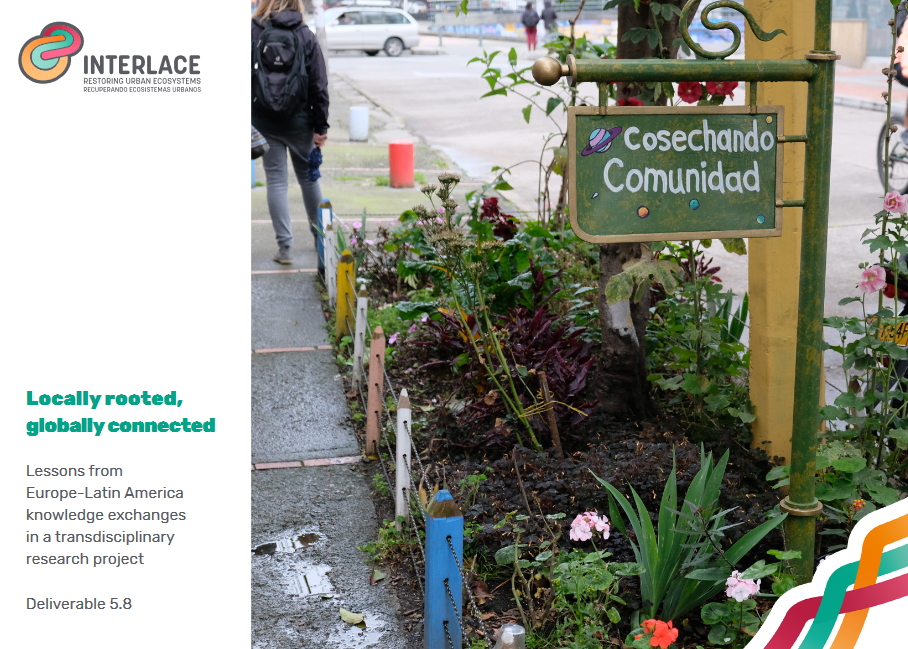
As the INTERLACE project concludes, we invite you to a final CITIES TALK NATURE webinar to reflect on the project's impact and ensure a continued legacy. This session will showcase key resources and empower cities, local stakeholders, and the research community to continue to drive the long-term adoption of nature-based solutions (NbS).
This report, funded by the European Climate Foundation (ECF), examines the assumptions for industrial carbon removals in the European Commission's 2040 Climate Target Impact Assessment. It focuses on the deployment of industrial carbon removal technologies and their resource demands.
The Guidance on Climate Resilient Landscapes project, financed by DG CLIMA, will develop actionable guidance to strengthen climate resilience in Europe's rural landscapes. With floods, droughts, heatwaves, and wildfires becoming more frequent and severe, landscapes need to be managed in ways that help them absorb, recover from, and mitigate such events, supporting both ecological and human resilience.
On 25 and 26 February 2025, Biodiversa+, in collaboration with UNEP-WCMC and with the support of the Research Council of Norway, convened a Foresight Workshop in Oslo to explore the intersections between nature-based solutions (NbS) and transformative change. McKenna Davis, Senior Fellow and Coordinator of Nature-based Solutions at Ecologic Institute, was invited to participate as an expert and support the identification of emerging research needs and innovation priorities that can advance NbS within the broader context of transformative change.
Addressing key knowledge gaps and research priorities
On 25 February 2025, from 2:00 PM to 5:00 PM, the expert dialogue "Access not Ownership: Opportunities and Challenges of the Sharing Economy" took place. The event was organized by the Ecologic Institute on behalf of the Berlin Senate Department for Mobility, Transport, Climate Protection, and the Environment (SenMVKU) and was held in Berlin.
D3.6 presents an expanded set of over 15 climate service tools developed within the REACHOUT project. Aligned with the Triple-A framework, the tools support cities across all adaptation phases and have been tested through co-creation with seven European City Hubs. The report highlights practical applications, integration potential, and readiness levels—laying the groundwork for a future digital platform.
As part of the EU-funded REACHOUT project, a comprehensive suite of climate service tools has been developed to support cities in addressing climate adaptation challenges. The newly released Guidelines for Climate Service Tools provide a structured overview of more than 20 technical and soft tools, as well as supporting consultancy services, all integrated into the Triple-A Toolkit – a web-based platform designed to enhance urban climate resilience. The tools address the full policy cycle of adaptation by covering the phases of Analysis, Ambition, and Action, and have been tested and refined through extensive co-creation with seven European City Hubs.