How can sustainability be firmly embedded in the education of medical and pharmaceutical professionals? A research article in the International Journal of Sustainability in Higher Education explores this question in the German context. The authors identify structural barriers that currently hinder the systematic integration of sustainability and present a political roadmap for higher education, vocational training and continuing professional development.
Although pharmaceuticals are indispensable for public healthcare, their environmental impacts are rarely considered during prescribing or dispensing. A newly developed Environmental Pharmaceutical Index (EPI) aims to integrate environmental information systematically into pharmaceutical and medical decision-making. The objective is to balance therapeutical needs and environmental impacts by supporting the selection of therapeutically equivalent medicines with lower environmental impacts without compromising patient care.
The brief links these findings to concrete recommendations for implementing Regulation (EC) No 1107/2009 more effectively. These include updating EFSA guidance and the data requirements under Regulations (EU) No 283/2013 and 284/2013, expanding the use of sensitive species and endpoints, improving assessments of pesticide mixtures and environmental fate, and better integrating non-dietary exposure and vulnerable life stages into regulatory testing. Many of these improvements could therefore be introduced within the existing EU approval framework.
The European Commission’s proposed Omnibus Simplification Package aims to streamline the authorisation of pesticides and reduce regulatory burdens within the European Union. However, a new Policy Forum article published in Science argues that the proposal could significantly weaken environmental risk assessment procedures and increase risks to biodiversity and human health. According to the authors, the current EU pesticide framework already contains important gaps, including insufficient consideration of impacts on many non-target organisms, cumulative effects of multiple pesticides, and sublethal ecological impacts. Rather than addressing these shortcomings, the Omnibus proposal may exacerbate them.
Researchers at Ecologic Institute have developed a new tool to help governments to produce socially just climate adaptation strategies. The Just2Adapt tool allows the user to analyse the justice dimensions of Heat Action Plans at the strategic level as well as at the level of individual measures. It is important that heat adaptation strategies integrate social justice considerations because of the unequal way in which the heat-health effects of climate change are distributed across the population.
Prescribing decisions are currently guided primarily by therapeutic efficacy, patient safety and cost-effectiveness. A recent feasibility study explores how environmental information could also become part of routine pharmaceutical decision-making in the future. At the centre of the proposed concept is a German Environmental Pharmaceutical Index (EPI), designed to provide standardised environmental information on active pharmaceutical ingredients (APIs) and make it readily accessible for healthcare professionals.
This publication documents informational and educational materials for the fields of medicine, pharmacy, and health communication. The project aimed to reduce the release of pharmaceutical substances into the environment and to strengthen the integration of environmental knowledge into education, teaching, and professional practice. The project produced openly accessible materials for universities and continuing education programmes, pharmacies, and the general public. In addition, an online platform was established to consolidate scientific background information, infographics, and teaching resources.
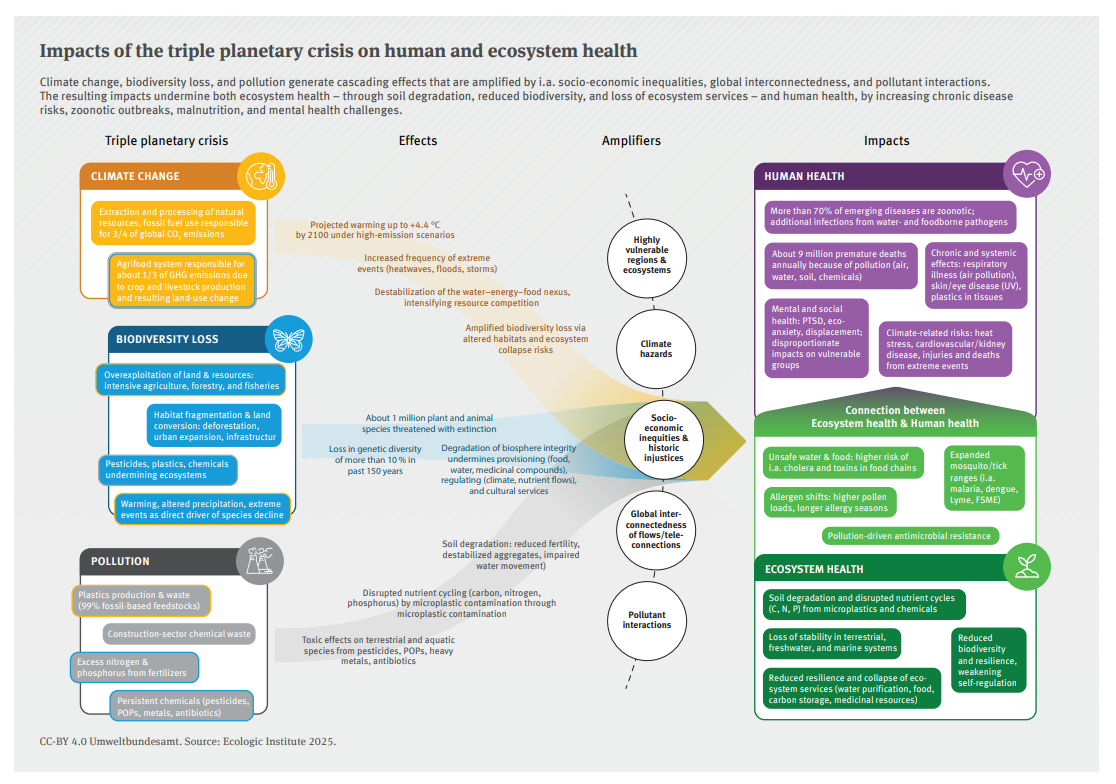
The triple planetary crisis is a systemic challenge, not three separate issues: climate change, biodiversity loss, and pollution reinforce one another through shared drivers and feedback, threatening planetary and human well-being. It is driven by fossil fuel dependence, unsustainable production and consumption, overexploitation of land and resources, and structural inequalities. The analysis concludes that the triple crisis can only be effectively addressed through systemic, cross-sectoral, and justice-oriented approaches. By linking resource governance, NbS, and transformative change, this report highlights how today’s triple crisis can be turned into an opportunity to regenerate ecosystems, reduce inequalities, and build resilient societies within planetary boundaries.
This fact sheet summarizes the information contained in the publication Burgos Cuevas et al. (2025): Moving from interconnected crises to systemic solutions. Resource efficiency, nature-based solutions, and systemic transformation as responses to the complexity of the triple planetary crisis. Interim report, Climate Change 83/2025. German Environment Agency: Dessau-Roßlau. https://doi.org/10.60810/openumwelt-8108.
This solution-oriented infographic showcases nature-based solutions (NbS) as systemic responses to the triple planetary crisis, illustrating how measures such as wetland restoration, mangrove protection or urban green infrastructure can simultaneously address climate change, biodiversity loss and pollution, while delivering co-benefits for health, resilience and livelihoods.
Pharmaceutical substances from creams and gels can enter wastewater when washed off after application. However, this can be reduced by first wiping your hands with a paper towel, disposing of it in the household waste, and only then washing your hands.
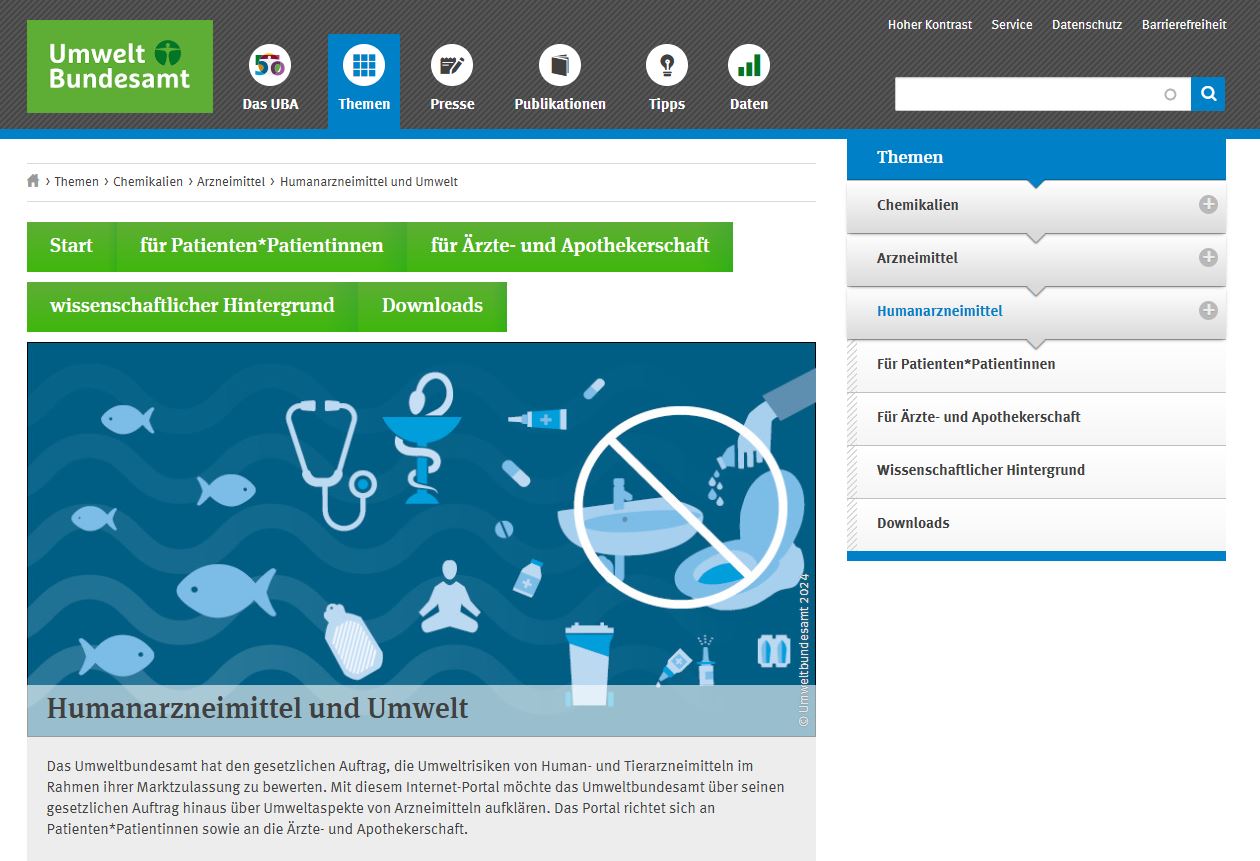
The Federal Environment Agency's online platform "Pharmaceuticals and the Environment" provides information on the environmental impact of human pharmaceuticals and gives recommendations for environmentally conscious use and disposal. The aim is to minimize the entry of pharmaceutical residues into the environment and thus protect organisms, water, and soil.
Kemper, Melanie 2025: Verbreitung von Informations- und Lehrmaterialien für einen umweltbewussten Umgang mit Humanarzneimitteln - Konzept und Plan für eine Kampagne. Ecologic Institut, Berlin. Unpublished.
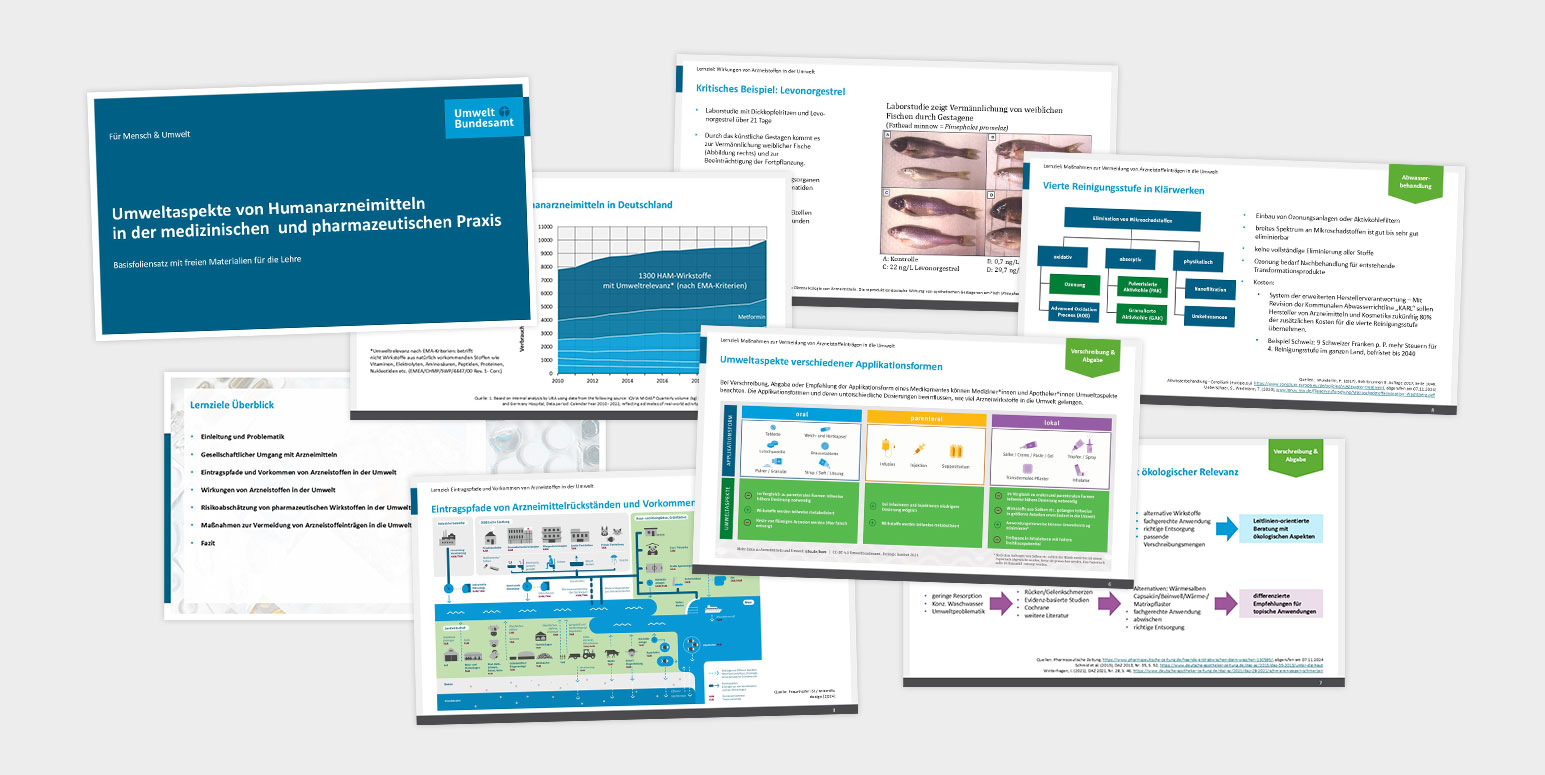
Pharmaceuticals in the environment are a growing problem. The UBA Internet portal "Human Medicinal Products and the Environment" offers freely available, scientifically proven teaching materials for medical and pharmaceutical lecturers. With the basic set of slides and the accompanying texts, the topic can be taught comprehensively and practically despite tight curricula.
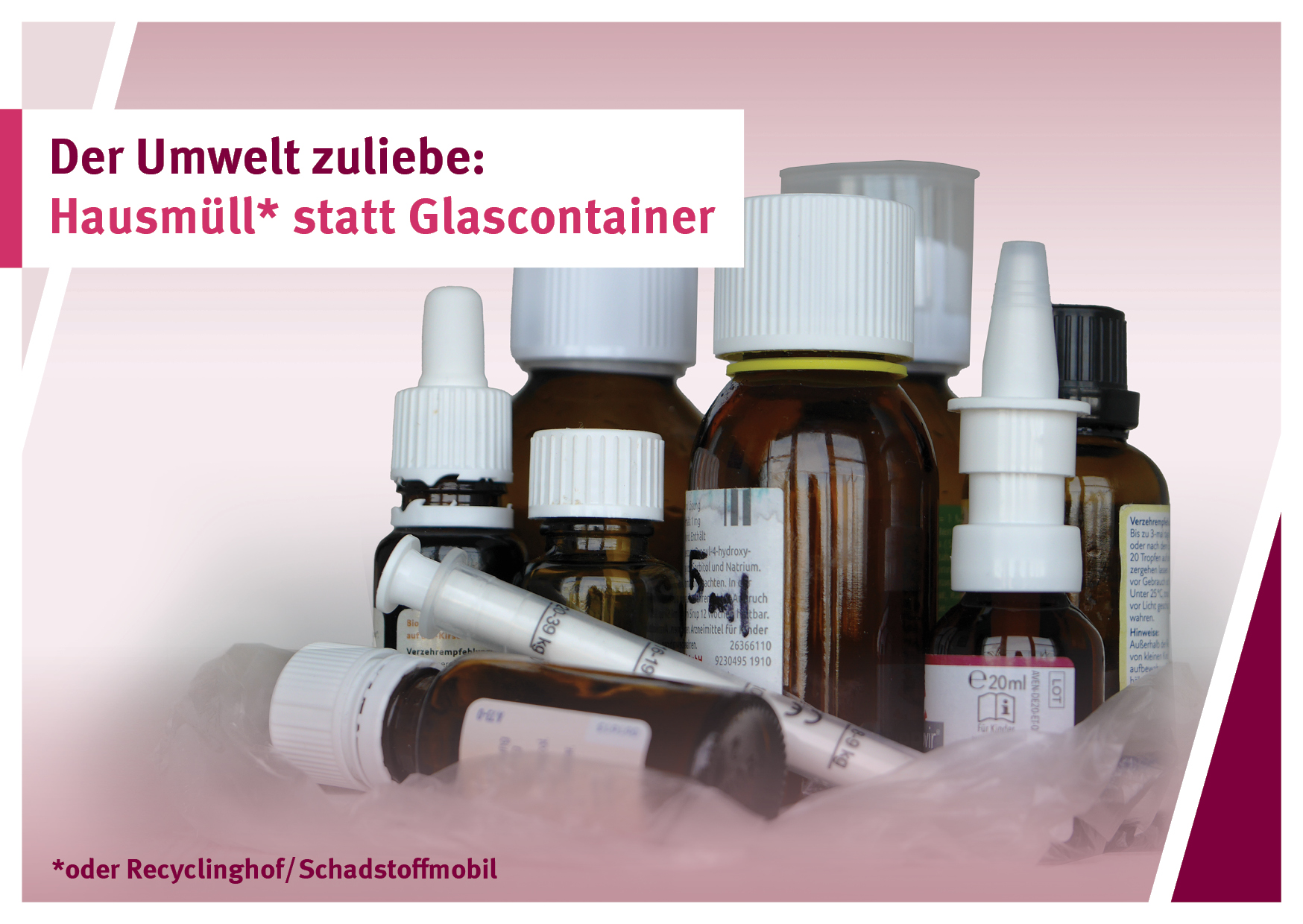
Liquid pharmaceutical leftovers are more often disposed of incorrectly in waste water than solid ones. For this reason, a German-language postcard in DIN A6 (10 x 15 cm) has been developed on this topic, which can be given to customers when liquid medicines are handed in at the pharmacy.
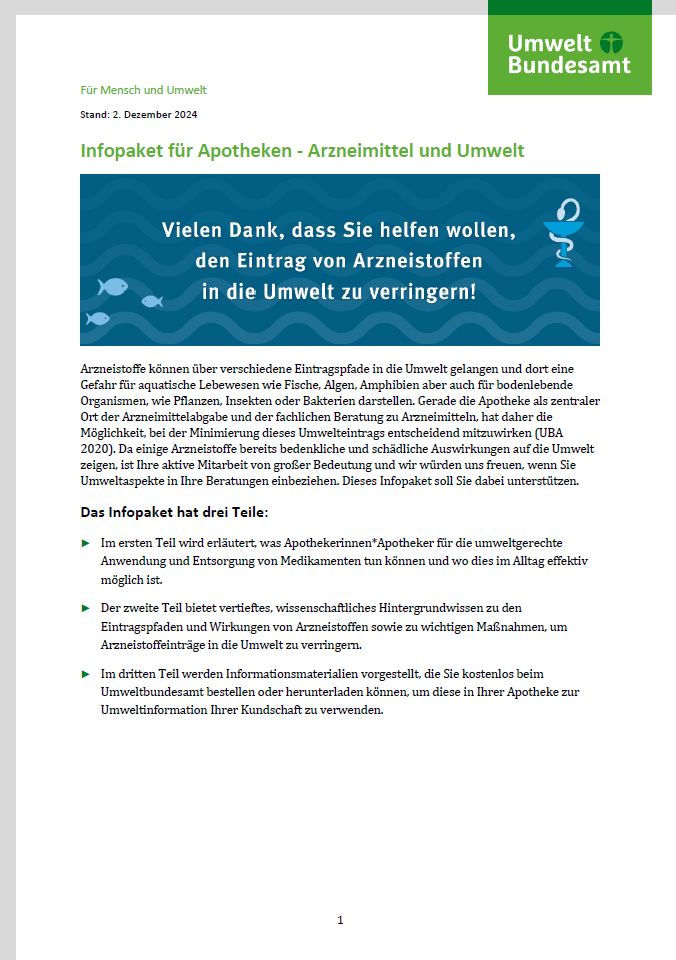
Pharmacies are an obvious place for conversation about pharmaceuticals and their effects on people and the environment, as well as the disposal of unused products. The information package for pharmacies provides pharmacy staff with in-depth background information for such discussions.