Photo by Chirag Saini on Unsplash, Cover © German Environment Agency, 2025
Moving from Interconnected Crises to Systemic Solutions
Resource efficiency, nature-based solutions, and systemic transformation as responses to the complexity of the triple planetary crisis
- Publication
- Citation
Burgos Cuevas, Natalia et al. (2025): Moving from interconnected crises to systemic solutions. Resource efficiency, nature-based solutions, and systemic transformation as responses to the complexity of the triple planetary crisis. Fact sheet. German Environment Agency: Dessau-Roßlau. https://doi.org/10.60810/openumwelt-8102.
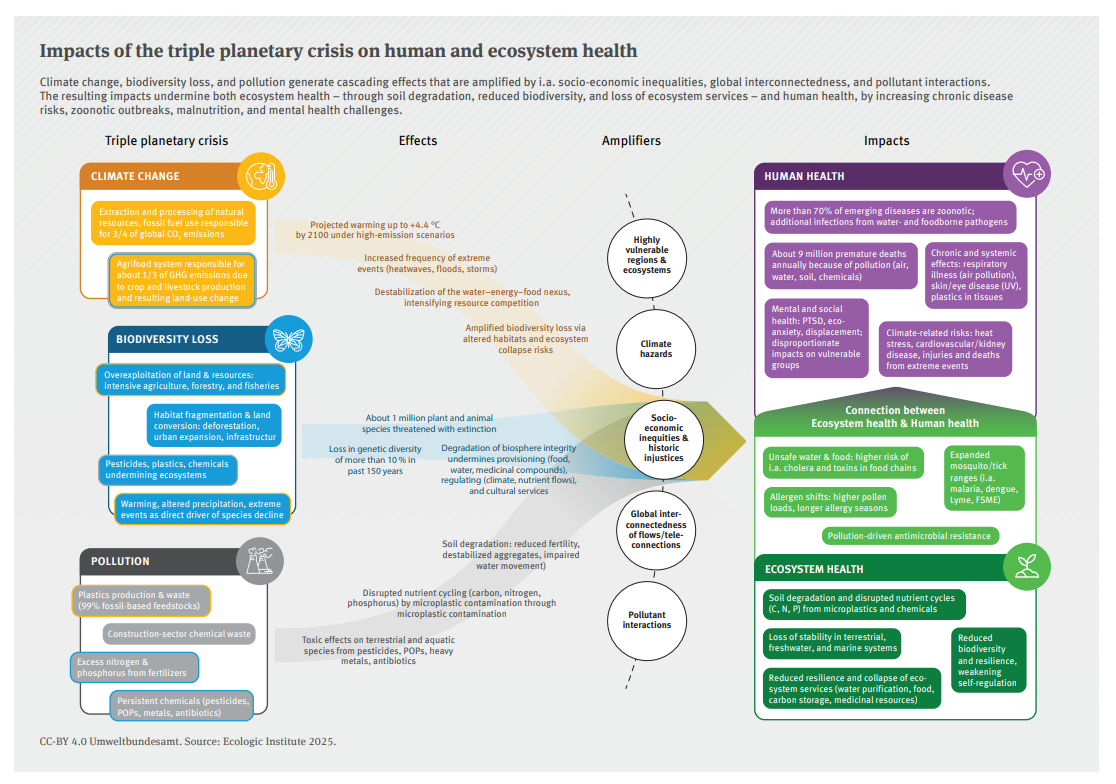
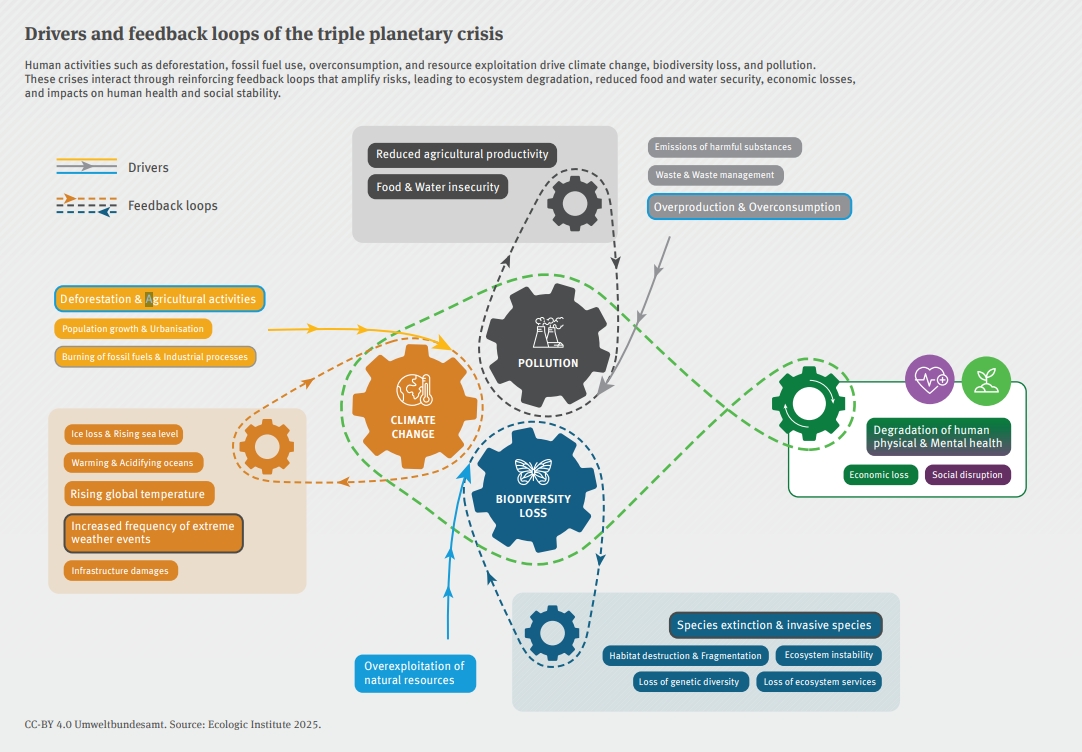
The triple planetary crisis of climate change, biodiversity loss, and pollution constitutes an interconnected system of risks, driven by unsustainable resource extraction and processing, fossil fuel dependence, and entrenched social and economic inequalities. Its impacts are distributed unequally, with Indigenous Peoples, women, youth, and countries of the Global South among the Most Affected People and Areas (MAPA), bearing the heaviest burdens while having the least influence over decisions.
Three Pathways for Systemic Solutions
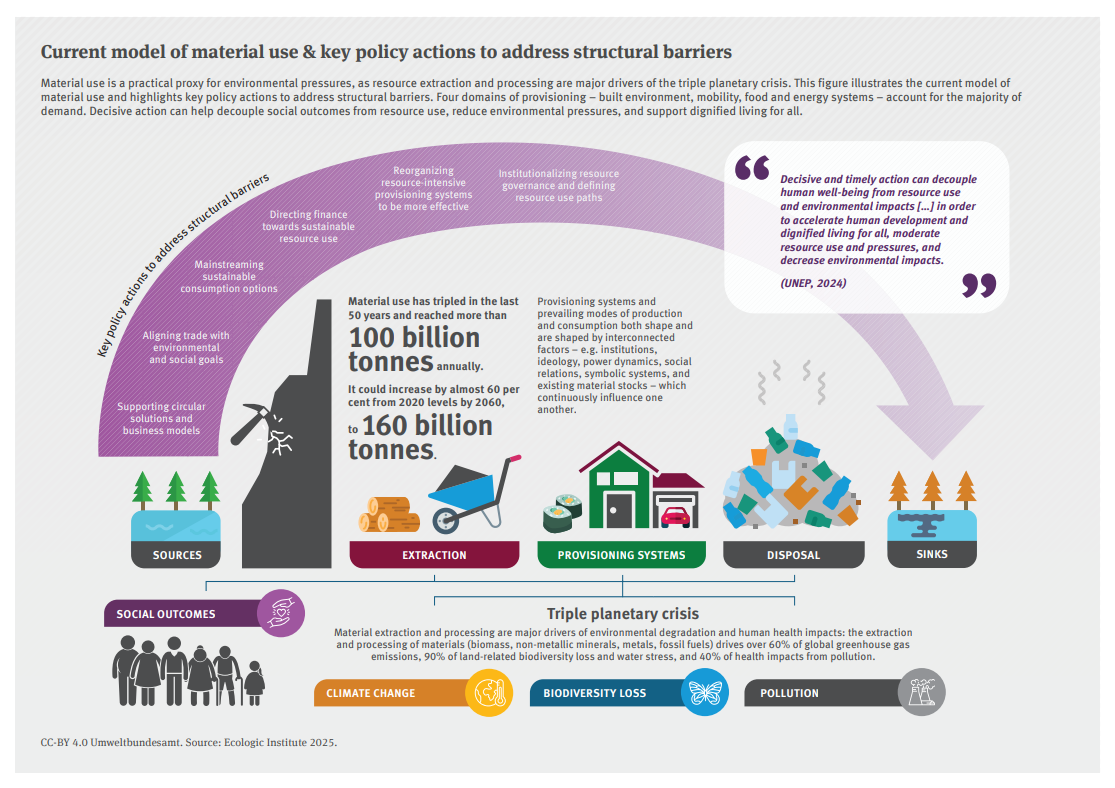
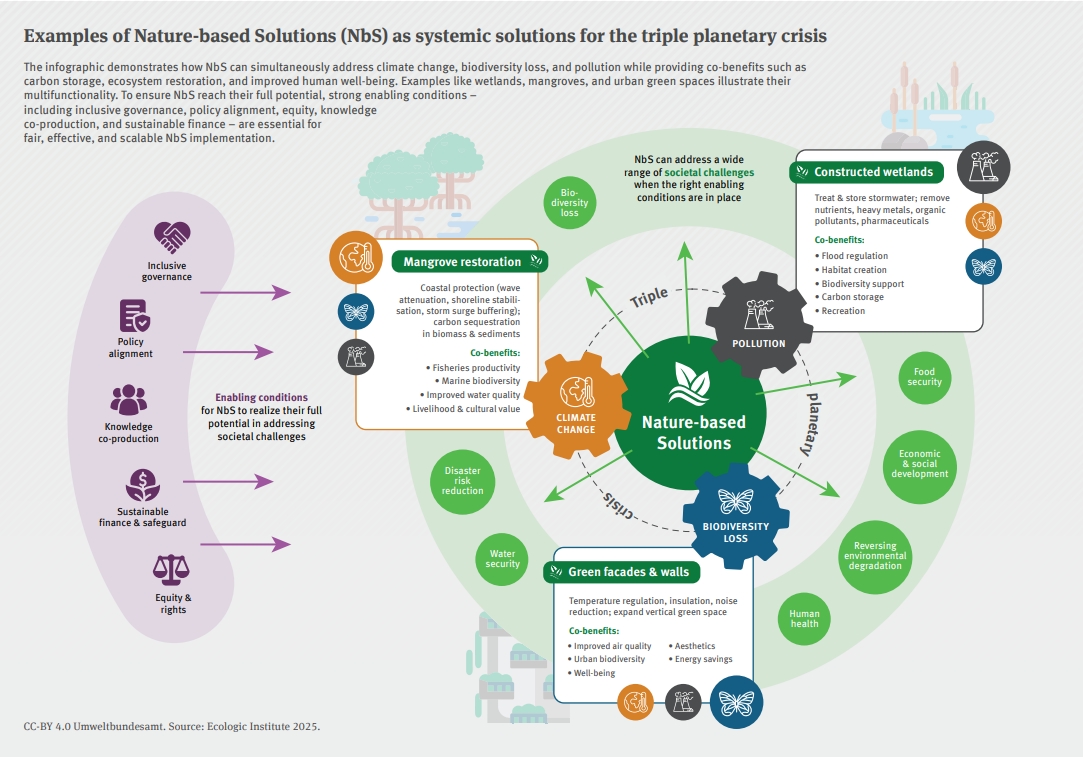
The triple planetary crisis demands responses that move beyond single-issue solutions. The analysis concludes that the triple crisis can only be effectively addressed through systemic, cross-sectoral, and justice-oriented approaches. Three interdependent pathways chart a way forward: societal metabolism and resource use to reduce pressures at the source, nature-based solutions to restore ecosystems and strengthen resilience, and systemic transformation to address root causes and embed justice in governance and values. Together, they form a mutually reinforcing strategy that links reduced material pressures, healthy ecosystems, and transformative governance into a coherent response, showing how only justice-oriented, cross-sectoral action can meet the scale and urgency of the challenge.
Contact

- Language
-
English
- Authorship
- Funding
-
German Environment Agency (UBA), Germany - Published by
-
German Environment Agency (UBA), Germany - Year
- Dimension
- 9 pp.
- DOI
- Project
- Project ID
- Keywords
-
triple planetary crisis, systemic environmental solutions, climate change and biodiversity loss, resource efficiency, nature-based solutions, planetary boundaries, environmental justice, cross-sectoral transformation, sustainable resource use, integrated environmental policyGlobal South, Small Island Developing Statessystematic literature review, systems analysis of societal metabolism, cross-sectoral policy analysis, nature-based solutions assessment, justice- and MAPA-focused governance analysis
Iwaszuk, E.; Spantzel, T.; Kroos, F.; Knoblauch, D. (2025): Integrated Approaches to Addressing the Triple Planetary Crisis: Country Best Practices. Lessons learned from Brazil, Colombia, Japan, New Zealand, Panama, Rwanda and Sweden. Policy paper. Climate Change 81/2025, German Environment Agency: Dessau-Roßlau. https://doi.org/10.60810/openumwelt-8106
Burgos Cuevas, Natalia et al. (2025): Moving from interconnected crises to systemic solutions. Resource efficiency, nature-based solutions, and systemic transformation as responses to the complexity of the triple planetary crisis. German Environment Agency: Dessau-Roßlau. https://doi.org/10.60810/openumwelt-8108.
Umweltbundesamt 2025: Drivers and feedback loops of the triple planetary crisis. Infographic.
Knoblauch, D., Felthöfer, C., Heni, Y., Burgos Cuevas, N., & Best, A. (2025). The Interconnected Challenges of Climate Change, Biodiversity Loss and Environmental Pollution: Drivers, Interdependencies and Impacts of the Triple Planetary Crisis. Interim report, Climate Change 82/2025. German Federal Agency. https://doi.org/10.60810/openumwelt-8107.
Felthöfer, C., Knoblauch, D., & Best, A. (2025). The interconnected challenges of climate change, biodiversity loss and environmental pollution: Drivers, interdependencies and impacts of the triple planetary crisis (Fact sheet). German Federal Agency. https://doi.org/10.60810/openumwelt-8070