© Grit Martinez, 2026
Blue Transformation of Mediterranean Fisheries
Between dock and data: Local knowledge strengthens the blue transition
- News
- Date
-
- Location
- Berlin, Germany
In the new Horizon Europe project SEA4FUTURE Ecologic Institute leads the social science and humanities research on integrating fishers’ knowledge and expertise into new monitoring processes of gears and defining new marine protected areas in the Mediterranean Sea. Officially launched on 1 January 2026, SEA4FUTURE has the ambition to catalyse a blue transformation of the Mediterranean seafood sector. The project addresses key challenges facing the region, including environmental degradation, overexploited fish stocks and socio-economic vulnerability of coastal communities in seven regions.
Innovation through involving fishers
SEA4FUTURE places fishers at the heart of innovation, turning them into active data collectors, co-designers of new fishing gears and co-managers of local measures. The project combines citizen science approaches – including eDNA and genomics surveys – with at-sea trials of more selective trawls and nets, as well as bycatch reduction devices for sharks, rays, sea turtles and dolphins. These technical innovations are paired with decision-support models that allow scientists, decision makers and fishers to test management scenarios together. In parallel, the project will assess and improve certification schemes and help build new markets for sustainable seafood, including products derived from invasive species.
Social science research and stakeholder involvement
Ecologic Institute leads the social science research focusing on the integration of fishers’ knowledge and expertise in new sustainable fisheries monitoring processes and implementing a stakeholder engagement strategy to foster social acceptance and support for the sustainable seafood products and practices promoted by the project. Ecologic also coordinates the development of actionable policy recommendations and building capacity for decision-makers, supporting the adoption of ecosystem-based fisheries management within the EU and beyond.
Ethnographic field research in Spain
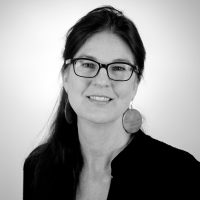
Dr Grit Martinez of Ecologic Institutes' SEA4FUTURE team recently spent time doing fieldwork in the Spanish case study while immersed in a different kind of research setting – one shaped not only by data and instruments but also by conversations on docks and the lived expertise of local fishing communities. Hosted by colleagues from a nearby marine research laboratory of the University of Aliante in Denia, the stay quickly evolved into an ethnographic field experience. The local team introduced her to the region’s fishermen’s guild, opening doors to interviews that revealed how science and practice intersect far from conference halls. Rather than formal surveys, many of the most meaningful insights emerged while observing daily routines: nets being repaired, boats unloading their catch, and fishers debating shifting tides, changing seasons or more sustainable fishing gears helping to protect juvenile fish, for example.
Changes in the Mediterranean region
Fishers spoke candidly about the transformations they have witnessed over decades – fluctuations in fish stocks, altered migration patterns, and the growing uncertainty brought by climate change and market pressures. Some described species that have become rarer, while others noted unexpected newcomers appearing in their waters. These observations, grounded in years of experience, offered a nuanced perspective that complements scientific monitoring programmes.
Openness to innovation and co-creation
Equally revealing were discussions about fishing methods. While traditional gears remain central to the local identity, many fishers showed openness to innovation, particularly when changes were framed as collaborative rather than imposed. The idea of participating as citizen scientists in SEA4FUTURE – testing new gear designs, contributing observational data and defining marine protected areas – sparked interest. Yet the conversations also highlighted a recurring message: genuine dialogue requires recognition of bottom-up knowledge. Fishers expressed a desire for EU maritime communication processes to move beyond consultation toward co-creation. They emphasised that policies resonate more strongly when local voices help define questions, not just respond to them.
Prospects for further consultation
The information captured during this first ethnographic field trip will inform SEA4Futures collaborative approaches, e.g., inform citizen science protocols, develop a stakeholder engagement strategy and policy recommendations and build capacity for decision-makers, supporting the adoption of ecosystem-based fisheries management within the EU and beyond. Further consultations will be repeated in other Mediterranean regions of SEA4FUTURE in France, Italy, Greece, Crete and Turkey.
Contact