© Ecologic Institute, 2026
Our New Resources Programme Led by Doris Knoblauch Sets Out to Tackle Resource Use and Pollution Challenges
Connecting research, policy and society to drive systemic change
- News
- Date
-
- Location
- Berlin, Germany
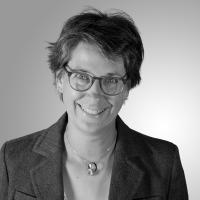
With the establishment of the new Resources Programme, Ecologic Institute further expands its work on sustainable resource use and environmental policy. Doris Knoblauch, a long-standing contributor to these fields at Ecologic Institute, will take on the role of programme director.
A new programme dedicated to the use of resources
The Resources Programme brings together interdisciplinary expertise to address one of the defining challenges of our time: how societies can reduce resource use while safeguarding prosperity and social wellbeing.
The programme will focus on advancing sustainable resource use, strengthening the circular economy, reducing pollution, and supporting systemic transitions towards more sustainable production and consumption patterns.
“My work is about using science to solve real-world problems,” says Doris Knoblauch. “And as programme director, I also try to create the best possible environment for my team to do the same.”
Researching systemic change
The programme combines expertise from the fields of economics, political science, geography, engineering, agricultural management, environmental policy, and integrated natural resource management. This interdisciplinary approach reflects the complexity of today’s environmental challenges and the need for integrated policy solutions.
Research within the programme will address several interconnected priorities, including:
- decoupling prosperity from resource use,
- making the circular economy truly circular,
- reducing pollution, including plastic pollution,
- involving citizens more actively in research through citizen science,
- supporting a sustainable bioeconomy,
- and fostering sustainable food systems and food environments that support long-term environmental and social wellbeing.
A central theme of the programme is the need to move beyond narrow or overly simplistic approaches to sustainability. In the field of plastics, for example, the programme highlights the limitations of relying solely on recycling or individual consumer behaviour. Instead, it emphasises the importance of systemic change across production, consumption and governance structures. The programme applies a similar systems perspective to food systems, recognising that sustainable diets depend not only on individual choices but also on the broader food environments, infrastructures, and policy frameworks that shape them.
The programme also aims to strengthen public engagement in sustainability transitions and contribute research that supports practical policymaking at European and international levels.
Building a Resource-conscious future
For Doris, Ecologic Institute offers a unique environment for this work.
“Ecologic Institute is a place where people can really develop their strengths. It combines individual expertise with strong teamwork. It’s intellectually stimulating, never boring, and people here are deeply motivated by the belief that our work can make a real difference.”
Her vision for the programme reflects a broader understanding of environmental governance. Rather than treating environmental issues as one policy area among many, the programme approaches them as the foundation of economic and social stability.
“The environment should not be treated as just one policy sector,” Doris says. “It is the foundation of everything: our economy, our health, our societies.”
At the core of the new Resources Programme is a simple but urgent ambition: helping societies live well within planetary boundaries.
Ecologic Institute warmly welcomes Doris Knoblauch in her new role as Director of the Resources Programme and looks forward to further strengthening its work on sustainable resource use, circular economy and systemic environmental change together with her team.
Watch the video, where she shares more about the programme and her vision for its future.
Contact