This guide shows how municipalities can systematically identify, assess and compare the costs and NbS. It takes users through a stepwise process on how to go about assessing costs and benefits. Documentation tables and guiding questions help apply each step to a specific project.
The European Climate Neutrality Observatory (ECNO) has published the second 2026 edition of its Clean Industrial Transition Monitor Quarterly Bulletin. The publication tracks economic developments affecting European industry alongside the implementation and expected impact of key initiatives under the EU’s Clean Industrial Deal.
Nature-based climate adaptation can only be effective if it reaches the people it is meant to serve. Inclusive public communication plays a key role in this process: it helps ensure that nature-based solutions are not only planned and implemented but also understood, accepted and shaped by a wide range of communities. This guide, published by the German Environment Agency, provides practical guidance on how municipalities can design inclusive communication strategies for nature-based climate adaptation.
Nature-based climate adaptation unfolds not only in urban space but also in public perception. Measures such as urban greening, water retention or heat action plans require clear and targeted communication in order to be understood, accepted and supported. A new short guide published by the German Environment Agency outlines how municipalities can use press work strategically to communicate nature-based climate adaptation in a clear and structured way.
What do shaded paths, green roofs and restored waterways have in common? In many cities, they are already part of the urban landscape – yet often remain unnoticed. This guide, published by the German Environment Agency, focuses on these existing measures. It explains how municipalities can use city maps to make nature-based climate adaptation visible, place it in context and communicate it in a transparent and accessible way.
Complementing the policy guidance "Mainstreaming climate and environmental objectives in EU funding programmes in the post-2027 period," this illustrated brochure showcases diverse examples of nature-based solutions (NbS) across water, urban, transport, agriculture, and marine sectors.
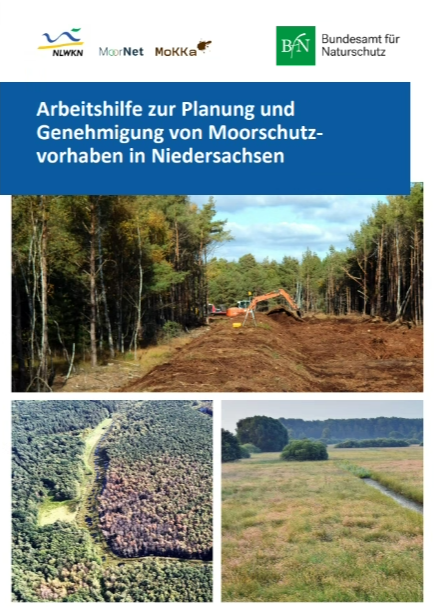
Rewetting peatlands – but how? This new guide provides an overview of the key steps involved in planning, financing and authorising peatland protection projects in Lower Saxony, as well as the associated measures. Commissioned by the Federal Agency for Nature Conservation, the brochure features contributions from Felix Dengler and Ulf Stein on behalf of the Ecologic Institute.
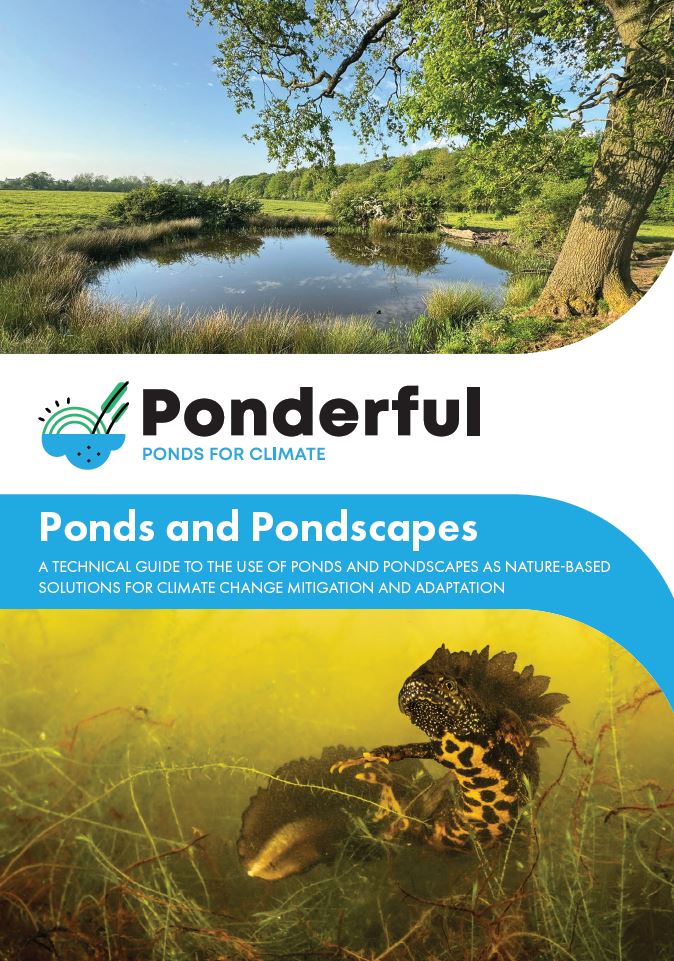
The technical handbook of the PONDERFUL project shows how ponds and pond landscapes can be used as Nature-Based Solutions (NBS) to tackle societal challenges such as climate change, biodiversity loss and water scarcity. The PONDERFUL handbook provides practice-oriented guidelines for dealing with these valuable ecosystems and shows how ponds can be integrated into existing landscapes so that nature and people benefit equally.
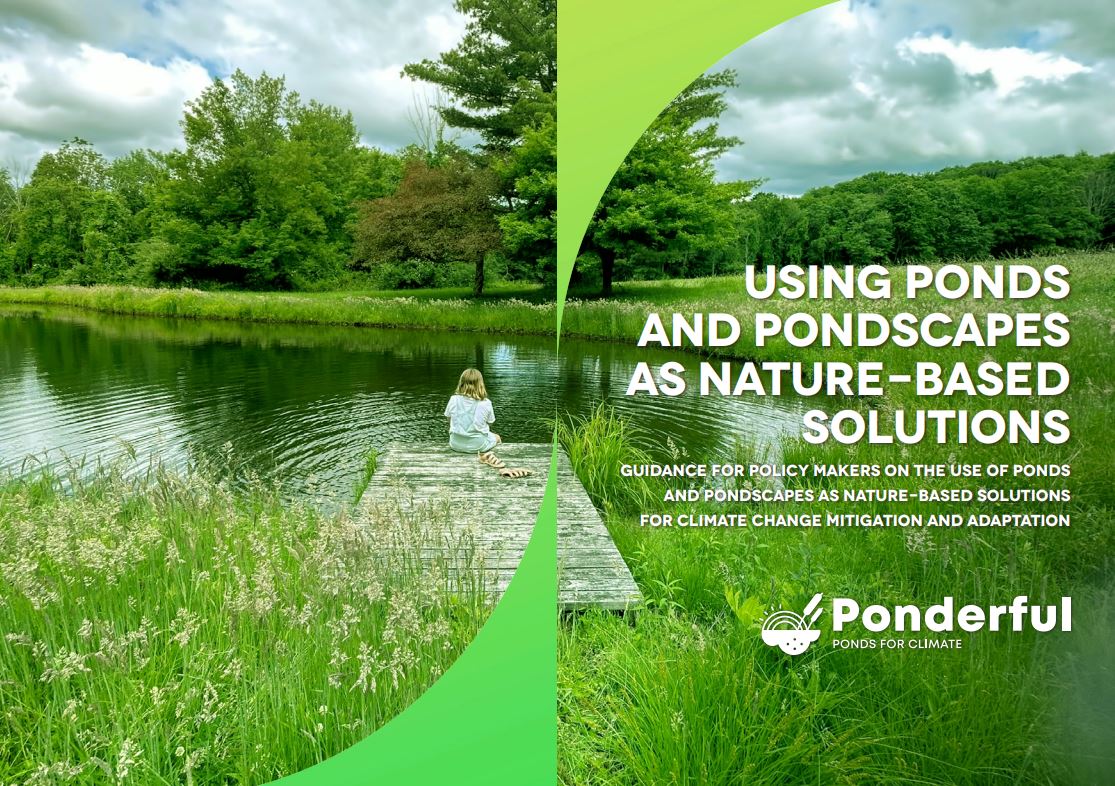
The recently published guide "Using ponds and pondscapes as nature-based solutions" is a practical guide for policy makers. The guide provides detailed recommendations on using ponds and pondscapes as nature-based solutions, in particular to adapt to climate change and promote biodiversity. In addition to the policy dimension, it contains practical suggestions for monitoring, management and restoration of ponds.
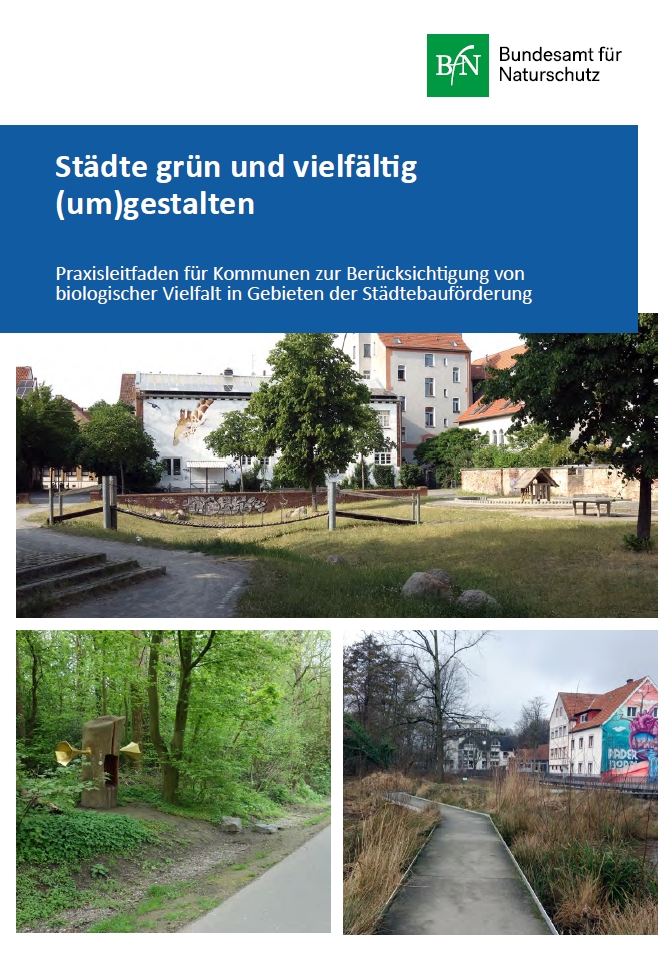
The practical guidance "Green and diverse urban (re)design" shows how local authorities can implement concrete measures to promote ecological diversity in urban areas. From the creation of new green spaces and the naturalization of bodies of water to the greening of roofs and façades, the guide offers practical recommendations and illustrative examples.
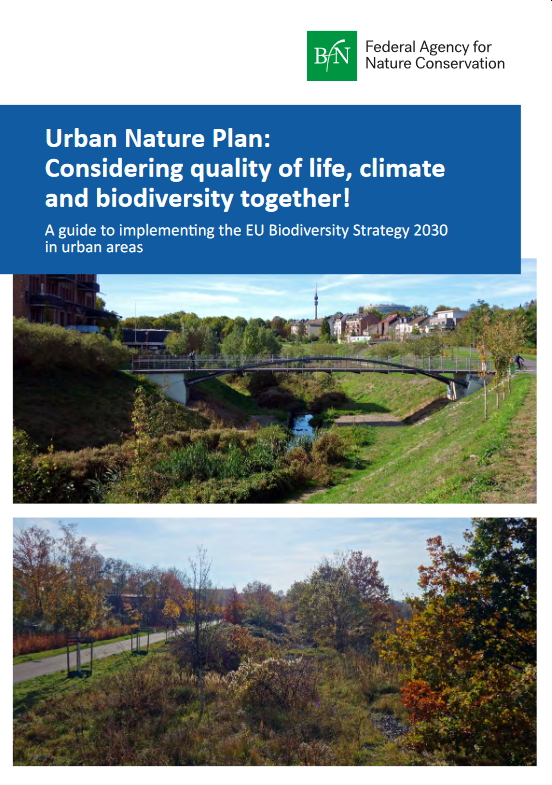
The EU Biodiversity Strategy 2030 calls on cities to promote urban nature in the form of "Urban Nature Plans" for the protection of biodiversity, for climate protection and adaptation and for the quality of life in cities, and to set ambitious targets for this. This brochure transfers the approach of urban nature plans to the German context and offers concrete tips for implementation. This includes a checklist to determine the extent to which a municipality's existing plans already correspond to urban nature plans.
Due to changing climatic conditions, the state government of Baden-Württemberg committed to update its adaptation strategy in 2023. This compact information highlights the measures from the state strategy in which municipalities have an important role to play. It is intended to help them define and implement, or work towards implementing, the measures necessary for their local conditions and risks. It provides a compact overview for municipalities on their way to adapt to the consequences of climate change.
Ecologic Institute provided editorial and graphical support for the update of the adaptation strategy in Baden-Württemberg. Using graphical elements and a well-designed reader guidance, the reading orientation was improved and the visual quality of the document was increased. In addition to the graphic design, Ecologic Institute provided support for the drafting of several chapters, e.g. on climate change impacts, summarized sectoral adaptation challenges and developed an abridged version of the update of the adaptation strategy.
The adaptation strategy provides the framework for the adaptation activities of the state of Baden-Württemberg and serves as a basis for implementation, especially for administration, municipalities and the economy. Due to changing climatic conditions, the state government of Baden-Württemberg committed to update its adaptation strategy in 2023. This short version summarizes the contents of the adaptation strategy.
The brochure summarizes all the recommendations for action that were developed as part of the STErn project. Objectives and indicators are outlined for each key topic of the STErn project.