This paper examines the penalty provisions in the draft Romanian implementing law proposed by the Romanian government on 22 July 2025. It briefly considers the draft's legislative status, assesses its compliance with EU-MER, and compares it with good practice in Denmark and with Italy's draft law.
This paper examines the penalty provisions in the draft Czech implementing law submitted on 11 November 2025 by the Minister for the Environment to the Prime Minister. It briefly considers the draft's legislative status in light of the political situation following the 3–4 October general election, assesses its compliance with the EU-MER, and compares it with good practice in Denmark and with Italy's draft law.
With the European Green Deal, the European Climate Law, and the Governance Regulation the EU has built a strong governance framework for climate policy-making. These policies have been effective in linking national and EU-wide actions and enhancing a harmonized approach across EU Member States. They legally enshrine the binding goal of EU-wide climate neutrality by 2050 and embed five-year national policy planning cycles in line with the UNFCCC Global Stocktake.
This UNITED project business brief discusses the legal framework and environmental implications of a project in the Greek Aegean combining aquaculture and tourism, including laws and regulations, particularly in relation to marine conservation, permitting and marine spatial planning.
This UNITED project business brief discusses the legal framework and environmental impacts of a project in the German North Sea that combines offshore wind energy and aquaculture, including the laws and regulations that apply to offshore installations in the German Exclusive Economic Zone (EEZ).
This Business Brief of the UNITED project examines the legal and environmental aspects of a project that successfully combines offshore wind energy production with innovative tourism activities.
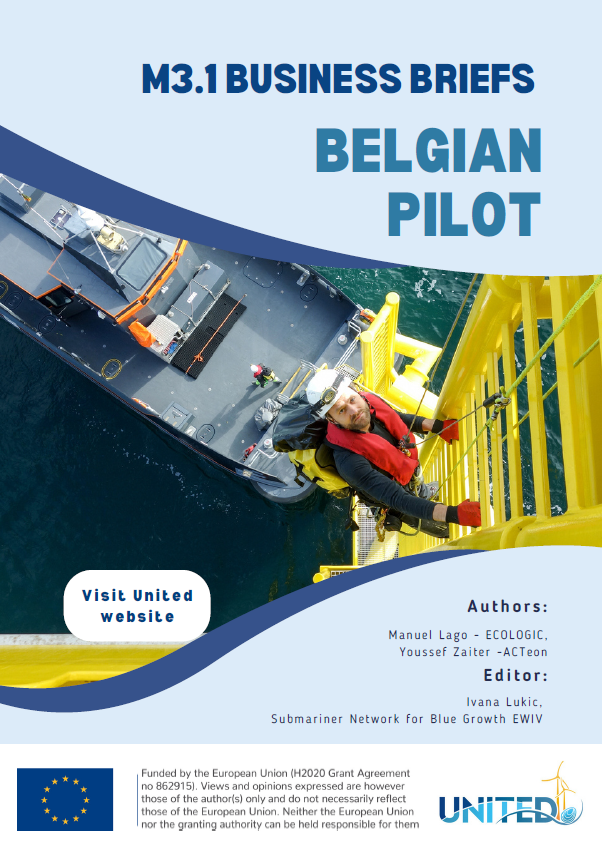
This UNITED project business brief examines the legal and environmental aspects of a Belgian project using offshore wind farms in the North Sea for the cultivation of flat oysters and seaweed. Particular attention is paid to environmental benefits, such as improved water quality and biodiversity, as well as potential challenges, including permitting procedures.
Households across Germany felt the weight of 2022's energy crisis, grappling with a dramatic increase in energy prices. Overall energy costs in Germany surged by 31% in 2022 compared to the previous year. To combat the adverse impacts of the 2022 energy crisis, Germany passed three major relief packages in 2022. This country briefing paper describes Germany’s policy response to the energy crisis of 2022 and provides a microsimulation-based summary of the distributional effects of energy price shocks on German households.
This case study shows that to achieve the digitalization of our energy systems and reach climate neutrality by 2050, policymakers must take a truly transformative approach and simultaneously address the core challenges of innovation, infrastructure, integration, and social acceptance. Future research should also include investment needs and the costs that relate to a smart meter rollout, e.g. the digitalization of our energy networks and the extension of supporting infrastructures.
The Ecologic Institute undertook a comprehensive country study for Germany focusing on the integration of species protection rules, specifically within agricultural sectors, under the Birds and Habitats Directives. Engaging with over 20 national and regional experts, the study probed the implications of Article 12 and 13 of the Habitats Directive (HD) and Article 5 of the Birds Directive (BD), focusing on how thoroughly the regulations are transposed into national law, to reveal what efforts are being made to provide information about them to farmers and enforce them and to evaluate assessment and authorisation procedures.
In light of current experiences in energy markets, Western democracies, and the EU in particular, are exploring new supply chains and strategies to reduce their raw material dependence on China. The findings presented here by the authors of this study provide an overview of the main options that the EU can currently use to counter the pressures of growing dependencies. This study discusses some positive examples of feasible circular approaches that aim to achieve savings in the use of rare earths.
The case study provides an overview of the Alaskan marine Arctic environment in terms of: 1) the state and status of its ecosystems and their biodiversity; 2) the drivers and associated pressures that impact marine ecosystem health, as well as 3) the policies in place to protect the marine environment, in particular through marine protected areas.
This report contains one of six case studies of the ArkMPA, including five on marine policies in states bordering the Arctic Ocean, and one overarching regional report. The case study provides an overview of the Canadian marine Arctic environment in terms of: 1) the state and status of its ecosystems and their biodiversity; 2) the drivers and associated pressures that impact marine ecosystem health, as well as 3) the policies in place to protect the marine environment, in particular through marine protected areas.
The Ecologic Institute undertook comprehensive country studies for Germany and Austria focusing on the integration of species protection rules, specifically within the forestry sector, under the Birds and Habitats Directives. The country profiles are focusing on how thoroughly the regulations are transposed into national law, to reveal what efforts are being made to provide information about them to foresters and enforce them and to evaluate assessment and authorization procedures.
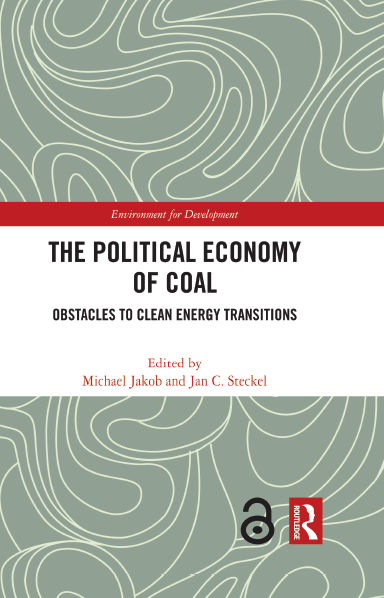
This edited volume provides an overview of the political economy of coal in diverse country contexts. It contains 15 country case studies that have been conducted by renowned researchers along a harmonized framework. Countries studied include Australia, Bulgaria, Chile, China, Colombia, Germany, India, Indonesia, Kenya, the Philippines, South Africa, the UK, the US, Turkey and Vietnam.