Regions play a central role in achieving the substantial acceleration of renewable energy deployment required to reach the 2030 greenhouse gas reduction targets. The report "The socio-economic impacts of renewable energy in EU regions: Strengthening local benefits" examines the socio-economic effects of renewable energy deployment at the regional level in the EU and subsequently identifies factors that are conducive to an equitable energy transition. As part of the report, this case study by Ecologic Institute analyzes the role of renewable energy and its socio-economic imparts in the North German region Mecklenburg-Western Pomerania. The analysis was done for the the Greens/European Free Alliance.
Bueb, Benedict, Tröltzsch, Jenny, Reichwein, David, Oldenburg, Clara, Favero, Fausto (2021): Case Studies of Sustainable Adaptation Pathways. Appendix to the Paper "Towards Sustainable Adaptation Pathways: A concept for integrative actions to achieve the 2030 Agenda, Paris Agreement and Sendai Framework". Climate Change | 48/2021. Dessau-Roßlau: Umweltbundesamt
This study, co-authored by Raffaele Piria, looks at energy policy and energy industry developments and debates on hydrogen in Canada and highlights potential for cooperation with Germany. There is a broad consensus that Germany will need to import significant quantities of sustainably produced hydrogen or derived products in the long term in order to meet its climate targets without overwhelming acceptance for domestic power generation.
This study, co-authored by Raffaele Piria, analyzes energy industry and policy developments on hydrogen in the U.S. and develops an agenda for cooperation between Germany and the U.S. in this area. In addition to the foreign policy discourse, there are many opportunities for cooperation between Germany and the U.S. in the field of hydrogen.
The capacity of multifunctional natural areas to simultaneously address user preferences, answer municipal needs, and fulfil wider political obligations is far from being fully realised. The present article responds to this situation and highlights the Q-method as an effective approach for assessing and integrating user viewpoints on urban GBI and its benefits in urban decision-making and planning processes.
This case study, prepared by Ecologic Institute and published by World Resources Institute (WRI) describes the status quo and relevant recent developments at the EU and national levels on long-term climate strategies, detailing relevant insights on legal obligations, specific features, existing challenges, and potential future processes. The case study, written by Ecologic Institute's Matthias Duwe and Ewa Iwaszuk, is available for download.
Science is believed to provide the most objective basis for effective decision-making, though it is rarely implemented in environmental management. Here, the authors reflect on the results of a regional workshop aimed at exploring the knowledge and use of scientific evidence by environmental managers in an ecologically diverse region in southern Spain: Andalusia.
This case-study paper examines future scenarios for car sharing in Germany, analysing drivers and impacts. Enabled by disruptive technological changes, car sharing is an example of a "product as a service" and becoming an increasingly viable alternative to the private ownership of cars. By intensifying the use of vehicles, car sharing has the potential to provide mobility using fewer physical and energy resources.
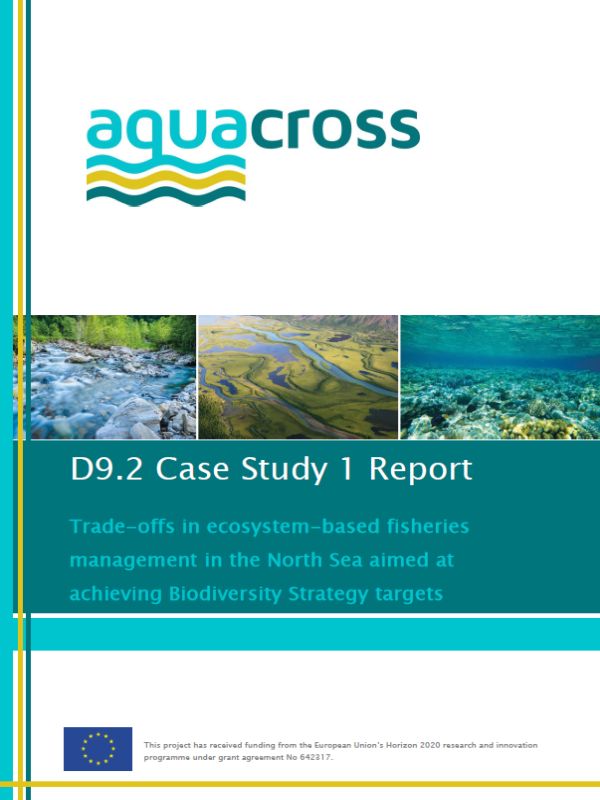
Over the past three years, the AQUACROSS Assessment Framework was developed, tested, and applied in eight case studies across Europe to solve local biodiversity challenges. Finally, results from each Case Study were published in a 30-page case study report and 3-page executive summary report. The case study is available for download.
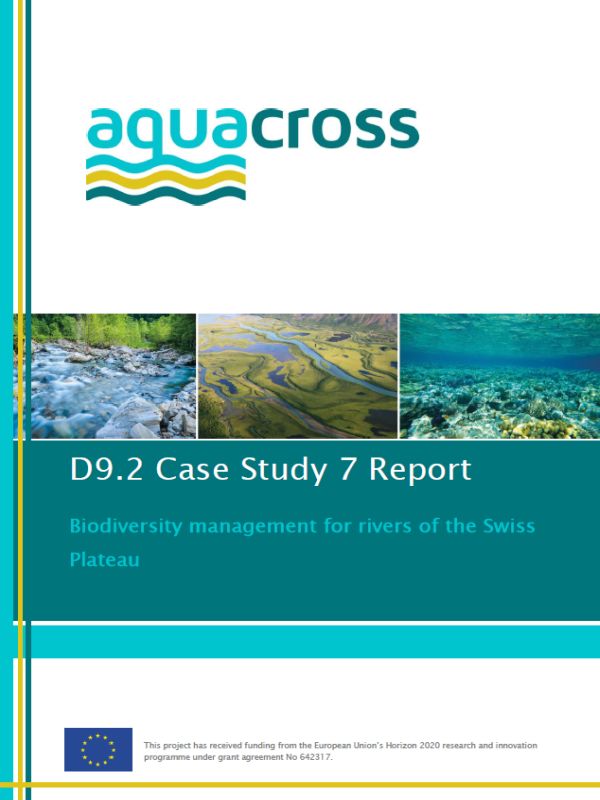
Freshwater ecosystems in the Swiss plateau are threatened by multiple stressors that deteriorate water quality and hydromorphology. To restore these ecosystems and stop the biodiversity decline, multiple management measures will be implemented over the next decades. We propose methods for a spatial and temporal prioritisation to coordinate measures from different sectors and maximise their effectiveness while considering other societal needs. The case study is available for download.
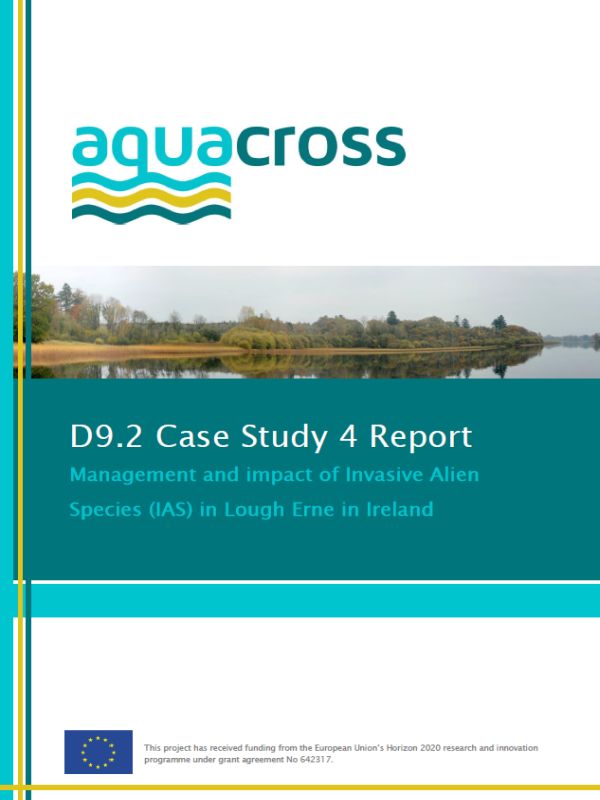
Lough Erne sustains multiple competing activities, each with different demands from the system in terms of ecosystem services and physical resources. It is a heavily modified water body, containing a range of non-native Invasive Alien Species (IAS) are considered a threat to Lough Erne biodiversity and also negatively affect the society that surrounds it. In this report, we apply the AQUACROSS Assessment Framework to understand this challenge and identify and assess ecosystem-based management solutions to the challenge of the IAS Nutall’s pond weed. The case study is available for download.
This case-study paper focuses on concrete recycling in France as a means of understanding circular-economy transitions in the building-materials sector. The EU, including France, produces large volumes of construction and demolition waste (CDW) per year and aims to increase the re-use of these materials, reducing landfilling and negative environmental impacts. Recycling concrete is seen as a way to contribute to these objectives by ensuring that a portion of this waste is turned into a product with value. Currently, France does not recycle CDW as much as some other Member States. This case study paper carries out a scenario analysis comparing two future scenarios for 2030, providing insights into important environmental and economic impacts of an increased concrete recycling rate in France.
Though the Ecosystem Service (ESS) approach is considered promising for integrated ecosystem management, its operationalisation is hampered by the lack of agreed evaluation instruments. To demonstratethe suitability of a structured ESS evaluation, the authors, among them Ecologic Institute's Dr. Manuel Lago and Gerardo Anzaldúa, conducted a case study estimating the impact of therestoration of the Emscher River and its tributaries on the provision, use and benefit of ESS.
The objective of this case study is to apply the AQUACROSS Assessment Framework (D3.2) approach to study the Faial-Pico Channel MPA. By doing so, the overarching aim is to understand how applying the Assessment Framework and therefore the concept of Ecosystem Based Management (EBM) can lead to new and alternative management approaches for the improved protection and preservation of aquatic biodiversity.
How have stakeholders and citizens participated in the development, implementation and monitoring of regional bioeconomy strategies? How has the involvement of stakeholders and citizens affected the strategies' development, implementation and monitoring? What are good practice examples of stakeholder and citizen participation in national and regional bioeconomy strategies? These and other questions are addressed in this report on regional bioeconomy strategies across Europe, focused on four regional case studies: Scotland, South-West Netherlands, Saxony-Anhalt and Veneto. Ecologic Institute was tasked with researching the Regional Innovation Strategy (RIS) in Saxony-Anhalt (Germany). The report is available for download.