In light of recent experiences with supply shortages, Western democracies, and the EU in particular, are exploring new supply chains and strategies to reduce their dependence on third-country imports. Ecologic Institute provided an overview of possible options that the EU can currently use to counter growing dependence. Using a case study on rare earths from China, the focus was particularly on the possible contribution of the circular economy to security of raw material supply.
In March 2022, at the resumed fifth meeting of the United Nations Environment Assembly, UN Member States adopted the historic decision to start negotiating a global treaty to combat plastic pollution. As national delegations and relevant stakeholders in Asia start preparing for the upcoming negotiations, this report by Linda Mederake and Doris Knoblauch (both Ecologic Institute), aims to provide an analysis of the region’s opportunities to end single-use plastics (SUPs) pollution through the development of this new global treaty.
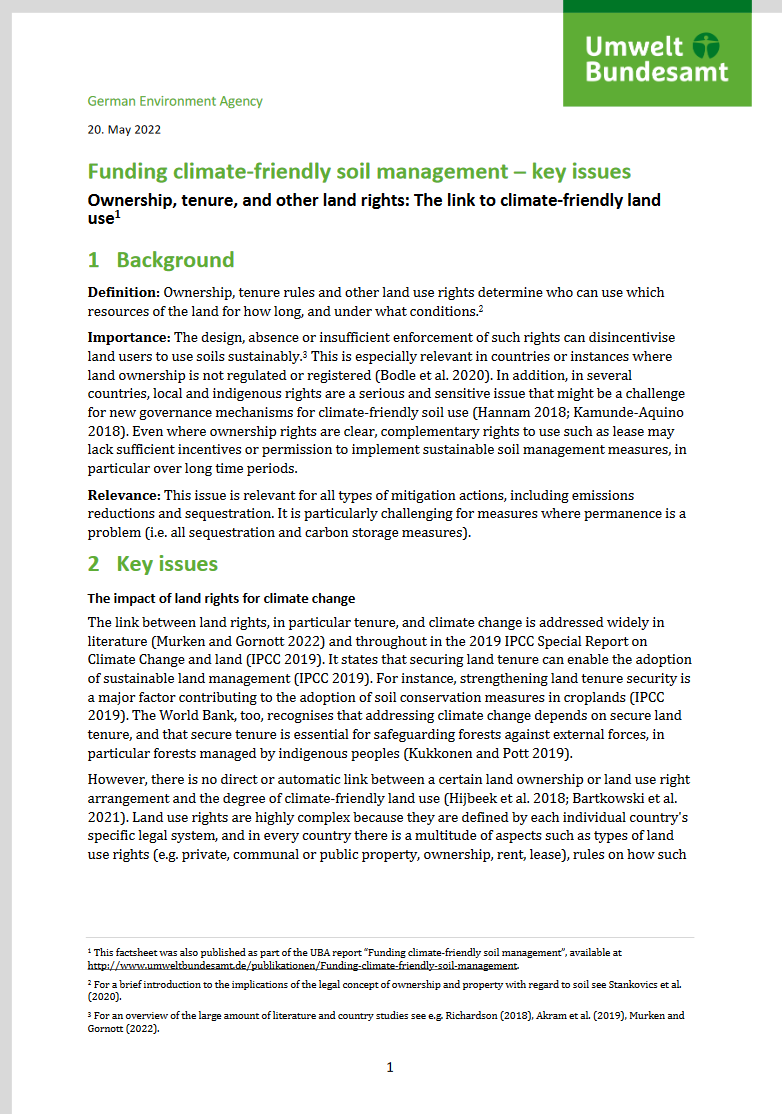
McDonald, Hugh et al. 2022: Funding climate-friendly soil management – key issues. Ex ante vs. ex post crediting. Factsheet. German Environment Agency: Dessau-Roßlau.
This info film shows in seven minutes how to use the Clearingstelle EEG|KWKG's database. How to make a request, what types of procedures there are and how a procedure is carried out at the Clearingstelle EEG|KWKG. The film was produced by Ecologic Institute.
This discussion paper focuses on the potential for political intervention to promote regionalization (in the interests of sustainability) in the most effective way possible. It is part of the work of the research project "Socio-ecological Transformation of the Food System" (acronym STErn) carried out on behalf of UBA/BMU.
The priorities of the German chairmanship of the Helsinki Commission (HELCOM) from 2020 to 2022 included strengthened ocean governance in the Baltic Sea region, updating the Baltic Sea Action Plan and measures on biodiversity, climate, eutrophication, pollutants, ammunition dumps, underwater noise and marine litter. The ten-year Baltic Sea Action Plan (BSAP), which was adopted by the environment ministers of the Baltic Sea states and the European Union in Lübeck in 2021, provides for around 200 measures. Specific programs and strategies complement these measures. The goal: a healthy and sustainably used Baltic Sea. This flyer, conceived and designed by Ecologic Institute, provides an overview of the Baltic Sea Action Plan and the work of the Helsinki Commission.