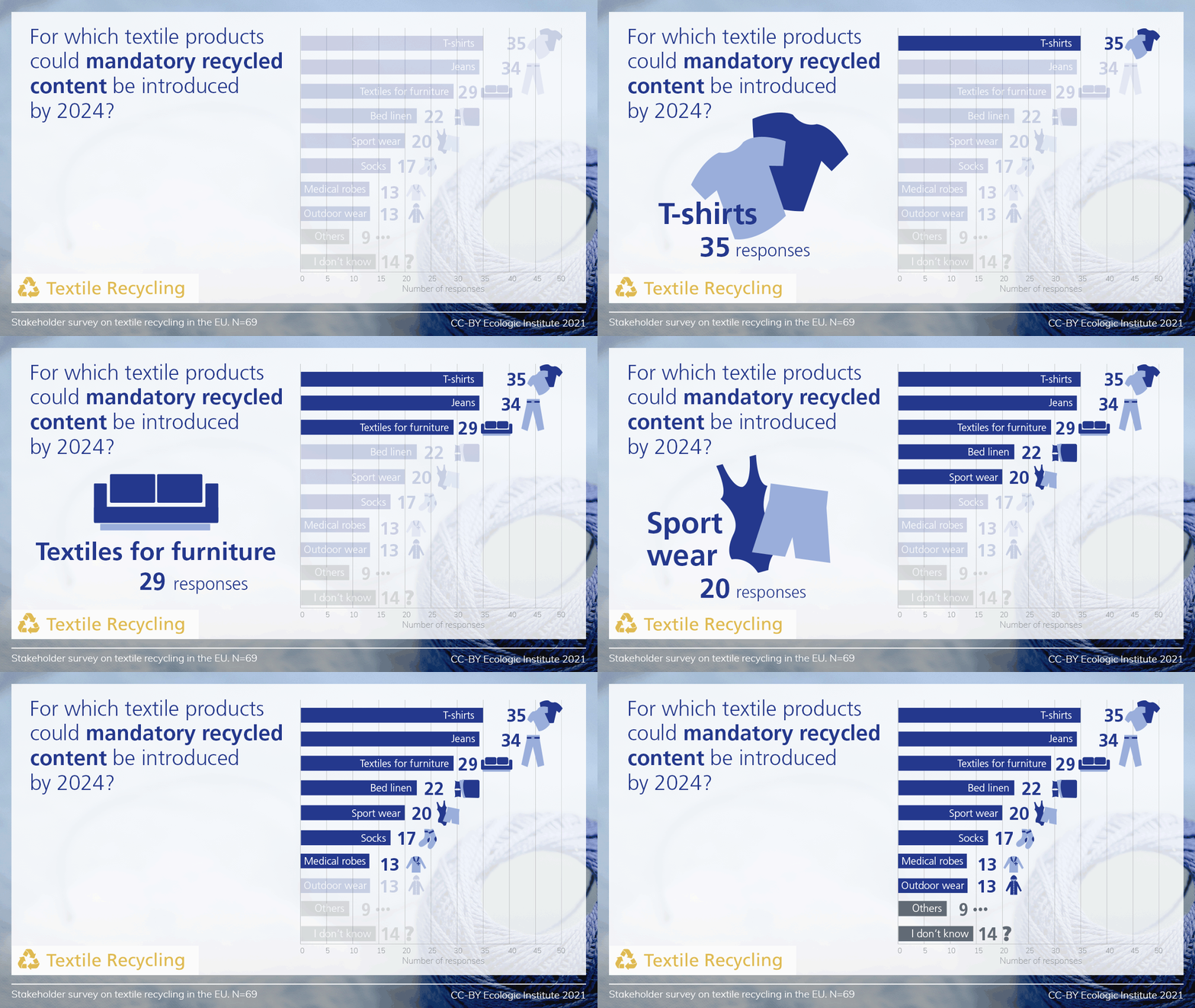
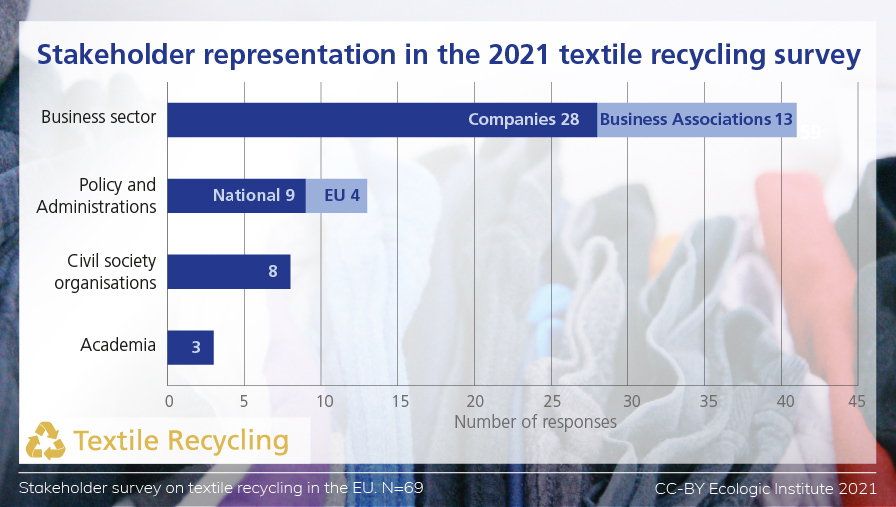
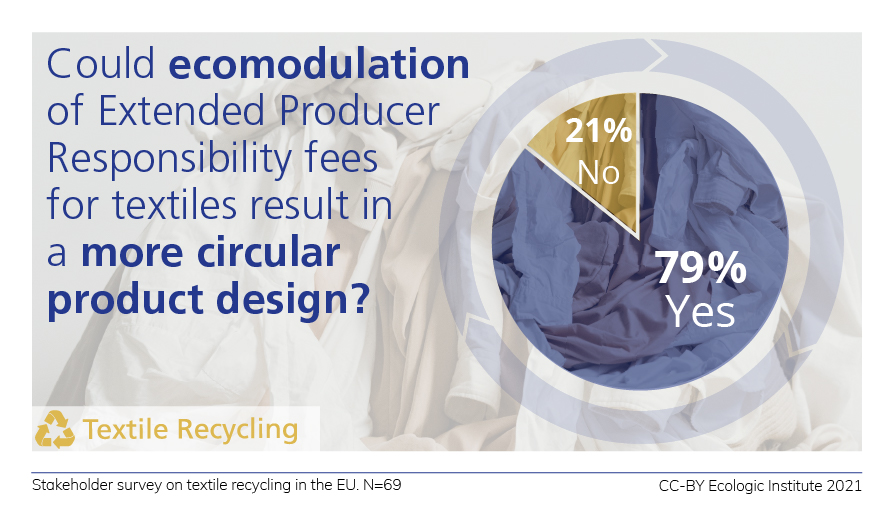
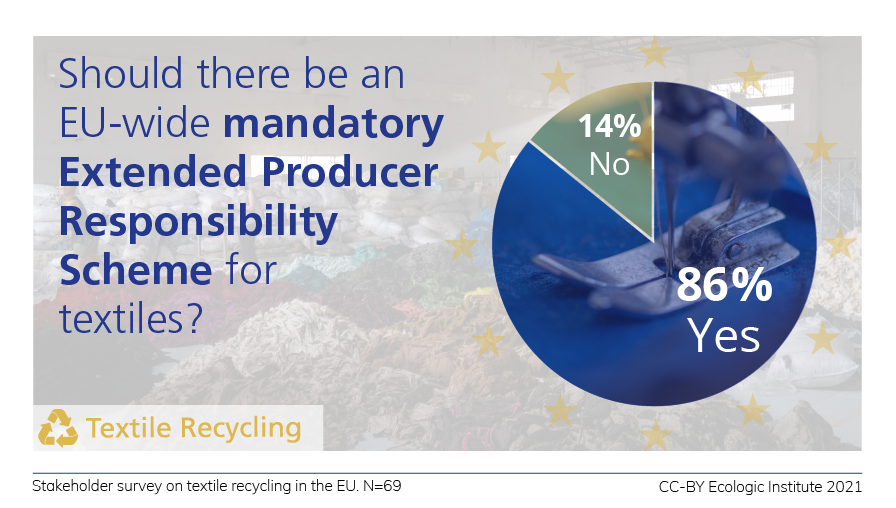
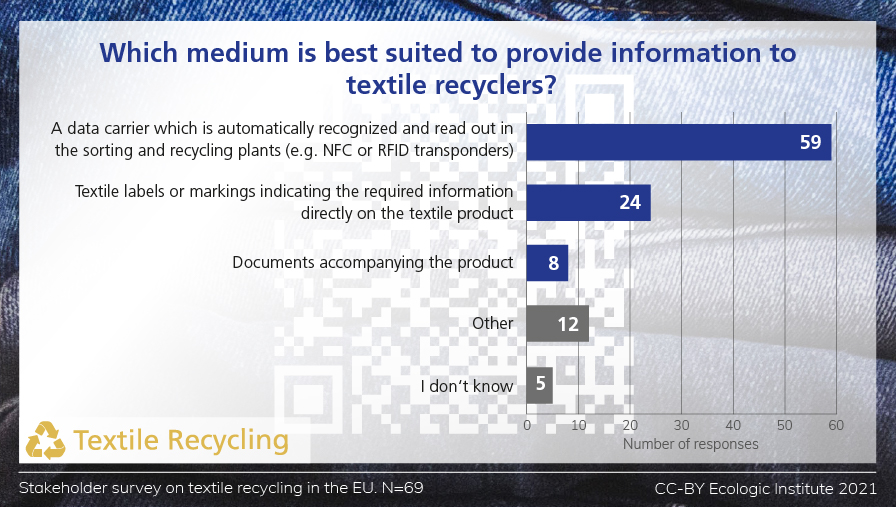
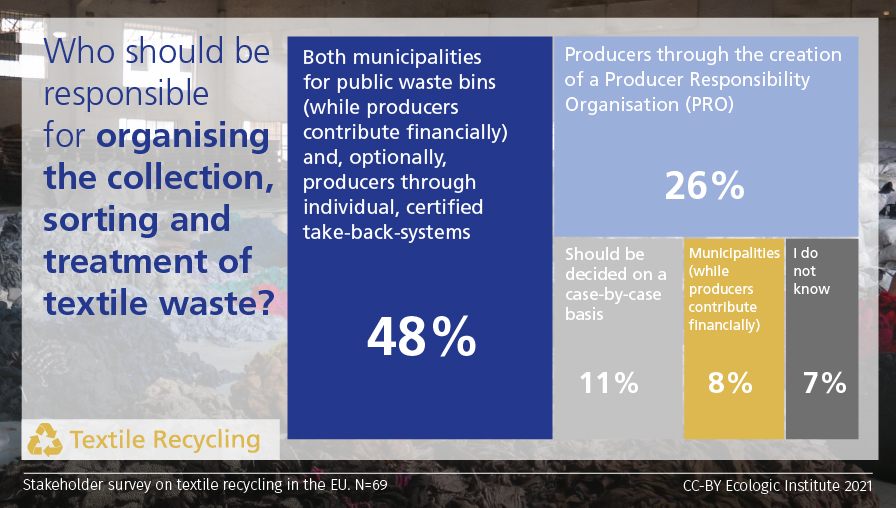
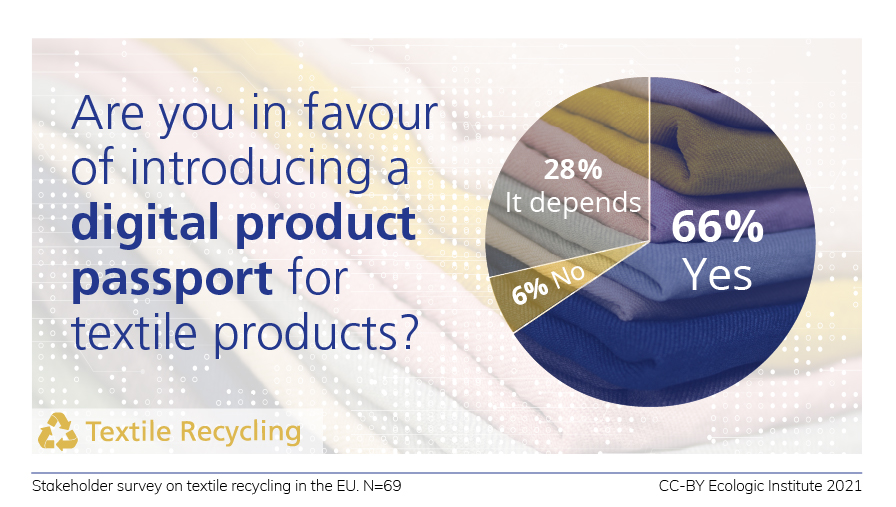
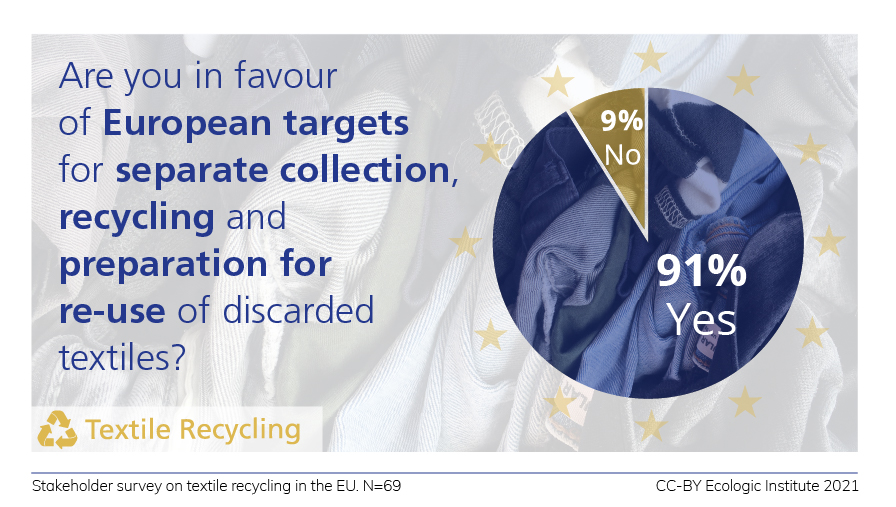
This animated infographic visualizes results of the survey "Fostering textile fibre recycling in Europe – pointers for policy action", conducted by Ecologic Institute in 2021. It is licensed under a Creative Commons CC-BY license.
This animated infographic visualizes results of the survey "Fostering textile fibre recycling in Europe – pointers for policy action", conducted by Ecologic Institute in 2021. It is licensed under a Creative Commons CC-BY license.
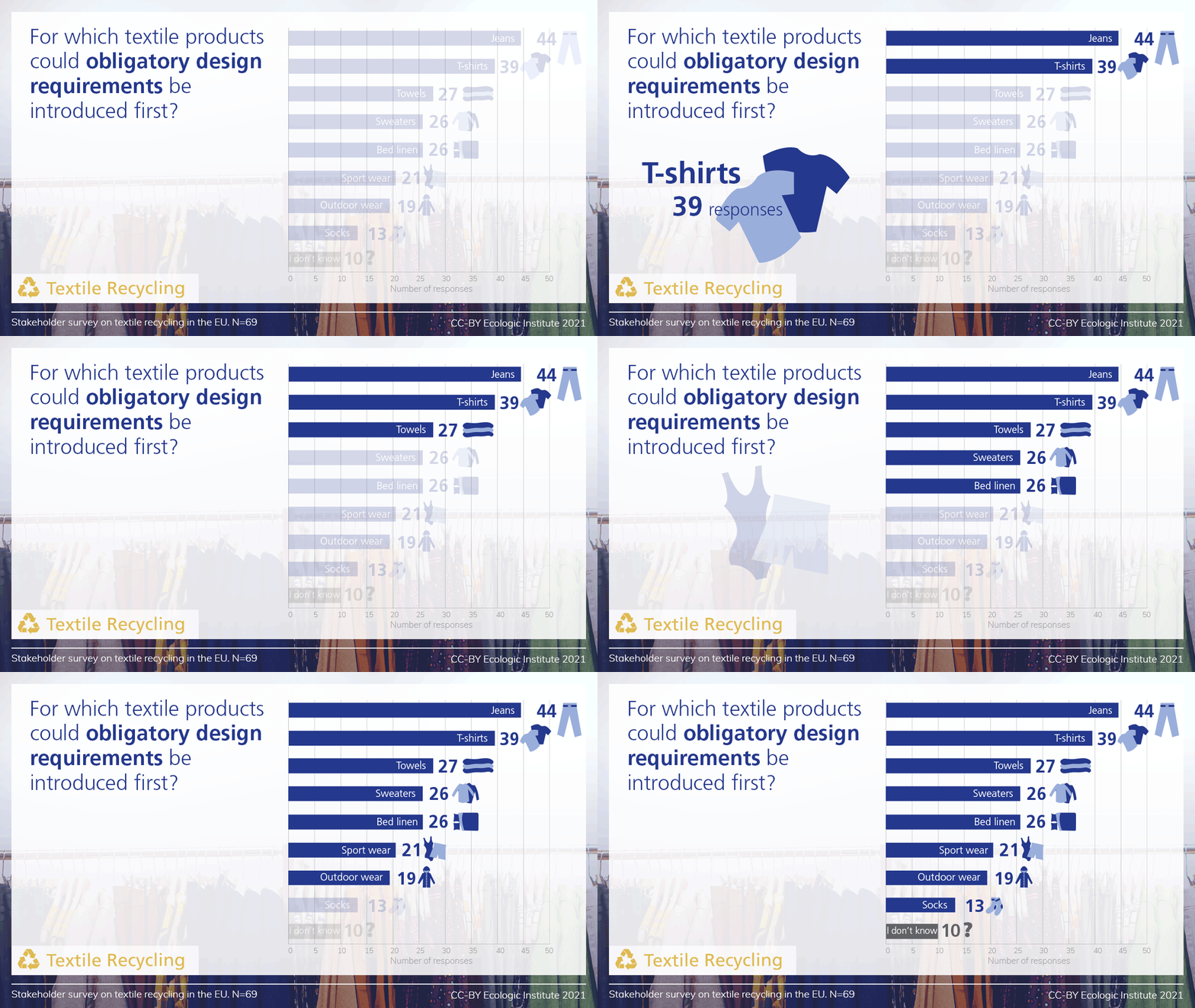
This infographic visualizes results of the survey "Fostering textile fibre recycling in Europe – pointers for policy action", conducted by Ecologic Institute in 2021. It is licensed under a Creative Commons CC-BY license.
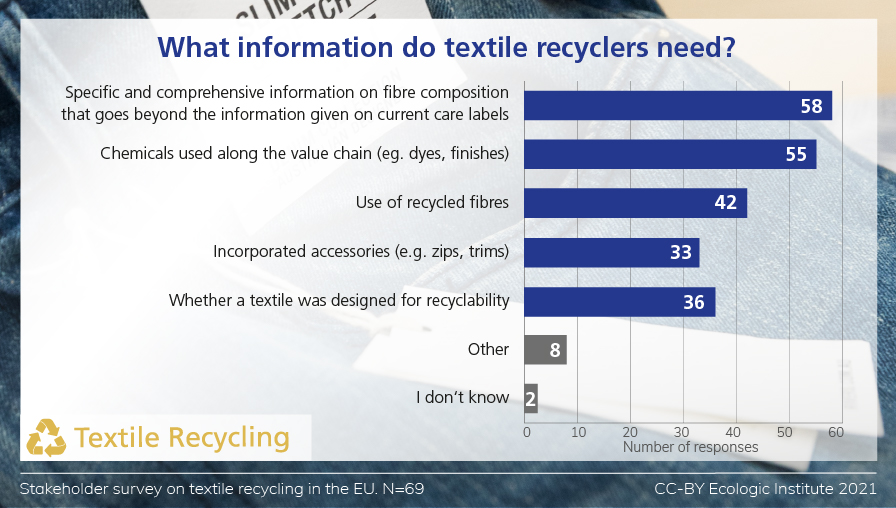
This infographic visualizes results of the survey "Fostering textile fibre recycling in Europe – pointers for policy action", conducted by Ecologic Institute in 2021. It is licensed under a Creative Commons CC-BY license.
This infographic visualizes results of the survey "Fostering textile fibre recycling in Europe – pointers for policy action", conducted by Ecologic Institute in 2021. It is licensed under a Creative Commons CC-BY license.
This infographic visualizes results of the survey "Fostering textile fibre recycling in Europe – pointers for policy action", conducted by Ecologic Institute in 2021. It is licensed under a Creative Commons CC-BY license.
This infographic visualizes results of the survey "Fostering textile fibre recycling in Europe – pointers for policy action", conducted by Ecologic Institute in 2021. It is licensed under a Creative Commons CC-BY license.
This infographic visualizes results of the survey "Fostering textile fibre recycling in Europe – pointers for policy action", conducted by Ecologic Institute in 2021. It is licensed under a Creative Commons CC-BY license.
This infographic visualizes results of the survey "Fostering textile fibre recycling in Europe – pointers for policy action", conducted by Ecologic Institute in 2021. It is licensed under a Creative Commons CC-BY license.
This infographic visualizes results of the survey "Fostering textile fibre recycling in Europe – pointers for policy action", conducted by Ecologic Institute in 2021. It is licensed under a Creative Commons CC-BY license.
This publication provides a quantitative overview of the development and status of environmental crime in Germany between 2010 and 2019, based on data from the police crime statistics ("Polizeiliche Kriminalstatistik") and the Federal Statistical Office's criminal prosecution statistics ("Strafverfolgungsstatistik"). The report provides both, an overview of general trends and an in-depth account of individual environmental offences. In addition, the publication contains data on administrative offences relating to trafficking of protected species. The report was prepared by a team from Ecologic Institute on behalf of the German Federal Environment Agency.
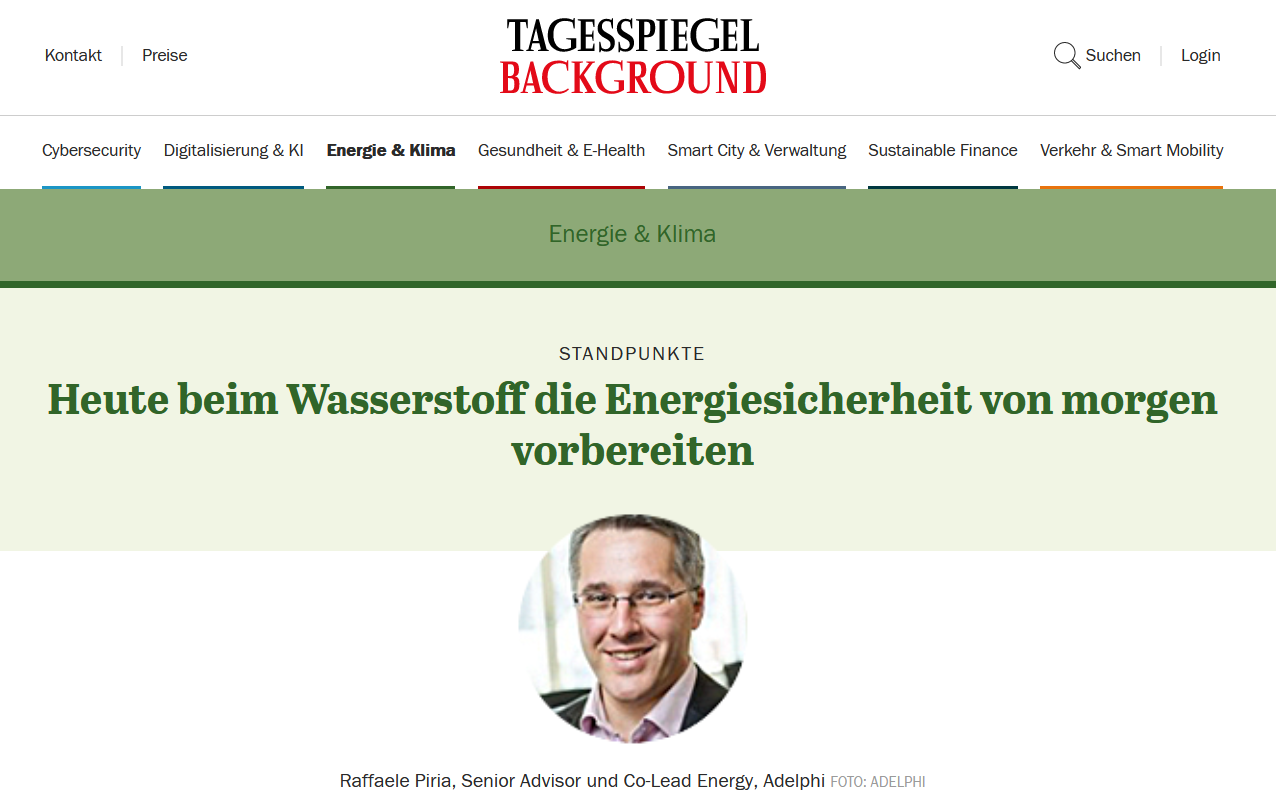
The future will increasingly be about hydrogen import security, writes Raffaele Piria in this article published in the Tagesspiegel. On the way to climate neutrality, the risk landscape will change fundamentally. Germany must prepare for this with determination and foresight - and make numerous trade-off decisions. In this article, Raffaele Piria describes three strategic legislative steps that should be taken to advance Germany's hydrogen import strategy.
This project supports DG RTD in developing a comprehensive Baseline for the lighthouses of the Atlantic/Arctic sea basin, Danube river basin and Mediterranean Sea basin of the Mission 'Restore our ocean and waters by 2030'. Specific activities include mapping lighthouse area relevant stakeholders, networks, governance structures and citizen engagement, as well as past, planned and ongoing projects relevant for the Mission objectives.
This report documents the results of three social-empirical research phases, which were carried out as work package 3 in the project "Trend Radar Resource Policy". In each case, citizens from all social milieus were surveyed within the framework of Moderated Research Online Communities on their assessment of trends identified in the project that are relevant to the use of natural resources and on the acceptance of political measures to conserve resources. The results show a high level of willingness to do more individually to protect natural resources, but also the expectation that politicians will create binding framework conditions for this.
We are thrilled to announce that the ENABLE project has been awarded the BiodivERsA Prize for Excellence and Impact. This award recognizes the excellent research performed in ENABLE and the impacts that were achieved for both policy and society. As a project partner, Ecologic Institute lead the work assessing the socio-cultural perceptions and preferences of citizens for different forms of green and blue infrastructure and supported the policy and institutional analysis in the project cities as well as the formulation of policy options.