In the Ecornet Berlin research partnership, five Berlin institutes of transdisciplinary sustainability research were jointly providing impetus for Berlin's transformation. Their annual conference, "Knowledge. Change. Berlin. 2021" brought current research findings into dialogue with experiences from other cities and the voices of Berlin's practitioners and civil society – for a social and ecological capital.
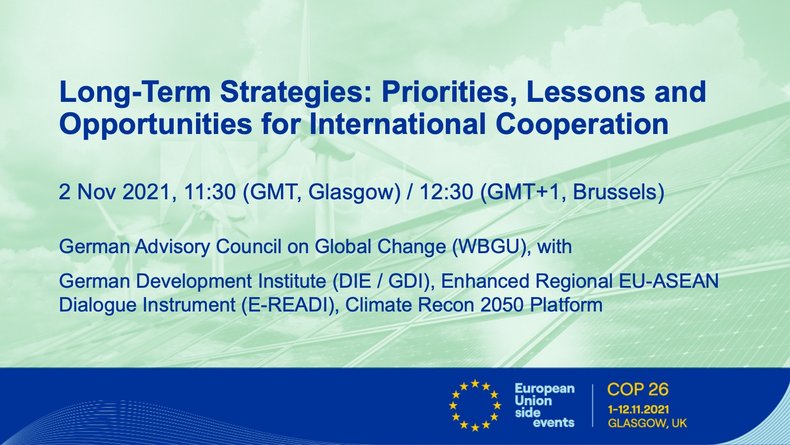
In this COP26 side event, we discussed priorities for the further development of long-term strategies, lessons from strategy formulation and implementation processes in the EU and ASEAN, and prospects for international cooperation. We draw on recent analyses by the German Advisory Council on Global Change (WBGU), the German Development Institute (DIE / GDI), the EU, including the EU-funded Enhanced Regional EU-ASEAN Dialogue Instrument (E-READI) study on the development of LTS in ASEAN and the Climate Recon 2050 platform (CR2050) experiences.
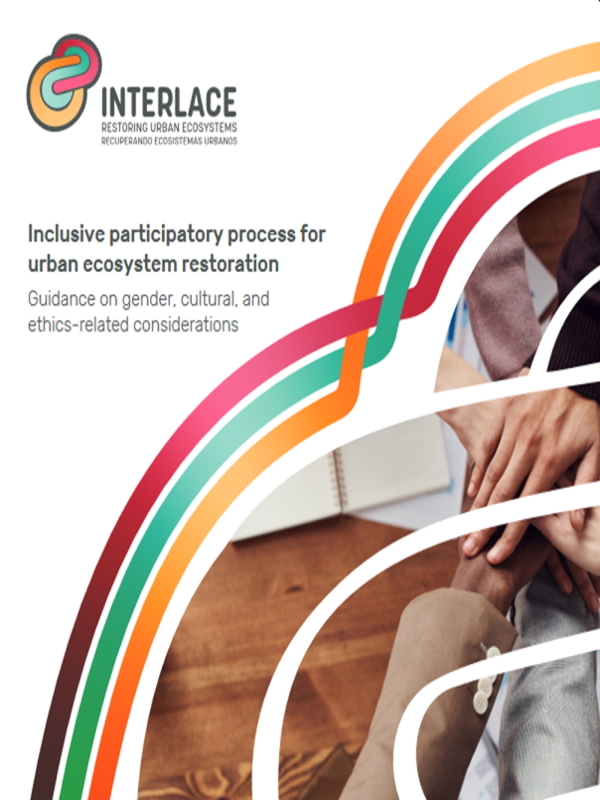
The INTERLACE project, coordinated by Ecologic Institute, has published the "Guidance on Gender, Cultural, and Ethical Considerations" to support inclusive, transparent, and fair stakeholder participation. The document provides practical recommendations and measurable indicators to help project partners integrate gender, cultural, and ethical considerations into their activities.
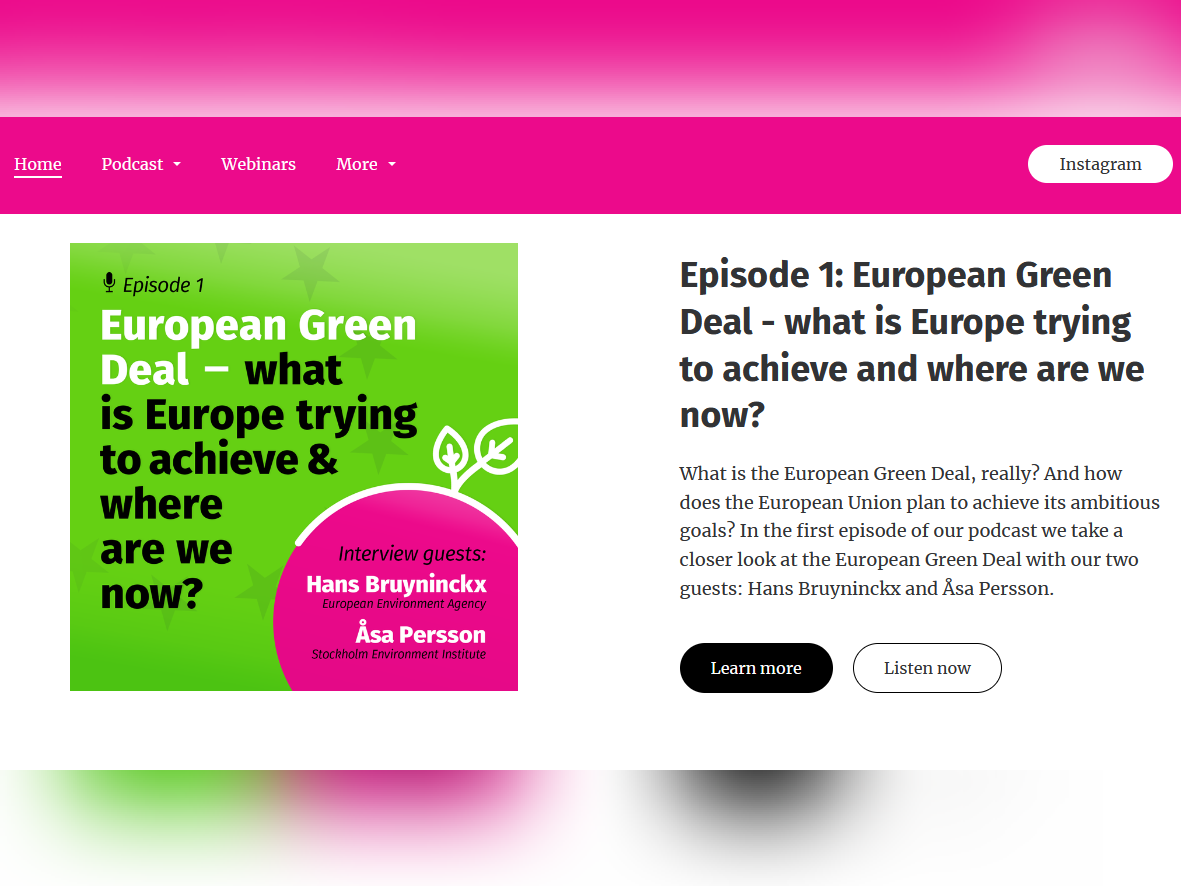
Are you interested in environmental issues or European policy? Would you like to understand what the European Green Deal is, and how will it impact our lives in the years to come? Then you have come to the right place. On the Green Deal – Big Deal website you can find all episodes of our podcast, our webinars and additional information about the European Green Deal.
The report "Intercomparison of Ecological Potential for Rivers" reviews and intercompares the methods used in European countries to define the ecological potential of river heavily modified water bodies. The report has been developed as part of an intercomparison exercise, which took place in the Water Framework Directive Common Implementation Strategy (WFD CIS) in 2019-2021. The report presents and summarises the information provided by European countries on the application of steps of CIS Guidance no. 37 "Steps for defining and assessing ecological potential for improving comparability of Heavily Modified Water Bodies" in the 3rd River Basin Management Plans.
Cleveringa, J., Kampa, E., 2021. Intercomparison of ecological potential for Transitional and Coastal waters (TraC). Amersfoort, Berlin: Arcadis, Ecologic Institute.
Wolfram, G., Konecny, R., Kampa, E., 2021. Intercomparison of ecological potential for Lakes and Reservoirs. Vienna, Berlin: Environment Agency, DWS Hydro-Ökologie, Ecologic Institute.
Ursula von der Leyen (President of the European Commission) described the European Green Deal as "Europe's man-on-the-moon moment". With this plan, the European Union aims to achieve climate neutrality by 2050, protect and enhance nature, and sustainably transform the European economy and society. But what exactly is the European Green Deal? Which role does it play in our everyday life? And what challenges does it pose? In our podcast and webinar series "Green deal – Big Deal?" we take a critical look at these questions and discuss various aspects of the European Green Deal with experts from policy, business and science.
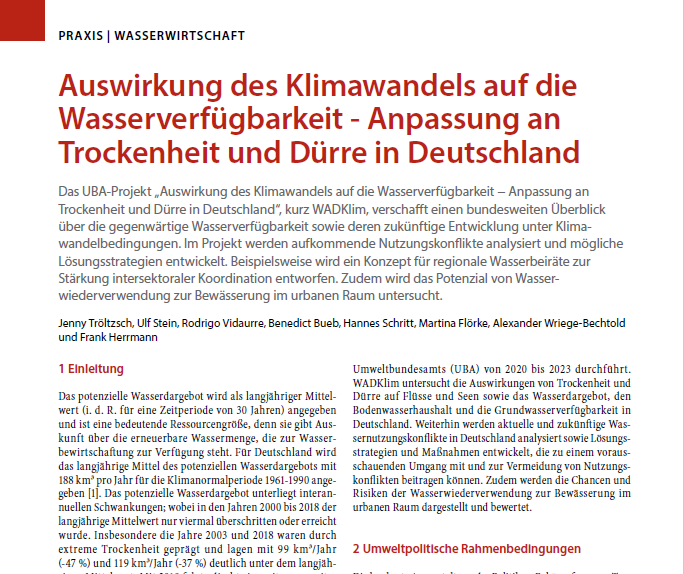
This article describes the project "Drought and Water Use Conflicts in Germany (WADKlim)" its approach and the context in Germany. The project provides a nationwide overview of current water availability and its future development under climate change conditions. It analyzes emerging conflicts of use and develops possible solution strategies. For example, a concept for regional water advisory councils to strengthen intersectoral coordination will be designed. In addition, the potential of water reuse for irrigation in urban areas will be investigated. The project is funded by the Federal Environment Agency (UBA).
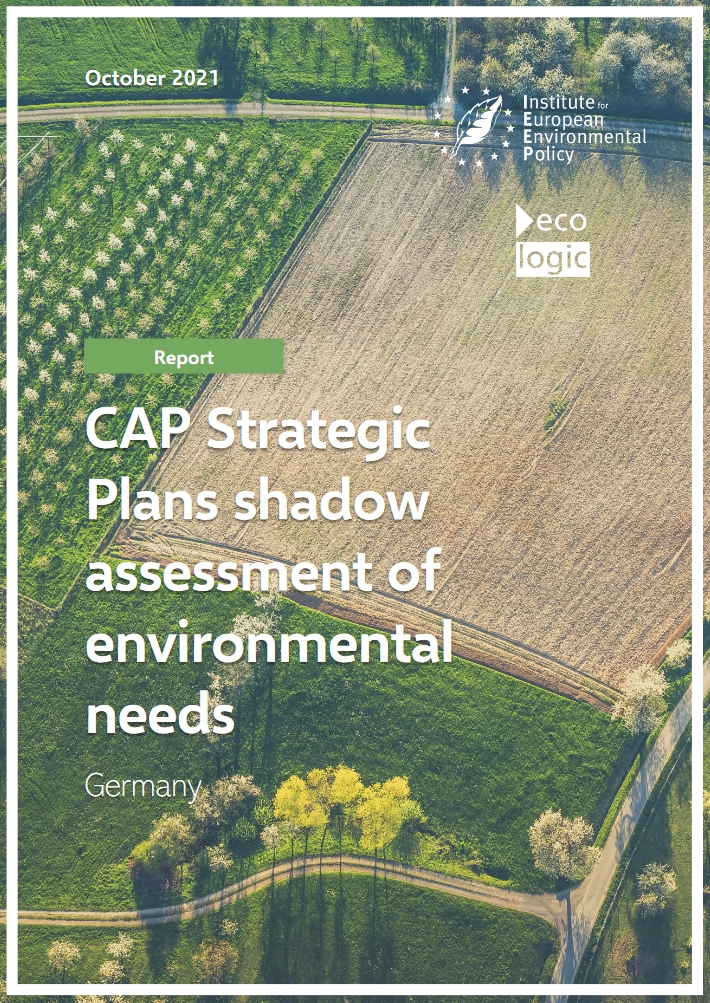
This report aims at 1) providing German and EU stakeholders and decision-makers with evidence-based material to inform Germany’s CAP strategic plan intervention logic, and 2) providing a reference point for the evaluation of the German government's own needs assessment in their CAP strategic plan.
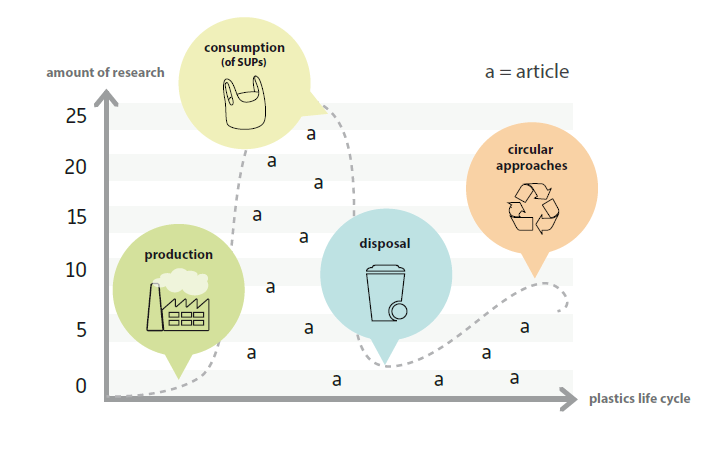
In this review, Ecologic Institute's Doris Knoblauch and Linda Mederake analyse the subject focus of 45 articles (published 2019–2021), dealing with government action to regulate plastic pollution. Policies described in the articles and introduced between 2016 and 2021 are clustered in four categories: production – consumption – disposal – circular approaches. The article is open access and available for download.
According to a recent EEA report co-authored by Ecologic Institute, water stress has become a serious problem across Europe and climate change is likely to raise the challenge. The report "Water resources across Europe – confronting water stress: an updated assessment" calls for a shift from crisis management to risk management to prevent irreversible negative consequences for nature and society. The report emphasizes the need for greater water use efficiency and improved ecosystem resilience, as water resources become insufficient to meet the joint demand of humans and nature.
The city of Berlin has many plans when it comes to climate protection. One major roadblock is the heating transition: To become climate-neutral by 2045 at the latest, around 360,000 residential and non-residential buildings in the capital must be supplied with environmentally friendly space heating and hot water. Furthermore, all new buildings must be planned and constructed in a way that conserves resources. In addition to the organizational and technical challenges involved in achieving a climate-friendly heat supply, a key question is how this can be achieved in a socially just manner that ensures rental prices remain affordable for low-income groups as well. On 2 November 2021, five leading Berlin institutes in sustainability research contributed to the conference "Knowledge. Change. Berlin. 2021" Solution Approaches for Climate-Neutral Housing and Construction and invite stakeholders from the city to the discussion.
Piria, Raffaele 2021 : Critical Review of the IPHE Working Paper "Methodology for Determining the GHG Emissions Associated with the Production of Hydrogen". adelphi, Oeko-Institut, Berlin, October 2021.
On 14 July 2021, the Commission proposed amendments to the Regulation 2018/842 – currently called by many the "Effort Sharing Regulation". Covering more about 60 % of the EU greenhouse gas emissions, this regulation and its reform are an essential elements of the Fit for 55 package. As a contribution to this debate, a paper by Ecologic Institute presents amendments to the Commission's proposal. Amendments are in particular intended to help ensure that all EU climate policy instruments support achieving the EU's 2050 climate neutrality target and net negative emissions afterwards.