This report explores options for scaling up carbon dioxide removals in the EU, considering respective costs, risks and opportunities. This assessment, covering both carbon sinks in the land sector and novel solutions, involves analyses of the status and potential of carbon dioxide removals in the EU, key policy needs and gaps, as well as policy recommendations for a robust EU governance of carbon dioxide removals.
This report summarizes the results of the research project "Scientific support for the design of an EU Carbon Removal Certification Framework" (CRCF) that provided support to national policy makers during the negotiation process and pursued the following objectives.
The Ecologic Institute hosted a virtual scoping workshop as part of the TROPICAL ADAPT project: Ecosystem-based Adaptation for Coastal Regions Worldwide. This workshop brought together members of the Advisory Board and other stakeholders to explore challenges and opportunities for EbA, refine project strategies, and foster collaboration. The workshop provided a platform to share insights on challenges and opportunities for EbA in coastal regions, refine strategic priorities for the project, and foster collaboration among experts. Additionally, it helped to identify key questions to guide future workshops.
On 19 February 2025, the RESTORE4Cs project will host a webinar titled "Tools and Indicators for Coastal Wetland Restoration to Promote Climate Resilience in Europe."
On 12 and 13 February 2025, Arne Riedel and Fenja Kroos from Ecologic Institute participated in the Network Conference of the Thematic Group "Polar and Ocean Politics", held at the Friedrich Ebert Foundation in Berlin. The conference brought together scholars from a wide range of disciplines to discuss current challenges in polar and ocean politics.
While hydrogen (H2) emissions make up a negligible fraction of today's GHG emissions, they are set to become more significant in the 2030s and, should the EU and the global community progress towards climate neutrality, will likely be substantial in the 2040s, as achieving climate neutrality requires the expansion of hydrogen use alongside the rapid reduction of other GHGs. As decisions made today will shape hydrogen value chains for decades, this paper develops a series of policy proposals to implement a four-pronged strategy.
Focusing on cities in the European Arctic, this book consolidates research on sustainable development, local and urban governance, and transnational cooperation in the region. It examines to what extent there is transnational cooperation between urban areas in remote locations and how it can be enhanced to better align with global sustainable development policies to successfully implement goals set for example by the 2030 Agenda for Sustainable Development and the Paris Agreement on climate change.
The SCALE-UP consortium organised a thematic conference in the frame of Bio360, which took place on 5 and 6 February 2025 in Nantes, France. The international trade fair, dedicated to advancing the bioeconomy, drew more than 450 exhibitors and 40+ conferences featuring pioneering solutions in bio-based materials, circular agriculture, and renewable energy. As the coordinator of the SCALE-UP project, Ecologic Institute played a key role in bringing together innovators, investors, farmers, and researchers to discuss sustainable bio-based solutions.
Restoring Europe’s freshwater ecosystems at the scale required by EU policy will require a broader mix of funding sources. The MERLIN Deliverable “Diversifying Funding for Freshwater Restoration using Nature-Based Solutions” examines how restoration teams across Europe are exploring new funding models and partnerships.
Stories have the unique potential to inspire change, shape perceptions, and foster understanding across diverse audiences. This collection of stories, developed as part of the INTERLACE project, aims to convey the profound emotional and cultural importance natural surroundings have for local communities and showcase the power of collective action.
Nature-based solutions (NbS) aim to improve the world for everyone, which means ensuring that vulnerable groups, such as women, children, migrants, and people with disabilities, benefit alongside other social groups. This report, part of the INTERLACE project, assesses how these groups have been included in the planning and implementation of project activities, offering valuable insights for future NBS initiatives and research.
This Deliverable presents the work of the CREDIBLE Focus Group 2.1, "Minimum requirements to ensure carbon farming delivers sustainability benefits". The objective of the Focus Group and the goal of this document is to make recommendations on how the CRCF can maximize the positive impact of carbon farming on biodiversity, adaptation, water and other sustainability outcomes, at the same time as mitigating climate change.
On 28 January 2025, the Directorate-General for Climate Action of the European Commission hosted a 1-day event on public funding for permanent carbon removal. The event focused on exploring and enhancing the financing landscape for climate action, with a specific emphasis on instruments supporting permanent carbon removal.
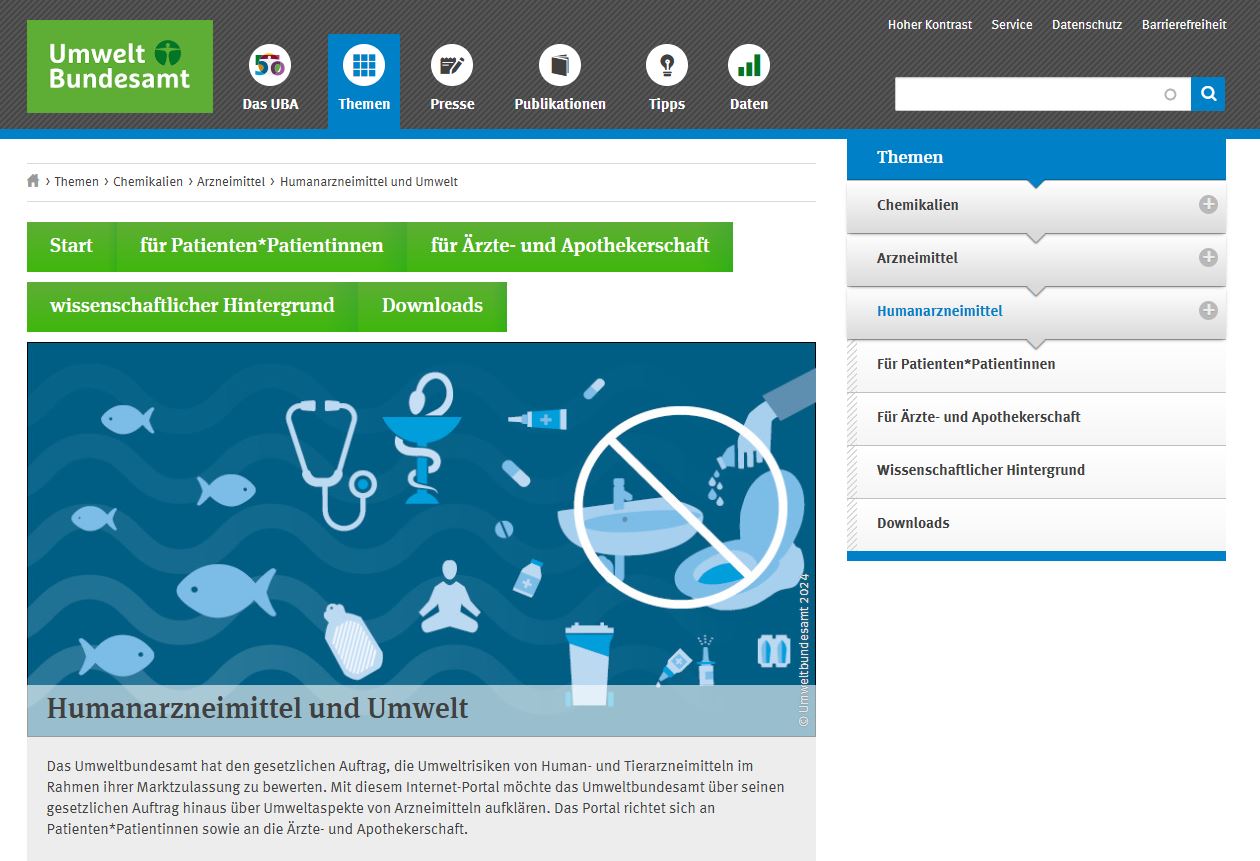
The Federal Environment Agency's online platform "Pharmaceuticals and the Environment" provides information on the environmental impact of human pharmaceuticals and gives recommendations for environmentally conscious use and disposal. The aim is to minimize the entry of pharmaceutical residues into the environment and thus protect organisms, water, and soil.
A new research report by the Ecologic Institute and Oeko-Institut discusses the implementation of the EU's new 2040 climate target. It identifies building blocks and measures particularly relevant for cutting the EU's emissions by net 90% in 2040.