This article reviews the role of ponds and pondscapes in delivering Nature's Contributions to People and provide an overview of the challenges and opportunities for their broader implementation as Nature-based Solutions. The authors, among them Manuel Lago (Ecologic Institute) propose a conceptual framework that can help the implementation of pond Nature-based Solutions, and that outlines future research needs.
In the latest "Green Deal – Big Deal?" podcast episode, the hosts Ewa Iwaszuk and Nick Evans from Ecologic Institute discuss these questions, together with their interview guests Claire Dupont (University of Ghent) and Sharon Turner (independent expert associated with European Climate Foundation and University of Sussex). The two guests explain their understanding of EU governance, how it has evolved over the years, and its crucial role in shaping Europe's future.
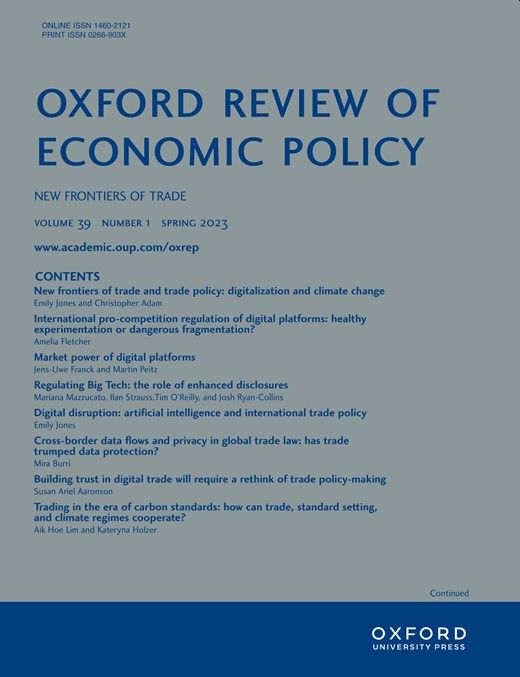
The European Commission has proposed a Carbon Border Adjustment Mechanism (CBAM) to enable ambitious climate policies in EU member states and to incentivize emission reductions in other countries. This paper adopts a dynamic, multilevel, polycentric perspective to discuss how domestic as well as foreign interest groups would be affected by the policy.
Building on the momentum created by the negotiations on the Nature Restoration Regulation (NRL) as well as by the overall successful outcome of the biodiversity summit COP15, the think tank network "Think Sustainable Europe" (TSE) met with EU Environment Commissioner Sinkevičius. As part of TSE, Ecologic Institute presented key recommendations on the NRL. These build on a series of policy briefs by Ecologic Institute and IEEP respectively, and were well received and aroused great interest both in the EU Commission and the European Parliament.
At the invitation of the Italian Institute for International Political Studies (ISPI), Dr. Camilla Bausch held a "Lectio Magistralis". At this Lectio, leading experts such as Jean-Claude Trichet (Former President of the European Central Bank) and Sergei Guriev (Professor of Economics at Sciences Po in Paris) discuss key political and scientific insights with master's students of the ISPI School. Dr. Bausch's lecture focused on dynamics, setbacks and breakthroughs in international climate policy – including an outlook on 2023 and identifying opportunities for the students themselves to take action.
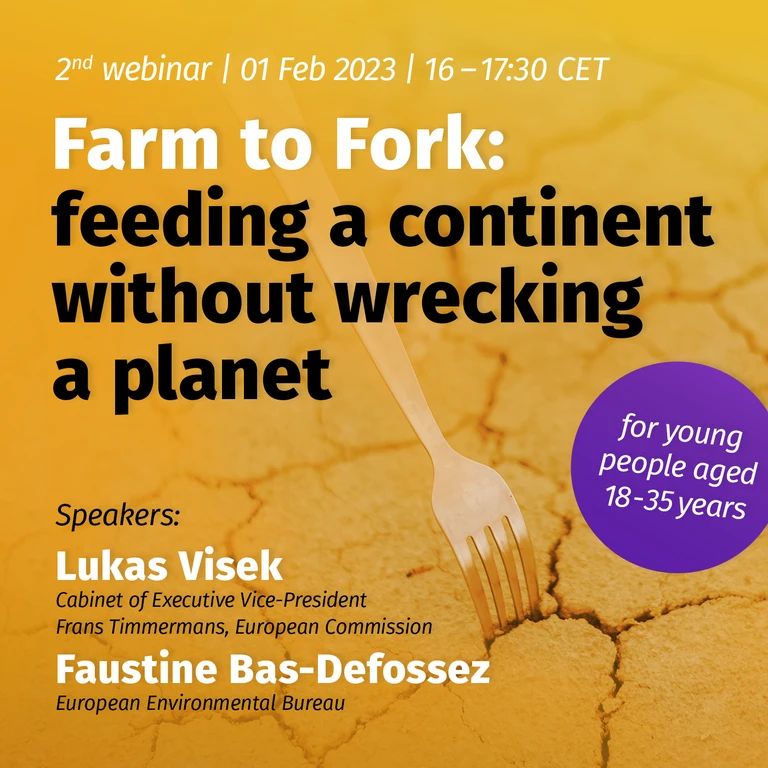
On 1 February 2023, we discussed the food systems approach adopted by the "Farm to fork" strategy and investigated how the strategy will impact producers, consumers and global food markets. We discussed strategies to address food waste and explored why meat is a politically sensitive topic.
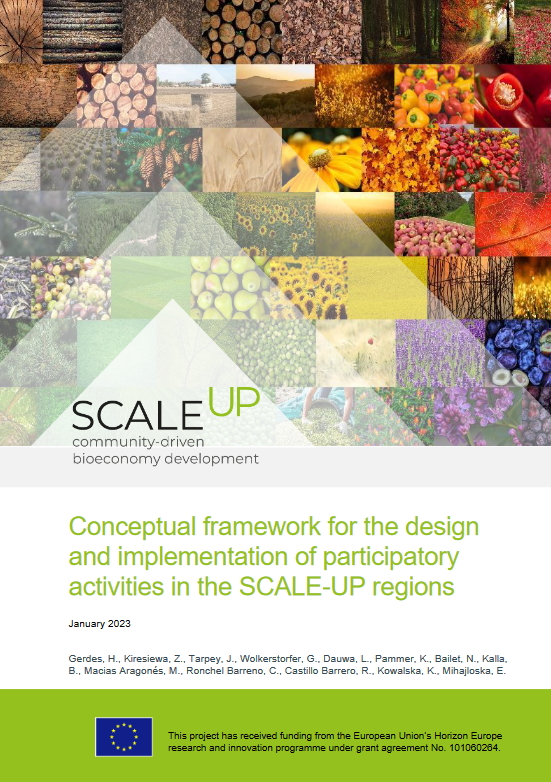
This framework sets out a holistic approach to foster community-driven bioeconomy development across six rural European areas. Building on a four-phase methodology – establishing regional knowledge and platforms; cross-regional knowledge transfer; creation of a pan-European Community of Practice; and dissemination – the report aligns with the European Green Deal and the second pillar of the Common Agricultural Policy (CAP). It identifies relevant biomass streams (from sawdust and agricultural residues to hemp and olive by-products) and outlines valorization options that drive local innovation while respecting ecological limits.
This document drafts a concept of the information architecture and user interface of the European Climate Neutrality Observatory (ECNO) website. It served to develop a common vision of the website and its data structure within the project team.
Animal products are an essential part of today's German diet, but they are associated with a variety of environmental problems, such as global warming, eutrophication of soils and waters, etc.. These cause external costs. The study, co-authored by Aaron Scheid and Benjamin Görlach of Ecologic Institute, estimates these external costs for animal products and examines policy measures to address them.
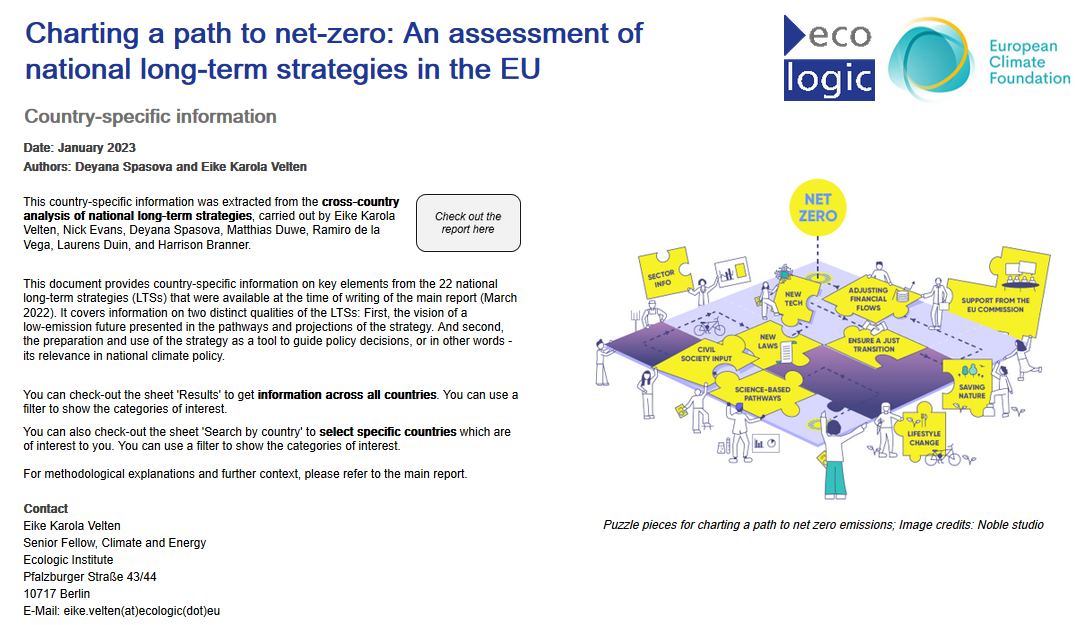
This document provides country specific information on key elements from the 22 national long-term climate strategies extracted for the cross-country analysis in table format. It allows for selection of specific criteria as well as for the selection of specific countries.
Indicators measuring progress towards climate neutrality must address the often structural, sectoral, and cross-sectoral changes implied by the transition, covering both the economic and social dimensions. To address this, Ecologic Institute developed this working document, testing an indicator framework for assessing the progress to climate neutrality by 2050. The document offers a glimpse at areas where developments are currently headed in the right direction or lagging behind.
In this brief, researchers from Ecologic Institute and Öko-Institut critically assess the Commission's 2022 proposal for Framework for Carbon Removals Certification as it applies to climate-friendly soil management. In particular, they evaluate whether Framework's so-called QU.A.L.ITY criteria (Quantification, Additionality, Long-term storage, Sustainability) are sufficient to ensure high quality soil carbon removals. The brief summarises the specific challenge posed by soil carbon sequestration, identifies problems with the current proposal, and makes recommendations for improvements. The brief is available for download.
This report offers a critical and in-depth analysis of current financing and implementation practices for climate adaptation measures in Europe and provides strategic recommendations for optimizing these processes.
This policy brief explores the potential and benefits of marine restoration, as proposed in the regulation. Marine and coastal ecosystems are immensely important for biodiversity and human well-being. Restoring marine areas can enable the respective ecosystems to (once again) perform their natural functions, improving their overall health and resilience.