Next to steep cuts in greenhouse gas emissions, the removal of CO2 from the atmosphere is essential to keep average global temperature increases to 1.5°C, and well below 2°C. At this point in time, there is effectively only one realistic and sustainable way to help remove large amounts of CO2 from the atmosphere: restoring degraded forests. A strong and reliable governance framework is a pre-condition to restore degraded forests at the necessary scale. A new Ecologic paper discusses how to design such a governance framework for the EU. The paper is available for download.
Marine ecosystems such as the Faial-Pico Channel, in the Azores, provide stakeholders with a broad range of valuable ecosystem services, including fish and recreation opportunities for locals and tourists. The global decline of marine biodiversity as well as the diverging interests between sectors such as fisheries and tourism place challenges upon policy-makers, administrators, and managers. In a response to this challenge, Marine Protected Area (MPA) managers worldwide increasingly rely on stakeholder input to ensure that all views and values are considered. However, adequate management should not only reflect all of society’s views, but also be based on the best and most up-to-date knowledge.
This report discusses extensions of area-based land foot-prints with meaningful impact-oriented indicators for the assessment of the effects of different con-sumption patterns on the ecosystems and sustainability of land use. First, existing indicators for representing the environmental impacts of land use are introduced in the context of their linkages and complementarity to area-based land footprints. The report discusses the following key indicators, which were identified as particularly relevant during an export workshop: System indicators, which qualify the area-based footprints across globally very different potential land productivities, deforestation footprint, energy use in agriculture, and irrigation water use in agriculture classified by degree of water scarcity. It introduces the methods developed for the quantification of system indicators for cropland and grassland footprints and for the deforestation footprint, and present results for Germany and the EU.
<p>The international "SustEcon Conference – The contribution of a sustainable economy to achieving the Sustainable Development Goals" took place on 25 and 26 September 2017 at the Freie Universität in Berlin. It was organised by the project NaWiKo, which coordinates 30 projects doing research on various topics linked to make the economy more sustainable.</p>
Green infrastructure (GI) and nature-based solutions (NBS) are increasingly recognised for their potential to contribute to a range of urban challenges and policy objectives. But, how can they be mainstreamed in practice and to what extent do current policy frame-works support their implementation? At the international conference on "Urban Green In-frastructure - Connecting People and Nature for Sustainable Cities", Ecologic Institute's McKenna Davis and Sandra Naumann addressed these and other issues in targeted ses-sions. The conference, held in Malmö (Sweden) from 20 to 21 September 2017, was the final conference of the EU-funded GreenSurge project.
In their 2007 publication for the first issue of CCLR, Dr. Camilla Bausch, Director of Ecologic Institute, and Michael Mehling, Partner and Board Member of the Institute, took stock of progress with climate negotiations under the United Nations. Now, a decade later, they have revisited their assessment, tracing the tumultuous path of negotiations since 2007, and pointing to milestones in the journey, major achievements, as well as challenges that lie ahead.
This book describes and analyses necessities for a more resource-efficient world. Authors across Europe, discuss solutions for a more sustainable use of natural resources and present good practice examples – such as repair services, digitalised construction projects and chemical leasing. The book addresses decision-makers and experts from the fields of policy development, industry, academia, civil society, and the media. Ecologic Institute's Mandy Hinzmann, Nick Evans, Terri Kafyeke, Stephen Bell and Martin Hirschnitz-Garbers took on the role of managing editors.
Ecologic Institute co-authored the RECREATE policy brief no. 7 on challenges and opportunities for national waste prevention programs. The authors state that the political framework needs to be more enabling and with further support for research and development targeted at measuring waste prevention and behavior change to unlock the potential of waste prevention. The RECREATE policy brief is available for download.
Cross-border trade and the rules governing it impact consumers. Trade has benefits for consumers, such as access to goods not available domestically. Yet it also has certain risks, such as exposure to traded goods that may be dangerous. Against this background, consumer organisations on both sides of the Atlantic have been discussing what a consumer-friendly trade policy could look like. Christiane Gerstetter and Lena Donat of Ecologic Institute's Legal Team have compiled a study examining what complaint mechanisms for consumer organisations concerning international trade agreements could look like.
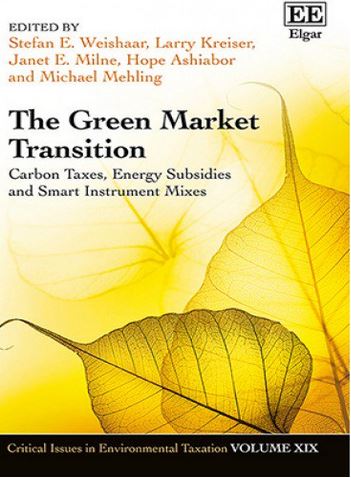
The chapter "Why are Green Fiscal Policies such a Small Part of Green Economic Policies? Evidence from three European Countries" of the book 'The Green Market Transition - Carbon Taxes, Energy Subsidies and Smart Instrument Mixes' presents and compares the green tax systems in place in Germany, Belgium and the Netherlands. One of the chapters authors, Ecologic Institute's Marius Hasenheit, describes the evolution of green taxes in Germany.
Ecologic Institute organized the second ICAP Master Course on Emissions Trading in Lisbon (Portugal). The two week-long course brought together 30 experts from emerging economies and developing countries to learn about emissions trading systems (ETS) as a tool for climate protection, and to discuss the options of implementing or optimizing such systems in their home countries.
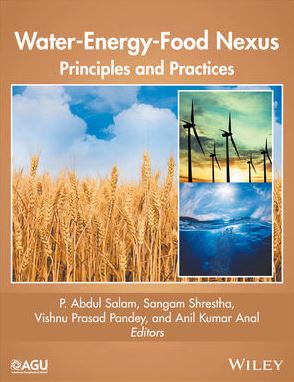
In this chapter the authors, among them Ecologic Institute's Josselin Rouillard, examine how the Water-Energy-Food nexus is emerging at different scales and national contexts worldwide. The chapter presents empirical evidence of innovations in terms of policy instruments. Normative suggestions for theorizing future nexus governance are also presented.
Addressing anthropogenic climate change requires a reassessment of all the choices we make in life, no matter if they are made individually or from within collective institutions. During the workshop "Communicating the Climate in a Controversial Time", Dr. Grit Martinez of Ecologic Institute spoke on the topics of climate change acceptance and governance under different socio-cultural regimes. The event was hosted by the Rachel Carson Center for Environment and Society, an international, interdisciplinary center for research and education in the environmental humanities supported by the German Federal Ministry of Education and Research.