Climate change and other pressures are impacting the environment and water resources in the Mediterranean, requiring plans for how to adapt the management of affected river basins and their water resources to changing future conditions. To address this challenge, a series of workshops organized by Ecologic Institute and local case study partners (CREAF, CyI, INRGREF and IzVRS) were held in March and April 2016 across the Mediterranean as part of the EU-funded BeWater project to gain stakeholder input for further developing tailored river basin adaptation plans.
We are excited to announce the eighth and final webinar in our POLIMP Webinar Series, which will feature a discussion with Prof. Michael Grubb, author of the book Planetary Economics, on the topic "Are EU climate policies up to the challenge of decarbonizing Europe?". The webinar will be moderated by Ecologic Institute’s Benjamin Görlach (Head, Economics and Policy Assessment).
The final synthesis of the 40 month long EFFACE research project is now available. The report is addressed at decision-makers and presents core findings from the EFFACE project in an accessible language. The final synthesis is available for download.
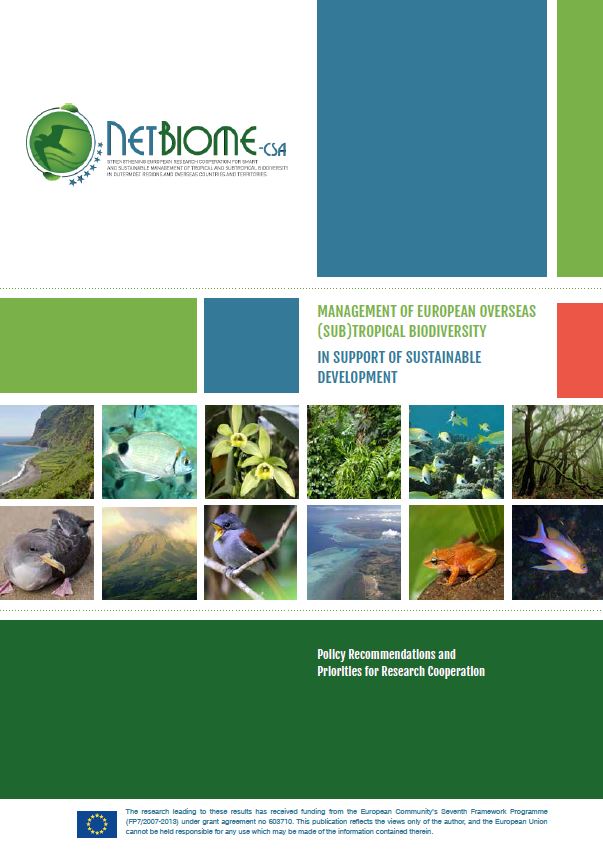
NetBiome-CSA is a European funded project that aims to extend and strengthen research partnerships and cooperation for the smart and sustainable management of tropical and subtropical biodiversity in Outermost Regions (ORs) and Overseas Countries and Territories (OCTs). The NetBiome Network, with the participation of Ecologic Institute, has developed a Strategic Document that compiles a series of policy and research priorities for improving knowledge about biodiversity and the practice of biodiversity governance in the EU ORs and OCTs. The priorities emerged from participatory processes within NetBiome-CSA. The document is available for download.
In their review of the past, present and future energy systems in the Wider Atlantic, Ecologic Institute authors find that the Atlantic Space dominates all aspects of the world's energy systems, and that this will not change with foreseeable energy transformations. Some energy systems are in decline: nuclear power for economic and technological risk-related reasons and fossil energies for reasons related to economics and climate change. Growth of an emerging new energy system, based on renewable energies, is accelerating as the costs of renewable technologies fall. The publication is available for download.
IEA-RETD (2016), Cost and financing aspects of community renewable energy projects. Volume II: German Case Study. Ricardo Energy & Environment and Ecologic Institute, IEA-RETD Operating Agent, IEA Implementing Agreement for Renewable Energy Technology Deployment (IEA-RETD), Utrecht, 2016.
This chapter examines the complex interactions between society and the environment in the Atlantic Space. Ecologic Institute authors highlight examples of cooperation, leadership and the increasing polycentrism of Atlantic environmental governance. It is part of a publication that gathers insights from over four years of EU funded research within the scope of the Atlantic Future research project. The full publication is available for download.
IEA-RETD (2016), Cost and financing aspects of community renewable energy projects. Volume II: Danish Case Study. Ricardo Energy & Environment and Ecologic Institute, IEA-RETD Operating Agent, IEA Implementing Agreement for Renewable Energy Technology Deployment (IEA-RETD), Utrecht, 2016.
While key barriers faced by community renewable energy projects are generally well understood, there is much less information available about the actual costs and financing implications. This report sheds light on the costs and corresponding financial impacts faced by community-owned renewable energy projects, especially in comparison to commercial renewable energy projects. The report, which was written collaboratively by Christine Lucha and Andreas Prahl(Ecologic Institute), is available for download.
The REFRESH project's Newsletter showcased news and results from the REFRESH project, information about upcoming events, highlights from past events, and important food waste news from Europe.
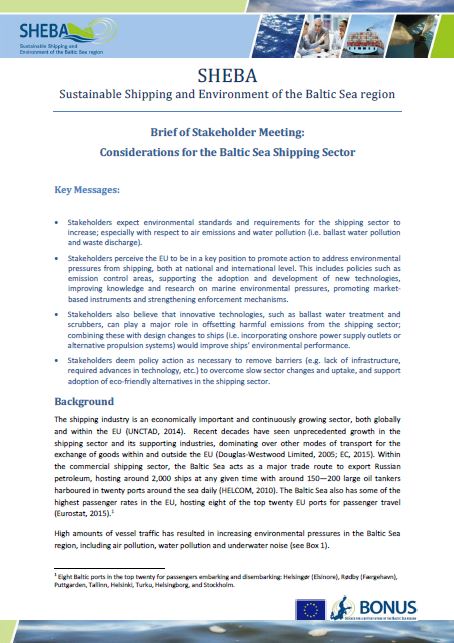
The BONUS project SHEBA (Sustainable Shipping and Environment in the Baltic Sea region) held a workshop with participants from various shipping-related sectors. The workshop aimed to better understand the environmental pressures of shipping in the Baltic and how these impacts might change over time, as well as which policies and abatement technologies could be important in the future. The main findings of this stakeholder consultation are available for download.
In the third installment of the webinar series accompanying Ecologic Institute's ETS e-learning program, moderated by Elizabeth Zelljadt, expert guest speaker Duan Maosheng (Tsinghua University) commented on China's pilot carbon markets and experiences in becoming ETS "market ready." He provided unique examples of capacity gaps that were overcome and others that remain a challenge, shedding light on China's plans for a nationwide ETS to begin in 2017.
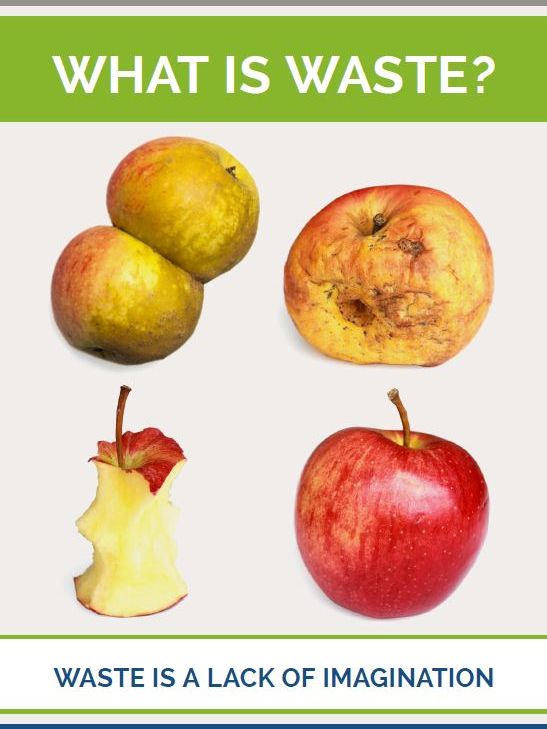
As part of the visual identity for project "Resource Efficient Food and dRink for the Entire Supply cHain" (REFRESH), Ecologic Institute designed two promotional flyers in small postcard format. The flyers summarizes general objectives and aims of the project, are styled according to the project style-guides and contains an project information, contact and an QR-code directing to the project website. Flyers are distributed during project events.