An innovative approach combines technical flood protection and restoration of the river Helme near Sundhausen in Thuringia. The risk of flooding is significantly reduced and companies are settling in the now flood-free industrial areas. Rare and protected species, such as the endangered river mussel (Unio crassus), also benefit from near-natural flood protection measures.
Technical flood protection and the use of hydropower have heavily modified the river Inn. Fish hardly find their vital habitats here. The local hydropower company restructures the river banks, creates alternative habitats and promotes biodiversity in the floodplain. The measures are implemented in close cooperation with the Free State of Bavaria and local authorities and interest groups.
The "Masterplan Fuldaaue" is an example of good cooperation between the Hessian municipalities of Bebra, Rotenburg and Alheim. The Fulda was restored near-naturally and flood protection was improved. Financing was provided by different funding sources and the costs were kept low by creative solutions.
Today, Fischerhude's floodplain of the Wümme near Bremen is an area of recognised ecological importance, especially for waterbound breeding and resting birds. This was made possible by a large-scale nature conservation project, in which numerous measures have been carried out since 1992 to restore water bodies, including the relocation of dykes, the creation of spawning grounds and riparian buffer strips.
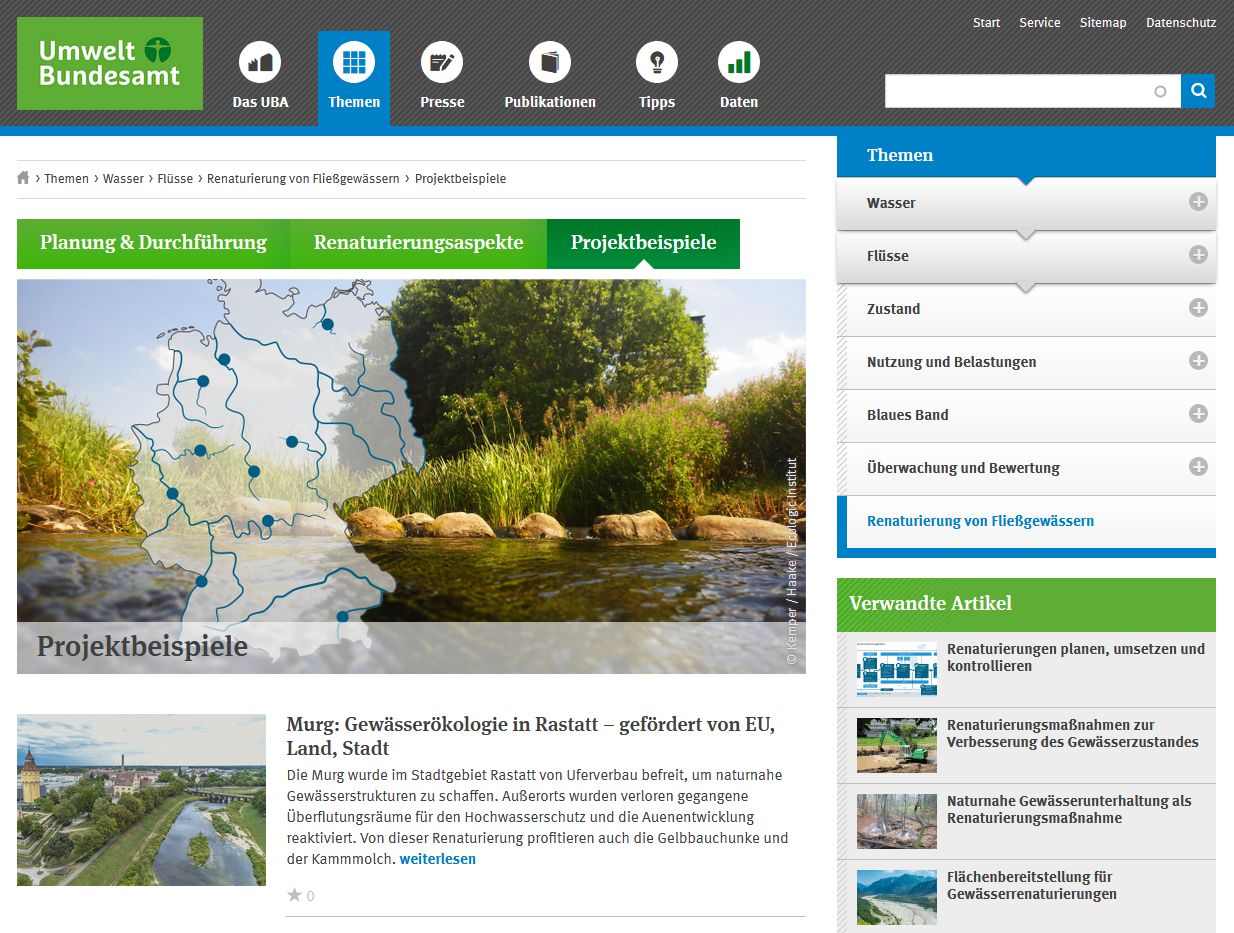
This information platform provides information for potential actors of renaturation projects. The aim of river restoration is to return rivers and streams to their natural state and to improve their ecological status.
On 20 November 2019, Doris Knoblauch of Ecologic Institute was invited as an expert to a hearing on "Climate Protection in the Pankow District" at the Pankow District Assembly in Berlin. The expert's presentation dealt with possible climate protection measures in terms of content (e.g. how the change in mobility or nutrition can succeed), but focused on organisational aspects, such as how climate protection can be anchored as a cross-sectional task in the district administration and within the population.
There are numerous regulatory approaches at the international, regional and national level regarding the handling of plastic products and plastic waste. What they all have in common is their limited effectiveness. Linda Mederake, Stephan Gürtler and Doris Knoblauch argue that this is partly due to the fact that at the international level a large number of binding agreements and voluntary initiatives have developed independently of one another and are therefore not coordinated in terms of content. The Plastics Atlas 2019 is available online.
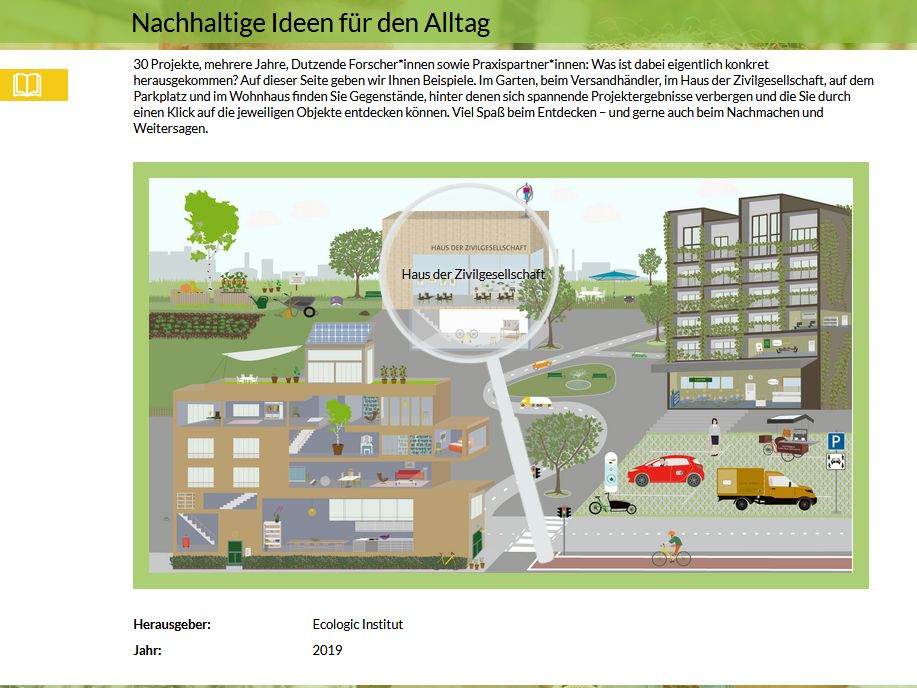
What can consumers, citizens, companies and local decision-makers do to make our economies more sustainable? 30 research projects were funded by the German Federal Ministry for Education and Research (BMBF) to research this and other aspects of a transition to a more sustainable economy. Practical ideas from these projects on how to act more sustainably are now available through an interactive website, produced by Ecologic Institute.
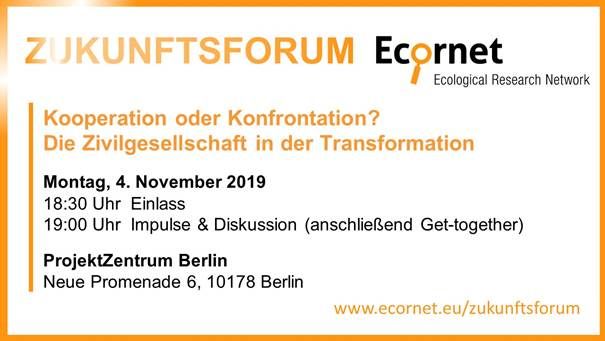
Meeting the Paris climate targets and transitioning to a climate-friendly, more sustainable society cannot be achieved without extended social alliances. This raises the question of how organizations should position themselves in the future: Will the disputes become sharper and fiercer? Which approaches are taken regarding current social and ecological problems? Is it possible to balance tensions and make compromises that are coherent with ecological and social interests? The Ecological Research Network (Ecornet) invited the public to join in discussing these questions.
On 25 October 2019 the Ecologic Institute supported the Federal Environment Agency (UBA) in a webinar on the IPCC Special Report on "The ocean and the cryosphere in a changing climate" (SROCC). The Ecologic Institute, together with the project Partner Climate Analytics, supported the UBA in defining and formulating the core messages of the SROCC published in September 2019.
On 21 October 2019, the event "Re-Use Berlin – neue Perspektiven für Gebrauchtwaren" (new perspectives for used goods) took place from 6 to 9 PM in Berlin's Urania. Ambassadors of reusing from Berlin presented their "stories" and visions, while business, administration and civil society representatives discussed existing approaches and sustainable ideas. 100 people participated in the event.
The enormously innovative German industry is in a position to develop many of the technical solutions required to achieve climate neutrality and bring them onto the market. However, this is not a fast-selling item, but also requires a long-term commitment from the public sector. In this article, Jan-Erik Thie and Benjamin Görlach of Ecologic Institute discuss how German industry can become climate neutral and why the public sector plays an important role. The article is available online.
Naumann, Stephan, Ulf Stein and Hannes Schritt 2019: Forum Fischschutz und Fischabstieg – Ergebnisse und Diskussion. In: WasserWirtschaft 2019, 10, 36-39.