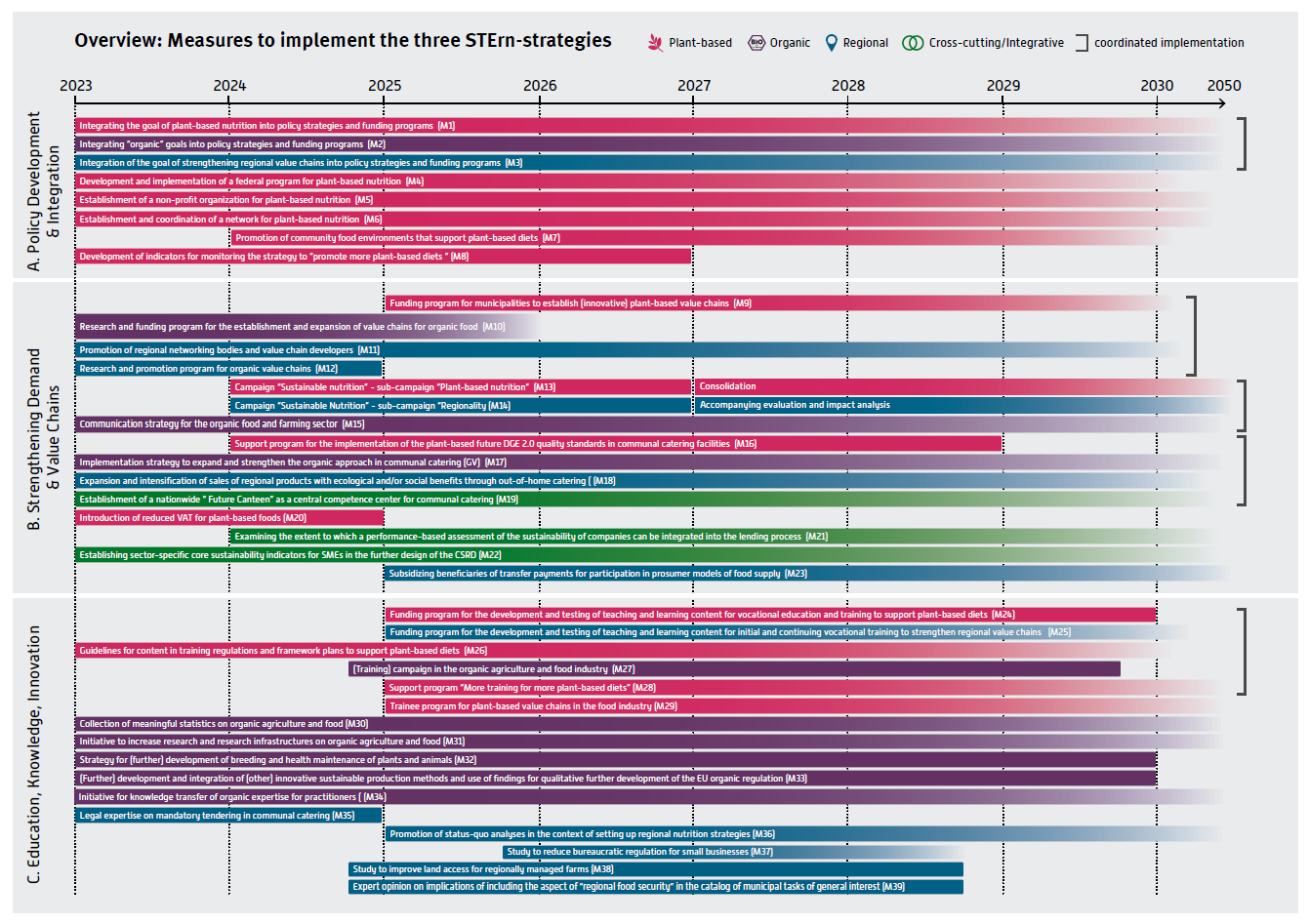
Animal products are an essential part of today's German diet, but they are associated with a variety of environmental problems, such as global warming, eutrophication of soils and waters, etc.. These cause external costs. The study, co-authored by Aaron Scheid and Benjamin Görlach of Ecologic Institute, estimates these external costs for animal products and examines policy measures to address them.
At the Expert Hearing in the European Parliament on "Sustainable management of water and resources in agriculture" on 25 April 2023, Dr. Ulf Stein, Senior Fellow of Ecologic Institute and Coordinator of the Water Studies, was invited as one of four experts. The aim of the event was to speak on the relationship between agriculture and water management in the context of the increasing scarcity of water resources due to climate change. The talk aimed to explore best practices and policy options that can help manage agriculture's impact on water resources, as well as address challenges to agriculture due to weather events such as droughts and floods.
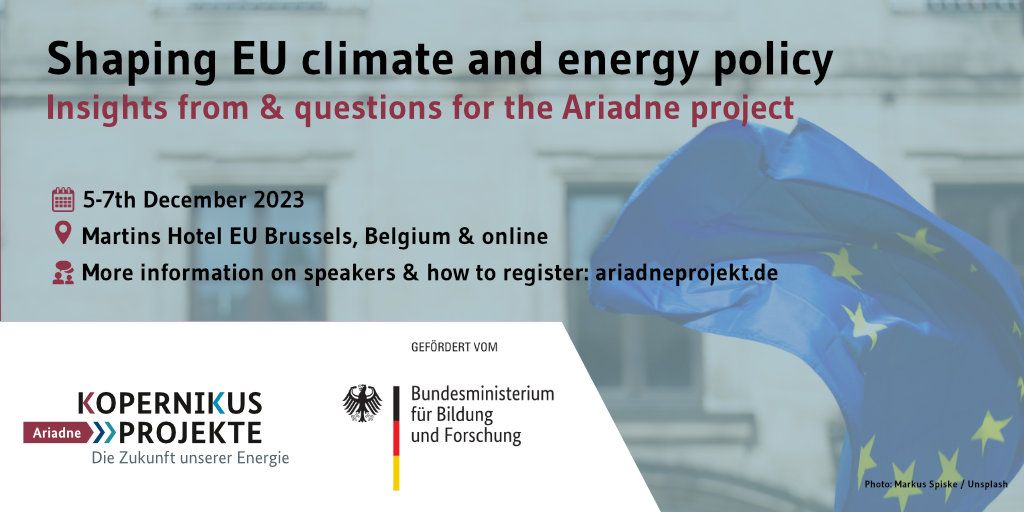
The aim of the thematic trip was to initiate an intensive dialog with international decision-makers, multipliers and journalists from different regions of the world to transfer and exchange experience and knowledge on the challenges of adapting to climate change. The aim was also to convey an up-to-date, authentic image of Germany in the field of climate protection and adaptation.
At this round table, organized by the TAPP (True Animal Protein Price) Coalition, the panel discussed a study that shows that true costs for animal products that takes into account all societal costs has a positive impact on society. The study was co-authored by Aaron Scheid and Benjamin Görlach from Ecologic Institute.
The further development of the National Climate Initiative (NCI) is based on the guiding principle of "100 % climate protection" and is ultimately intended to lead to a complete decarbonization of the economy and society, combined with a halving of energy consumption. Achieving this goal requires new approaches at many levels, among many actors and in many areas of daily life. The future further development of the NCI is also to be increasingly focused on this, and the necessary support programs are to be developed for this purpose.
Focusing on urban and rural development at the regional and local level as key areas of application for climate services, the paper characterizes this valley of death and suggests options to bridge the gap. The authors, among them Ecologic Institute's Dr. Grit Martinez, suggest that reframing of the concept of climate services can help expand their applications and effectiveness, taking local non-climate challenges, opportunities and narratives into account.
The Assessing Climate Change Risk in EUrope (ACCREU) project aims to support a just transition to climate resilience in the EU by co-creating and delivering actionable ideas and new knowledge. This project brings together diverse stakeholders to address climate change adaptation and mitigation in the face of new social and environmental challenges.
Dr. Stephan Sina, Senior Fellow at Ecologic Institute, gave a presentation on environmental criminal law at the Transfer Talk on Environmental Crime at the Criminological Research Center (KKF). He gave an overview of statistical developments, structural peculiarities of environmental criminal law, challenges in prosecution and the ongoing amendment of the EU's Environmental Crime Directive.
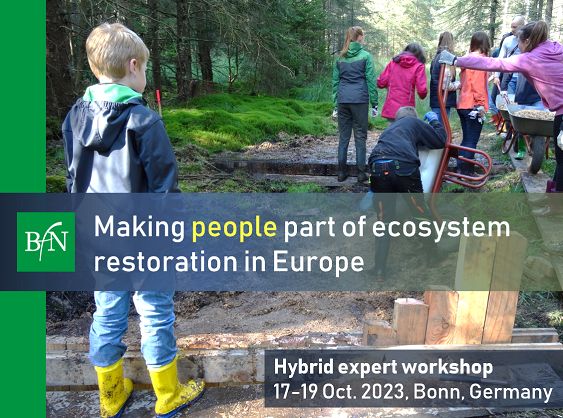
Our planet is experiencing a biodiversity crisis. And the problem across the EU is also severe, with more than 80% of habitats in the EU now in a bad or poor conservation status. To reverse this alarming trend, the European Commission has proposed the Nature Restoration Law, which aims to restore at least 20% of EU land and sea by 2030, and all ecosystems in need of restoration by 2050.
A key objective of the Interlace project is strengthening cooperation, learning, and peer-to-peer interactions between regions and projects. As part of this process, Natalia Burgos from the Interlace team was invited to take part in a knowledge exchange Task Force organized by Clearing House Project. The Task Force took place in Bogotá (Colombia) on 30 and 31 March 2023 and focused on discussing strategies for urban forest management and implementation, with an emphasis on governance and community participation.
On Thursday, 20 April 2023, INTERLACE hosted a Cities Talk Nature Talks webinar, aiming to strengthen cooperation, learning, and peer-to-peer interactions on the local, regional, and global scales. Natalia Burgos presented on governance instruments to mainstream nature-based solutions and shared best practices gathered in the Urban Governance Atlas.
Ecologic Institute recently hosted a delegation of Rwandan stakeholders consisting of government officials, scientists, and members of civil society. The event, organized by the Development, Climate, and Events teams and supported by the German Agency for International Cooperation (GIZ), aimed to expand Ecologic Institute's international networks and increase the reach of their research results.
At the online conference, "Moore II: Restoring Intact Ecosystems and Sustainable Use – Pathways to Success," held on 25 April 2023, Gregory Fuchs presented a policy paper stressing the need for freshwater ecosystem restoration. The event, organized to support the UN Decade for Ecosystem Restoration, specifically focused on peatland restoration.
This policy paper aims to inform discussions about the new policy monitoring mechanism by providing an overview of policy consistency and how to assess it. It discusses the specifics of consistency elaborated in the EU Climate Law, considers the academic and policy understanding of policy consistency and examines how this fits with the provisions in the law.
The Commission's proposal on the Carbon Removals Certification Framework puts the EU on a dangerous path that makes it easier to replace emissions reductions with CO₂ removals. Integrating CO₂ removal into EU emissions trading also carries risks. In this project, a robust framework for CO₂ removal was developed and discussed.