As the European Commission develops the CRCF, the need for effective monitoring, reporting and verification (MRV) systems and a detailed registry is becoming more pressing. Against this background, the CAFAMORE project addresses these challenges by developing a harmonised, parcel-level monitoring approach and a geographically explicit registry for carbon farming across the EU.
Ecologic Institute, in partnership with Ramboll and I4CE, continues its collaboration with the European Environment Agency in supporting the understanding of costs of climate impacts and climate adaptation. The overall aim of this study is to extract, complement and compile quantitative information on the economic costs and socio-economic impacts of climate adaptation versus costs of inaction in EU27 Member States. The work builds on previous work conducted by the consortium for the EEA which serves as the methodological foundation for this project.
To generate new sources of climate finance, this project assesses the design and implications of an international oil extraction levy. Unlike downstream carbon pricing policies, the levy would be applied at the point of oil extraction and based on the embedded carbon in crude oil. By internalising part of the climate costs of fossil fuels, the mechanism aligns with the polluter pays principle.
This project supports the German Environment Agency (UBA) in developing strategic options for the structural evolution of the EU ETS post-2030. Its results will feed into the European Commission's 2026 review of the ETS and inform Germany's position in upcoming negotiations on ETS reform.
The aim of this project is to compile an up-to-date overview of existing scientific studies on the economic valuation of marine ecosystems and their services, as well as on the environmental impacts of the oceans. The aim is to go beyond the consideration of short-term "provisioning services", both in terms of the ecosystem services recorded and in terms of geographical coverage.
This project aims to deepen understanding of CBAM, identify potential circumvention loopholes, and develop practical recommendations to close the remaining gaps.
The project's ambition is to contribute to the systemic transformation needed for a nature-positive economy through collaborative multi-stakeholder research and innovation to provide clarity and guidance for policy, industry and society.
This study aims to provide actionable recommendations to the European Commission for how to make progress on selected international climate finance instruments.
The project aims to provide the European Commission with information on how to best use the EU budget in the post-2027 MFF to achieve the ambitious environmental and climate objectives in an effective and efficient way. The results of this project will feed into the political processes that will shape the post-2027 MFF.
The Assessing Climate Change Risk in EUrope (ACCREU) project aims to support a just transition to climate resilience in the EU by co-creating and delivering actionable ideas and new knowledge. This project brings together diverse stakeholders to address climate change adaptation and mitigation in the face of new social and environmental challenges.
The project aims to communicate the benefits and challenges of emissions trading and provides information to interested partner countries. The upcoming project phase focuses on intensifying the dissemination of knowledge on emissions trading within the framework of various events. Workshops, informative panels and side events are organized by the consortium in Germany and abroad, for and with foreign governments, government-related institutions and interested stakeholders.
In collaboration with the International PtX Hub, we analyzed the emerging EU and international regimes and develop recommendations on GHG accounting and PtX sustainability. In a series of bilateral online workshops, we provided guidance to policy makers and other stakeholders from Algeria, Chile, Colombia, India, Kenya, Jordan, Namibia, South Africa, Uruguay and Vietnam.
Carbon pricing is gaining traction around the world, as more and more jurisdictions implement emissions trading systems or tax carbon emissions to achieve their climate objectives. The annual "State and Trends of Carbon Pricing" is the flagship report of the World Bank to provide a concise, up-to-date overview of what is happening in this field. With over 70,000 annual downloads, it is one of the most prominent publications on this matter. 2023 marks the 10th edition of the State and Trends report. A consortium of adelphi and Ecologic Institute supported the World Bank in developing the 2023 edition of the report.
The study "Macro-economic / top-down assessment of climate impacts on the EU economy" by Ramboll, SEURECO and Ecologic Institute aims to assist the Commission by providing a solid assessment of the costs of climate impacts in the EU, with a particular focus on the economic and social (distributional) costs which, according to the existing scientific evidence, could be potentially very significant.
The consortium of Ramboll, CE Delft and Ecologic Institute supports the EEA with the study "Defining adaptation needs, counting adaptation finance and enabling actions at national and European level," which aims to provide knowledge products to feed into different EEA products and processes in the field of adaptation and adaptation finance.
This project for the European Commission's Climate Directorate General investigates policies that put a price on agricultural emissions and reward farmers and others in the land use sector for sequestering carbon on their land.
This research project will examine various proposals for providing low-cost electricity from renewable energies for industry on behalf of the German Federal Ministry of Economics and Climate Protection (BMWK). The aim is to ensure the availability of green electricity for industry at stable, favorable prices so that companies can invest in climate-neutral production processes
The consumption of dairy, eggs and meat causes damage to the environment in various places in the supply chain, such as climate change, eutrophication and the emission of harmful substances such as ammonia (which contributes to nitrogen problems) and particulate matter. The TAPP Coalition (True Animal Protein Price Coalition) requests a European-oriented policy proposals to pass on the price of dairy, eggs and meat so that it reflects the actual costs to society and to calculate these for economic and environmental effects for the EU-27 involving two case studies for Germany and France.
In the course of the "European Green Deal", the greenhouse gas emission allowances cap in the European Emissions Trading Scheme (EU-ETS) was tightened in order to achieve the set target of reducing greenhouse gas emissions by 55% compared to 1990 levels by 2030. This leads to a higher risk of relocation of production sites to locations outside the EU ETS (so-called carbon leakage) by energy-intensive industries. The European Green Deal therefore considers a Carbon Border Adjustment Mechanism (CBAM). This mechanism is intended both to counteract the relocation of production sites and to promote the decarbonisation of CO2-intensive industry. The EU Commission presented a regulatory proposal for the introduction of such a mechanism on 14 July 2021. Within the framework of the research project, the possibilities of a CO2 compensation mechanism (CBAM) that is permissible under international, trade and European law is investigated, evaluated and presented. The work was carried out jointly by a consortium consisting of Ecologic Institute, Oeko-Institut and Prof. Dr. Michael Mehling.
This project looks at the distributional effects of energy tax reform across Europe and develops recommendations for making the reforms socially and environmentally sound. Ecologic Institute contributes to this project with its expertise of German energy taxation and will translate the findings of the modelling exercise to the German context.
Europe's environment is in an alarming state, with climate change expected to further aggravate the situation. This substantially threatens economic prosperity, human wellbeing and social peace. Our society and economy need systemic transformative change, and ecosystem restoration integrated into nature-based solutions lies at its heart. MERLIN (Mainstreaming Ecological Restoration of freshwater-related ecosystems in a Landscape context: Innovation, upscaling and transformation) is a 4-year Innovation Action project (funded by the EU) which aims to support transformative ecosystem restoration. The project will work in 17 flagship projects, from Finland to Israel, in order to generate a blueprint for to implement, upscale and replicate restoration and nature based solutions in freshwater ecosystems.
On behalf of the European Parliament, Ecologic Institute with support from IEEP investigate the potential of carbon farming to mitigate emissions in the EU and how to effectively increase carbon farming action. Ahead of two key EU Commission policy proposals in December 2021 (the 'Carbon Farming Initiative' and 'Carbon Removals Certification Mechanism'), the study summarises existing knowledge on carbon farming options, business models, and challenges. It also evaluates funding and policy opportunities to support its uptake.
Mexico took a significant step forward in January 2020 by initiating the pilot phase of its emissions trading system (ETS), making it the first country in Latin America to adopt such a system. The launch was a key milestone – eight years after the legal basis was established to develop the ETS. In this period the Mexican Secretariat of Environment and Natural Resources (SEMARNAT) has been developing the rules for the system, with the objective of reducing emissions efficiently, without affecting the competitiveness of national industries in the international market. To support this endeavour, a consortium of international and local experts came together to provide technical advisory services and capacity building for the successful implementation of the pilot phase and the design of the operational phase for the Mexican ETS.
The Arctic Winter College was a series of weekly webinars for 60 emerging leaders and experts, bringing diverse insights, and hosted by organizer Victoria Herrmann (President and Managing Director of The Arctic Institute). It focused on the theme "Arctic on the Move." The class schedule featured 20 great researchers, policy practitioners, and Traditional Knowledge holders.
The project "Capacity Building Emissions Trading to Support Bilateral Cooperation" aims to disseminate knowledge on emissions trading internationally and to support partner countries in setting up national emissions trading systems. The consortium supports the Federal Ministry for Environment, Nature Conservation and Nuclear Safety's bilateral activities in the field of capacity development and training on emissions trading. Former and current cooperation partners include Brazil, China, Chile, Kazakhstan, Mexico, South Korea, Thailand, Turkey and Ukraine.
To fulfill its commitments under the Paris Agreement, the European Union plans to increase the ambition of its 2030 greenhouse gas emissions reduction target. As a basis for this debate, in December 2020, the EU Commission published the communication "Stepping up Europe's 2030 climate ambition" and a related Impact Assessment (IA) on raising the 2030 target in September 2019. In the communication, the Commission proposed to increase the EU target to -55% compared to 1990 and presents different policy approaches to reach this target.
Together with FutureCamp, Ecologic Institute examines in detail the design options of climate protection contracts. The focus is on the practical implementation of the instrument, such as the design in compliance with EU state aid law as well as overlap and demarcation with other (funding) instruments.
In this project, Climact and Ecologic Institute analysed the impact assessment for the new EU climate target proposed by the Commission in September 2020. After examining policy options and modelling results, they were compared with recent studies, in particular with Climact's modelling results for 2030. A policy brief highlights key points where the Commission differs from other studies and identifies climate change potentials that deserve more attention in future analyses.
This project assesses the design options, implications and scope of carbon border adjustment mechanisms (CBAM) or alternative measures such as a carbon border adjustment for imports, a CBA on imports and exports, an excise with border adjustment in combination with continued free allocation, or a carbon added tax.
By bringing together policymakers from the European Commission and other European institutions, as well as selected experts from academia and civil society, this conference creates a virtual platform for discussion how Europe can leapfrog to resilience. The organizers offer a unique space for cross institutional dialogue and knowledge transfer, enriched by different perspectives and areas of expertise.
Around the world, an increasing number of countries have decided to phase out coal, both to achieve their climate targets, but also to modernise their electricity sector in the transition from fossil to renewable energy supply. This includes Germany, which long had one of the highest shares of coal use in Europe – and Chile, as one the first Latin American country to move beyond coal. To support the dialogue in the Chilean-German Energy Partnership, Ecologic Institute, Agora Energiewende and Chilean experts were commissioned to draft a paper comparing the coal phase-out processes in both countries.
The Ariadne project shows ways in which the climate goals can be achieved. The focus is on research for energy transition strategies, their systemic effects, and which sectoral interactions arise as a result. The project investigates policy instruments to help achieve climate goals in an efficient and socially balanced way. With the help of evidence-based assessments, the scientific basis for shaping the energy transition is to be expanded and any learning processes in politics and science are to be triggered.
Ecologic Institute investigates the extent to which transport and buildings are already affected by the existing EU emissions trading scheme, e.g. through district heating networks and electromobility. Furthermore, Ecologic Institute contributes case studies on non-European emissions trading schemes covering transport and/or buildings (including California, New Zealand and Tokyo). Furthermore, Ecologic Institute provides analyses on which price-based instruments are already applied in selected EU member states. Finally, Ecologic Institute examines how the expansion of emissions trading would affect competitiveness and the EU's existing climate policy instruments.
Under this contract, the Ecologic Institute continues its programme of ETS training and capacity building activities implemented under the auspices of the International Carbon Action Partnership (ICAP), supported by the European Commission. In an Ecologic-led consortium with ICF and Get2C, the programme seeks to provide participants from developing countries and emerging economies with knowledge to develop and implement emissions trading as a cost-effective policy instrument to reduce greenhouse gas emissions.
The European commission strives for carbon-neutrality in Europe by 2050. In order to achieve this goal, the energy intensive industries will have to reduce their emissions substantially. On behalf of the European Parliament, CE Delft and Ecologic Institute will summarise how energy intensive industries in Europe can transition to a carbon-neutral energy economy while preserving their global competitiveness.
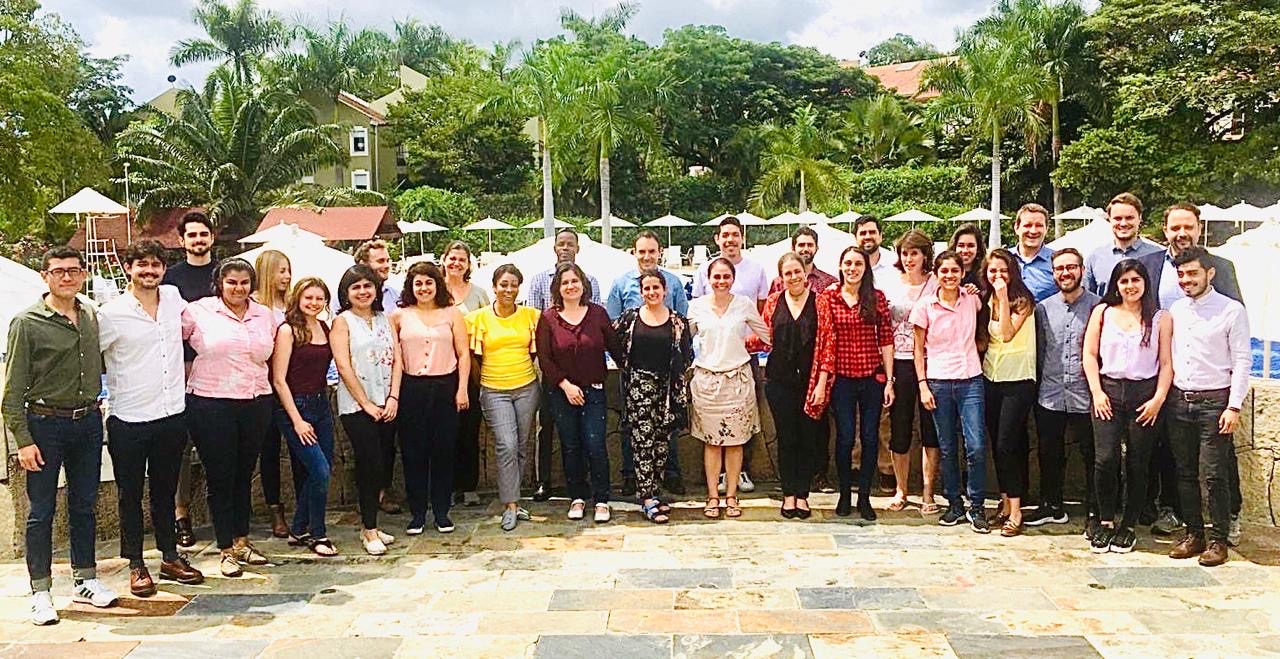
Together with the International Carbon Action Partnership (ICAP), Ecologic Institute implemented a training course on the design and implementation of emissions trading in Colombia. From 12 to 21 November 2019, the course brought together 27 participants from all across Latin America and the Caribbean, representing national governments in the region as well as academia, think tanks, business and industry, and intergovernmental organisations.
China's national carbon market has shown promising growth since its inception, with significant trading volumes and rising carbon prices. However, several challenges and deficiencies have surfaced during its operation, hindering the formation of a transparent and fair carbon price. To address these issues and enhance the effectiveness of the market, Ecologic Institute are providing research activities as part of an international consortium led by ICF.
The objective of this project is to support DG Climate Action (European Commission) in its assessment of Member States’ key challenges to reduce their greenhouse gas emissions and related policies recently put into place. The information should also help DG CLIMA in enhancing the role of climate policies in the European Semester. With this project, Ecologic Institute continues the work in this field since 2012.
The 2016 REFIT Evaluation of the Environmental Liability Directive (ELD) showed that the national implementation is working to a much lower extent than could be expected and with a great variation between the Member States. Under the Multi-Annual Work Programme for the period 2017 to 2020, the European Commission promotes, among others, the availability of financial security across the EU. Supporting this objective, the project aims to enhance the evidence base in relation to the current situation in Member States.
The Oekoworld Workshop on Sustainability Evaluation of Businesses in the Digital Economy in Berlin explored new ways to express ethical values in relation to complex technological and business-model innovations in the context of ethical and sustainable investment. The workshop was prepared and convened on 16 November 2018 by Ecologic Institute with sponsorship from Ökoworld AG, the asset management company behind the Oekovision investment fund.
From June 2018 to the end of January 2019, the Commission on "Growth, Structural Change and Employment" met as an independent body comprised of covering a broad cross-section of social, political and economic actors. As per its mandate from the German Federal Government adopted on 6 June 2018, the Commission was requested to develop a plan for ending coal-fired power generation in Germany, which would both contribute to meeting the Federal Government's climate policy goals, but also deliver recommendations on manging structural change in the coal regions and create new, future-proof jobs.
BIOBRIDGES's overall aim is to ensure the marketability of sustainable bio-based products by establishing primary partnerships between bio-based industries, brand owners and consumer representatives in cooperation with other stakeholders like local communities, local authorities and industrial actors. The ambition is to create at least two new cross-sector interconnections in bio-based economy clusters.
Ecologic Institute supported ICAP and GIZ in the implementation of an advanced training course on ETS design and implementation which took place in the Chinese city of Haikou, 22 to 26 October 2018. Based on the experience gained in previous ICAP Training Courses implemented by the Ecologic Institute, Benjamin Görlach was involved in the curriculum development, acted as one of the facilitators of the course, managed several of the interactive sessions and presented in several sessions throughout the course.
The G7 and G20 conferences are two multilateral fora for mutual exchange between the world largest economies. For the European Union, the congresses are particularly important to push for the implementation of the Sustainable Development Goals (SDGs) and to enhance international environmental protection. In this project, Ecologic Institute supports the European Commission in strengthening the voice of the EU in the negotiations. The team provides expert advice for EU position development on resource efficiency, circular economy, marine waste, plastics and sustainable finance.
Europe's energy sector transformation is now well on its way. Yet, to reach the EU's ambitious decarbonisation target for 2050, more fundamental changes will be required in the energy and transport system after 2020. To provide a solid basis for decision-makers, the Ecologic Institute supports Agora Energiewende in developing a report that delivers a snapshot of how the EU’s energy system could like in 2030. The new report "Big Picture of the European Clean Energy Transition in 2030" builds on the successful German predecessor "Energiewende 2030: The Big Picture". In a concise and accessible fashion, the report specifies key challenges in EU energy policy and shows the way forward towards higher ambition.