It is difficult to deny the fact that Earth's climate is changing. Almost all scientists consider the emission of greenhouse gases, mainly through the burning of fossil fuels such as coal, oil, and natural gas, to be one of the main reasons. The impacts of climate change include rising average and extreme temperatures, shifting patterns in snow- and rainfall, and rising sea levels. These changes threaten not only fragile ecological equilibria but also our economies and societies. Ecologic Institute's Senior Fellow Tanja Srebotnjak was involved in the indicator review for the report "Climate Change Indicators in the United States, 2012," published in December 2012 by the Environmental Protection Agency (EPA).
Fehér, János et al. 2012: Hydromorphological alterations and pressures in European rivers, lakes, transitional and coastal waters. VITUKI, NIVA, IWRS, Ecologic, Ecologic Institute, Stichting Deltares, SYKE, CENIA, Prague. ISBN: 978-80-85087-98-7.
This report evaluates the National Climate Initiative which aims at reducing German greenhouse gas emissions by 40% until 2020. In detail, 21 individual projects, 4 directives and 3 increases from 2008 to 2011 are examined.
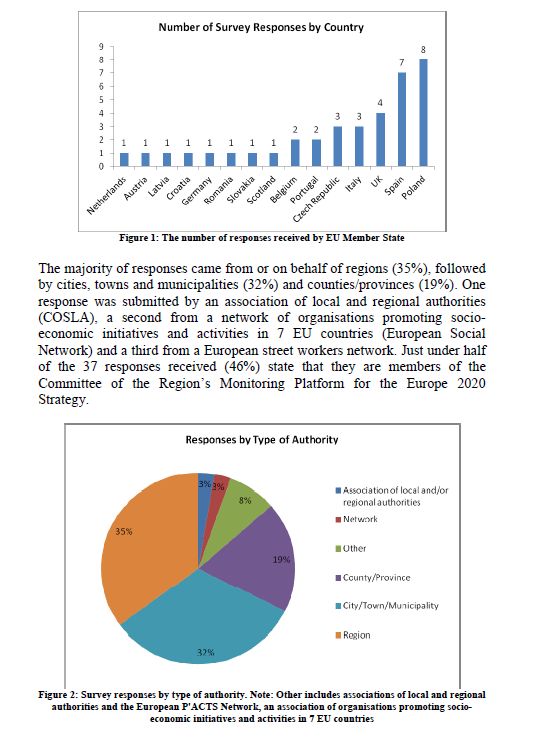
This report contains the results of a survey of the EU Committee of the Regions about the impacts of the financial and economic crisis on SMEs. It points out how the affected regions and cities reacted to this challenge by supporting their local businesses in various ways. Furthermore it concentrates on the question, whether these steps were of any help and what could have been solved in a better way. The report is available for download.
The European Union needs a common vision for its energy future. A shift towards renewable energy sources will increase security of supply, improve the competitiveness of the European economy, and put Europe on a path towards sustainability. The Heinrich Böll Foundation commissioned a working group of experts from different backgrounds to provide a collection of policy ideas for two key areas that will define the future of renewable energy development in Europe: grids, and support and remuneration schemes for renewable energy technologies. The report 'A European Union for Renewable Energy' was co-authored by Sascha Müller-Kraenner, Partner of Ecologic Institute and Susanne Langsdorf, researcher at Ecologic Institute. The study is available for download.
This study about the costs and benefits of adaptation measures in Germany shows that many such measures can deliver results and are economically viable. Included here are green roofs that protect against heat waves in cities, the restoration of floodplains, and heat-resistant asphalt for street cover. Measures to increase awareness of adaptation opportunities were also found to have positive effects.
This study follows the analysis of the role played by Local and Regional Authorities (LRA) in the first round of National Reform Programme (NRP) submissions in 2011. The 2012 study is based on the same set of questions and evaluation protocol used in 2011. Three additional assessment questions were added to reflect the dynamic nature of Europe's economic and policy landscape, including the pressing need to promote sustainable job growth and the fiscal consolidation of the public sector.
The Ecologic Institute report is based, inter alia, on over 70 interviews conducted with policy-makers and experts in Ethiopia, Morocco, Israel and the occupied Palestinian Territories (oPT), as well as representatives of the EU and the UN. The report assesses not only the effectiveness of existing measures for addressing hydro-climatic risks, but also collects perspectives on how these policies should develop.
Ecologic Institute and Perspective GmbH analysed the role of German companies in the CDM and JI markets in this report funded by the German Federal Environment Agency. German producers of environmental technology hold leading positions on the world market today and are expected to do so in the future. However, German technology providers do not play a major role in CDM/JI projects: the share of German technology in CDM projects is less than 20%. An English summary of the report is available for download.
This study developed a detailed assessment of the potential threats, risks, damage costs, and existing adaptive capacities of Member States in the realm of the CAP and Cohesion Policy, as well as an appraisal of options and strategies through which the CAP and Cohesion Policy can adapt to a changing climate. The study makes recommendations and offers guidance to public authorities in Member States on how to mainstream climate into and climate proof expenditures and measures under Cohesion Policy and the CAP. The study findings are of direct relevance for the programming of CAP and Cohesion Policy expenditures under the next EU Multi-Annual Financial Framework from 2014 to 2020. The final report is available for download.
The latest research results on climate change and adaptation along the German Baltic Sea Coast are presented by the RADOST project (Regional Adaptation Strategies for the German Baltic Sea Coast) in its 3rd annual report. They were developed in cooperation with partners in the project region.
Actors from different levels of government have been the focus of this survey on adaptation to climate change, which was carried out as part of RADOST. Questions are explored, what would be possible climate impacts, what can be understood as adaptation measure on the Baltic coast, and who is responsible for the implementation of adaptation measures. The report is available for download.
Industrialized countries have committed themselves to providing USD 100 billion of "new and additional" financing annually by the year 2020 to support developing countries in their efforts to mitigate climate change and adapt to its effects. But what does "new and additional" mean? Where do development projects end and where do climate change measures start? These questions are tackled by Irene Knoke (Südwind Institute) in a study for the European Parliament. Matthias Duwe (Ecologic Institute) provided his expert opinion in a peer review of the paper. The study is available for download.
The report aims to provide those working to improve senior health in San Mateo County with a wide variety of information on current and projected senior health. To achieve this, it relies on many sources of information, chief among them the San Mateo County Health System, specifically the Aging and Adult Services Division and the Health Policy and Planning Division. Their work is supplemented with statistics from the US Census Bureau, especially the American Community Survey, as well as a broad range of academic and policy studies, geospatial statistics and visualizations.
Vidaurre, Rodrigo and Isabelle Turcotte 2012: Results of the Stakeholder Consultation on Requirements for a Possible Environmental Risk and Hazard Classification System for Pharmaceuticals. Ecologic Institute, Swedish Environmental Research Institute, Institute for Social-Ecological research.