To date, developing countries have only participated in the carbon market as suppliers of offsets: through projects that reduce greenhouse gas emissions, they generate credits that are then sold to industrialised countries that have not acieved their mitigation targets. Since climate change is becoming an ever more pressing problem, however, mitigation in developing countries will need to go beyond offsets. At the same time, developing countries need to meet their responsibilities for the social welfare of their growing populations; scaled-up mitigation efforts will hence require time, capacity building, and large-scale investment. The so-called "Nationally Appropriate Mitigation Actions" (NAMAs) have been discussed as a way to enhance mitigation efforts in developing countries while taking into account their national circumstances and development priorities.
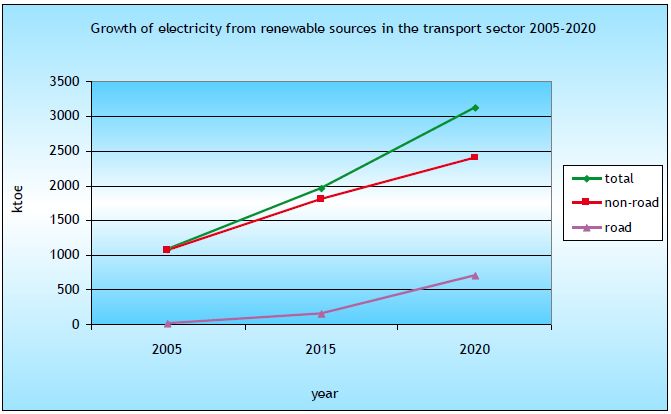
The European Union (EU) wants to increase the share of renewable energy in the transport sector to 10% by 2020. This 10% target was set in the Renewable Energy Directive (RED). However, it currently focuses on the use of biofuels in transport and assumes a grid-average for electricity used in transport. No methodology is available for biomethane and hydrogen from renewable sources. The study "Shifting Renewable Energy in Transport into the Next Gear" was performed to determine whether there are conditions under which it is possible and beneficial to amend the RED to include new methodologies for renewable electricity, hydrogen and biomethane to count towards the 10% transport target. The final report is available for download.
Developing a methodology for taking into account all electricity, hydrogen and methane from renewable sources in the 10% transport target - Report for the Directorate General Energy
In a literature review, Ecologic Institute examined the effects of environmental tax reforms on the distribution of wealth among different population groups. The review was a contribution to a project commissioned by the European Environment Agency that analysed the long-term perspectives of a substantial shift of taxation from labour and income towards resource use in Europe. Distributional impacts of such a tax reform are addressed in one project report, while another one focuses on the effects of environmental tax reform on innovation.
Between June and August 2011, BioFresh Team members from Ecologic Institute and Oxford University School of Geography and the Environment undertook an online survey of stakeholders' opinions of the status and policy profile of freshwater biodiversity in policy-making and of various communication channels that link science and policy. The evaluation report is available for download.
The German nuclear phase-out and shift to renewable energy is of great interest in other countries, including China. An article by Jane Feng 冯洁in the "Southern Weekly" 南方周末, Guangdong, cites R. Andreas Kraemer of Ecologic Institute on grid expansion, reserve capacities, and future electricity prices.
Developing countries are the main providers of genetic resources and traditional knowledge. Conversely, most intellectual property rights (IPRs) on seeds and medicines are concentrated in developed countries. This has some disadvantages for developing countries. Thus, patents on seed or pharmaceutical products sometimes make the access to such products for the poor more difficult and expensive; there are hardly any positive effects of IPRs on fighting poverty by contrast. This is the result of a study for the European Parliament that Ecologic Institute helped to write. The study, which was written by Ecologic Institute (Christiane Gerstetter, Christine Lucha, Katriona McGlade and Elizabeth Tedsen) and Vrije Universiteit Brussel is available for download.

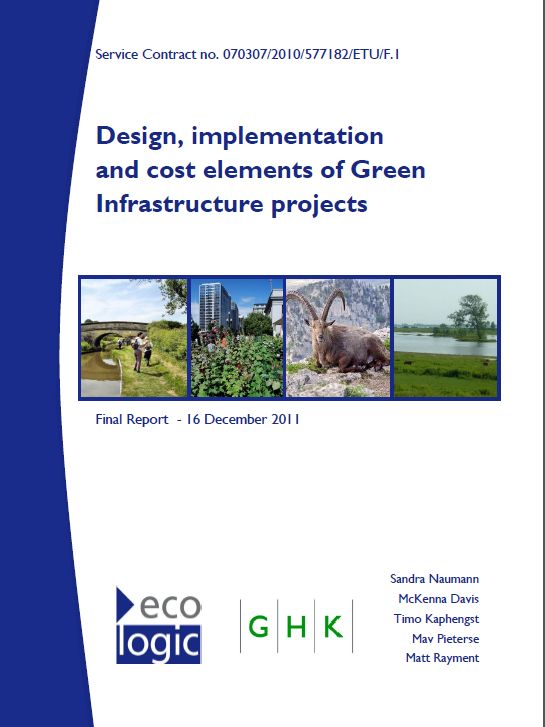
Ecologic Institute and GHK produced a comprehensive overview of the design, implementation and cost efficiency of green infrastructure projects in the EU to solidify the understanding of this concept. The study was presented at the workshop "Insights from Green Infrastructure projects in the EU", held in Brussels on 17 January 2012. Given the cross-sectoral nature and relevance of the subject, attendees included representatives from DG Environment, DG Clima and DG Regio, amongst others. The study contributes to the EU’s post-2010 biodiversity policy and the development of the upcoming EU strategy on green infrastructure. The final report is available for download.
The report aims at providing an in-depth analysis of the expected benefits of better implementation and enforcement of EU waste legislation, and the means with which this can be achieved. The report is available for download.
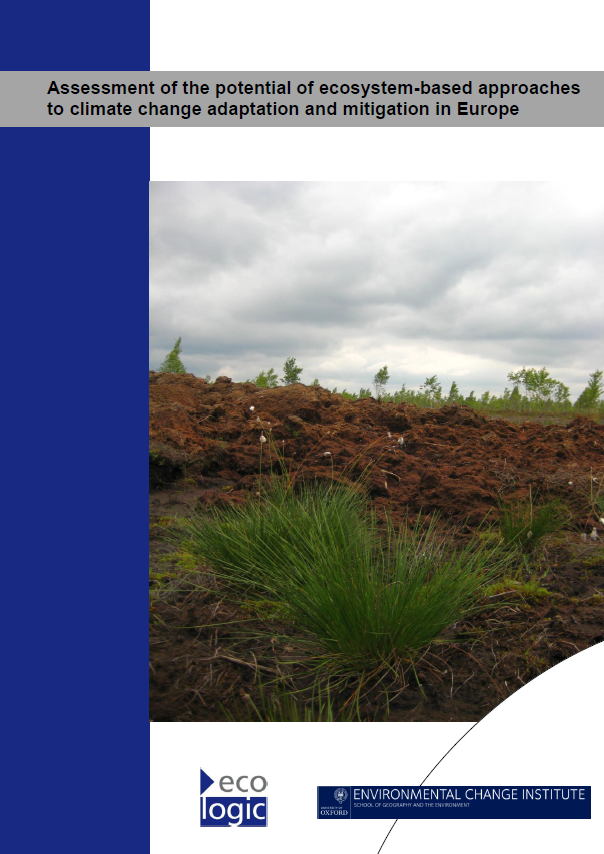
This study aimed to address current knowledge gaps regarding the uptake and implementation of ecosystem-based approaches, and thereby gain a better understanding of their role and potential in climate change adaptation and mitigation in Europe.
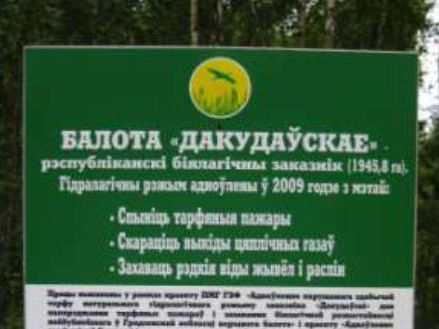
This report presents an analysis of the Peatland Rewetting Project in Belarus, which explores the potential of carbon emission reductions from rewetting degraded or depleted peatland located within the Belarusian territory and the opportunity to trade credits representing these reductions in a voluntary carbon market. Peatland rewetting as applied in the Belarus Project represents an ecosystem-based approach to climate change adaptation and mitigation and is approached in this report as such. The report is available for download.
Despite the continuous international efforts to reduce energy poverty, about 2.7 billion people do not have access to modern energy services in the developing countries. This study analyses the current situation, outlines the main challenges but also provides best practice examples how the challenges can be met. Eike Dreblow from Ecologic Institute was one of the authors. The final results of this project are available for download.
Martinez, Grit; Bray, Dennis (2011): Befragung politischer Entscheidungsträger zur Wahrnehmung des Klimawandels und zur Anpassung an den Klimawandel an der deutschen Ostseeküste. Ecologic Institut Berlin & Helmholtz-Zentrum Geesthacht. RADOST-Berichtsreihe, Bericht Nr. 4.
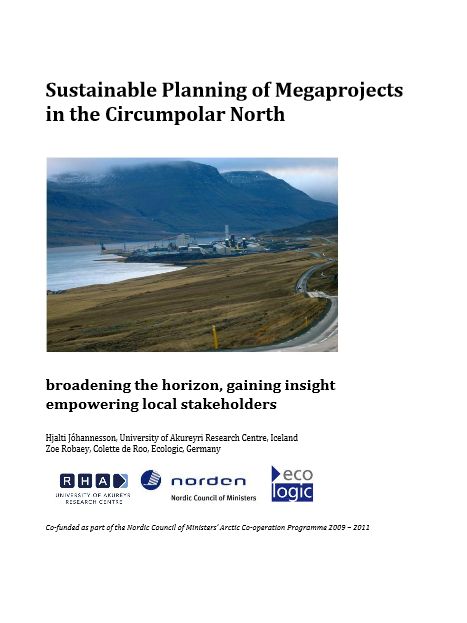
Assessing the sustainable development of megaprojects in the Circumpolar North involves looking at socio-economic and environmental impacts, while studying the processes that enable citizen participation. Two megaprojects in Iceland and Canada are evaluated through these lenses, and lessons learned are derived for the sustainable planning of future megaprojects. The publication is available online.
Flörke, Martina et al. 2011: Final Report for the Project Climate Adaptation - Modelling Water Scenarios and Sectoral Impacts. Center for Environmental Systems Research, Kassel.