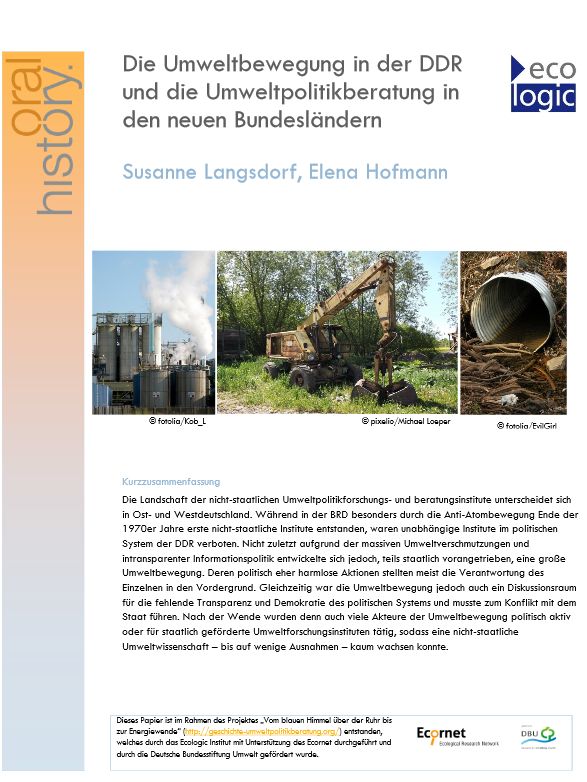
Die Umweltbewegung in der DDR und die Umweltpolitikberatung in den neuen Bundesländern
- Publication
- Citation
Langsdorf, Susanne; Hofmann, Elena 2014: Die Umweltbewegung in der DDR und die Umweltpolitikberatung in den neuen Bundesländern.
The landscape of non-governmental environmental policy research and advisory institutes differs between eastern and western Germany. In West Germany, the anti-nuclear movement in particular contributed to the emergence of the first non-governmental institutes in the late 1970s, whereas independent institutes were prohibited under the political system of the GDR. Yet widespread environmental pollution and a lack of transparency in the provision of information helped give rise to a large environmental movement, partly encouraged by the state itself. Its politically less contentious activities tended to emphasise individual responsibility. At the same time, however, the environmental movement provided a forum for discussing the political system’s lack of transparency and democracy, inevitably bringing it into conflict with the state. Following German reunification, many members of the environmental movement entered politics or took up positions at publicly funded environmental research institutes. As a result, with only a few exceptions, independent environmental research struggled to establish itself.
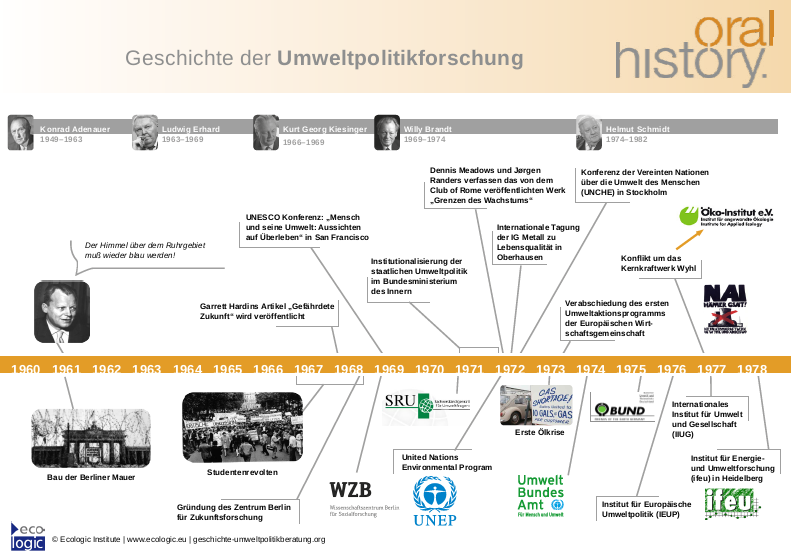
The project ‘From Blue Skies over the Ruhr to the Energy Transition’ (December 2012–June 2014) produced seven papers covering a range of topics. They drew on findings from the project interviews and placed them in the context of the existing academic literature. In doing so, the papers contributed to documenting the history of non-governmental environmental policy research and advice and identified areas in which the material collected could help fill existing gaps in knowledge. At the same time, the findings raised further research questions extending beyond the scope of the project.

- Language
-
German
- Authorship
- Funding
-
Deutsche Bundesstiftung Umwelt (DBU), Germany - Year
- Dimension
- 13 pp.
- Project
- Project ID
- Table of contents
-
Click to show full table of contents
- Keywords
-
environmental movement, GDR, environmental policy, environmental research, environmental history, environmental pollution, environmental movement, environmental science, German reunification, German transition period, civil society, oral historyGermany, eastern Germany, new federal states, Berlin, Brandenburg, Saxony, Saxony-Anhalt and Thuringialiterature review, oral history, interviews with contemporary witnesses, expert interviews, semi-structured interviews, qualitative interview analysis, transcription
Knoblauch, Doris; Mederake, Linda 2014: Die Anfänge der nicht-staatlichen Umweltpolitikforschung und -beratung.
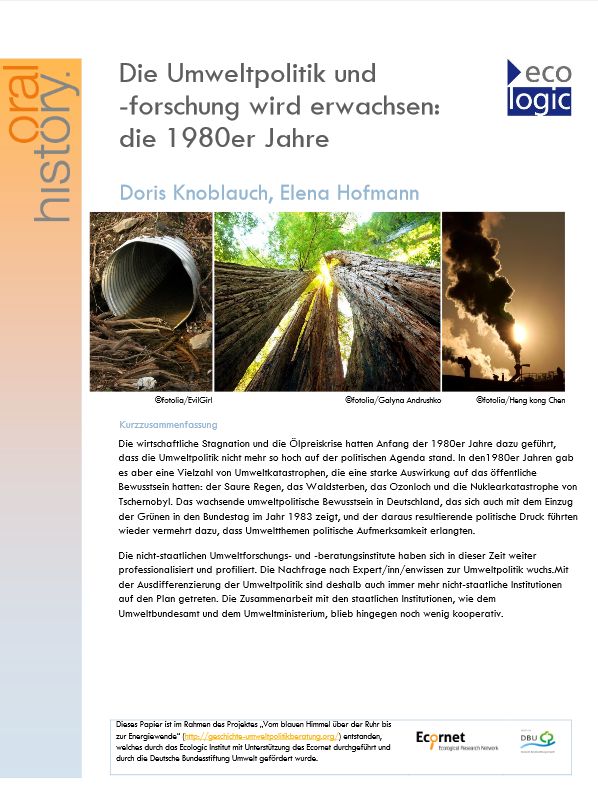
Knoblauch, Doris; Hofmann,Elena 2014: Die Umweltpolitik und -forschung wird erwachsen: die 1980er Jahre.
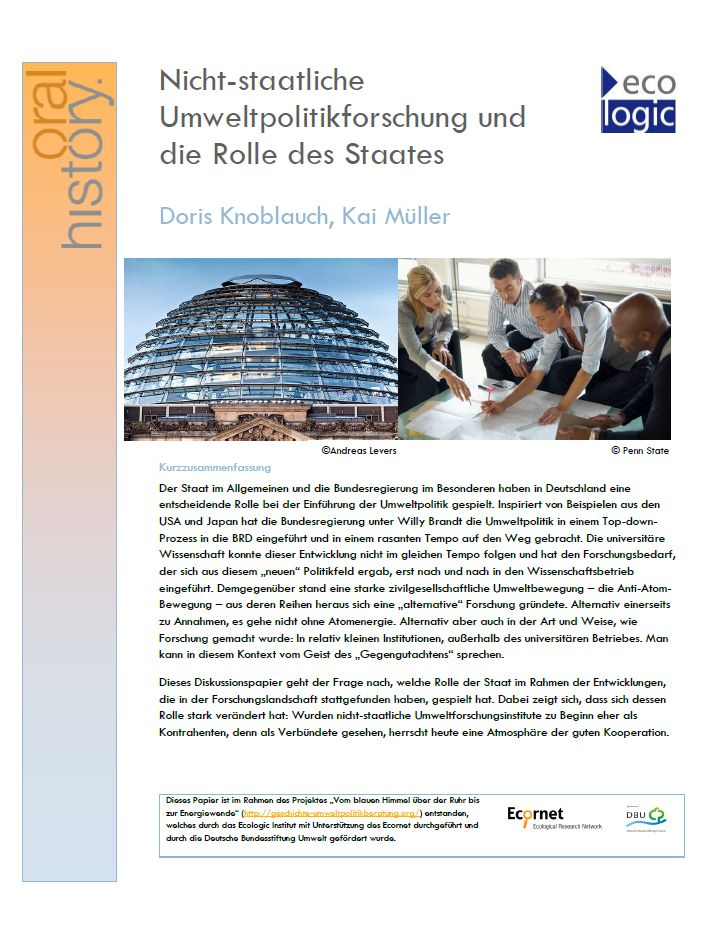
Knoblauch, Doris; Müller, Kai 2014: Nicht-staatliche Umweltpolitikforschung und die Rolle des Staates.
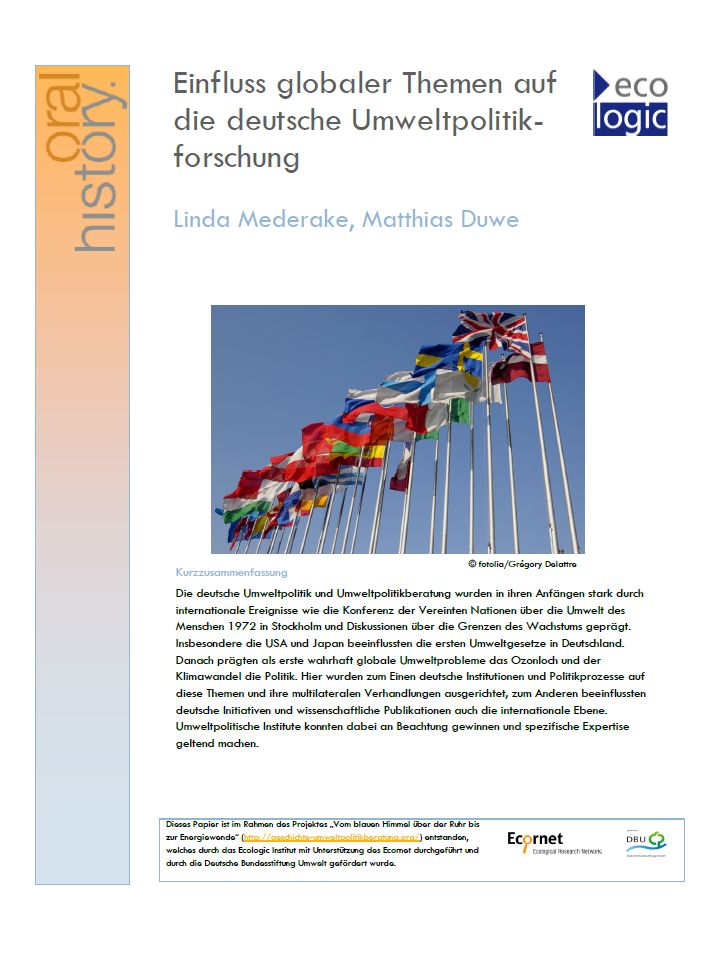
Mederake, Linda; Duwe, Matthias 2014: Einfluss globaler Themen auf die deutsche Umweltpolitikforschung.
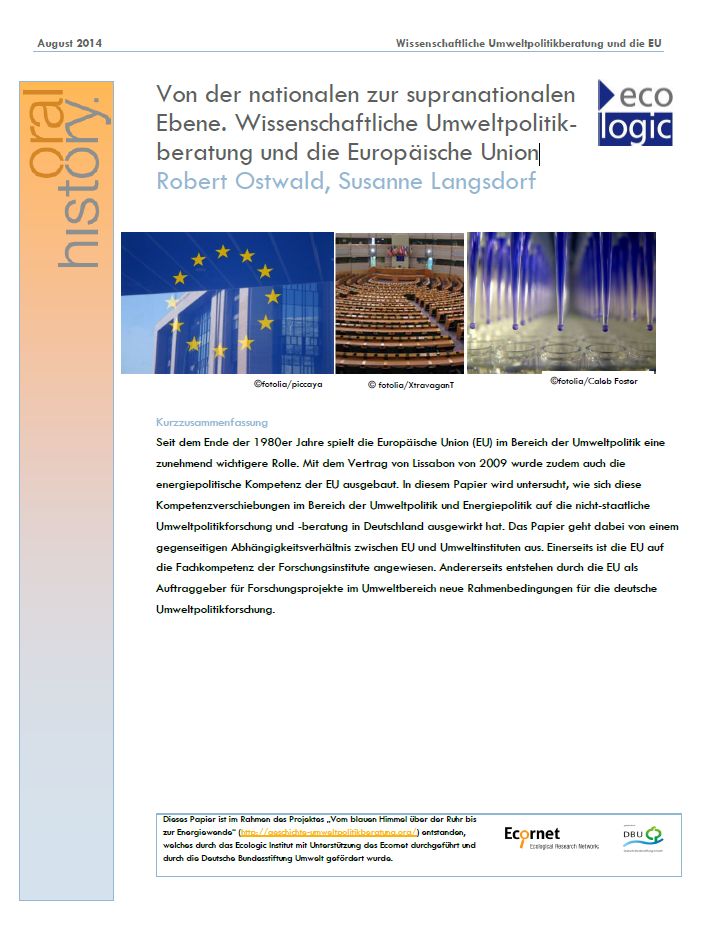
Ostwald, Robert; Langsdorf, Susanne 2014: Von der nationalen zur supranationalen Ebene. Wissenschaftliche Umweltpolitikberatung und die Europäische Union.
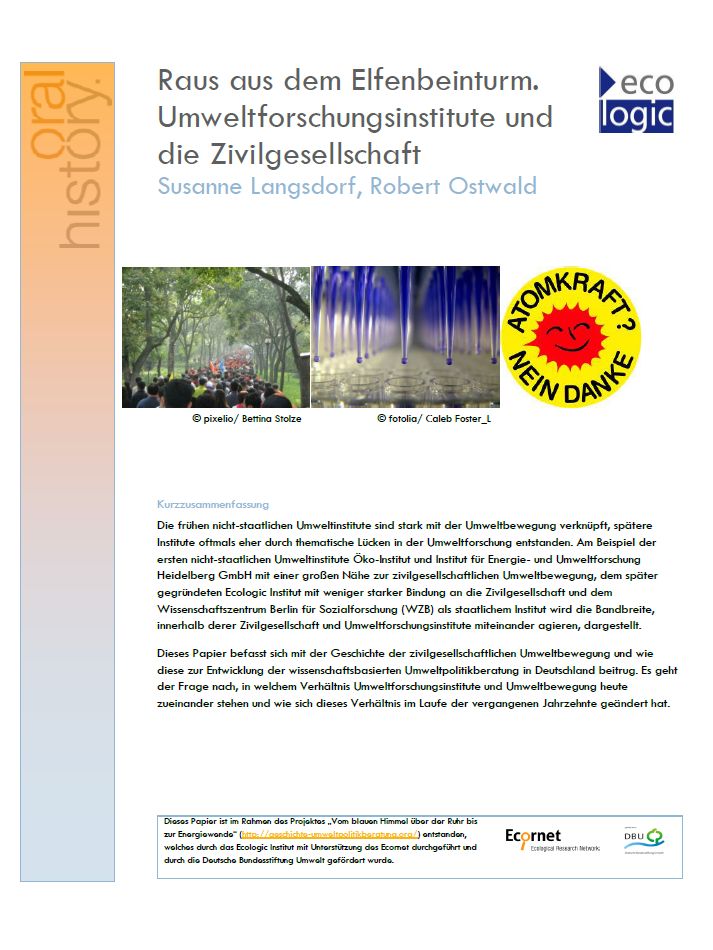
Langsdorf, Susanne; Ostwald, Robert 2014: Raus aus dem Elfenbeinturm. Umweltforschungsinstitute und die Zivilgesellschaft.