Nicht-staatliche Umweltpolitikforschung und die Rolle des Staates
- Publication
- Citation
Knoblauch, Doris; Müller, Kai 2014: Nicht-staatliche Umweltpolitikforschung und die Rolle des Staates.
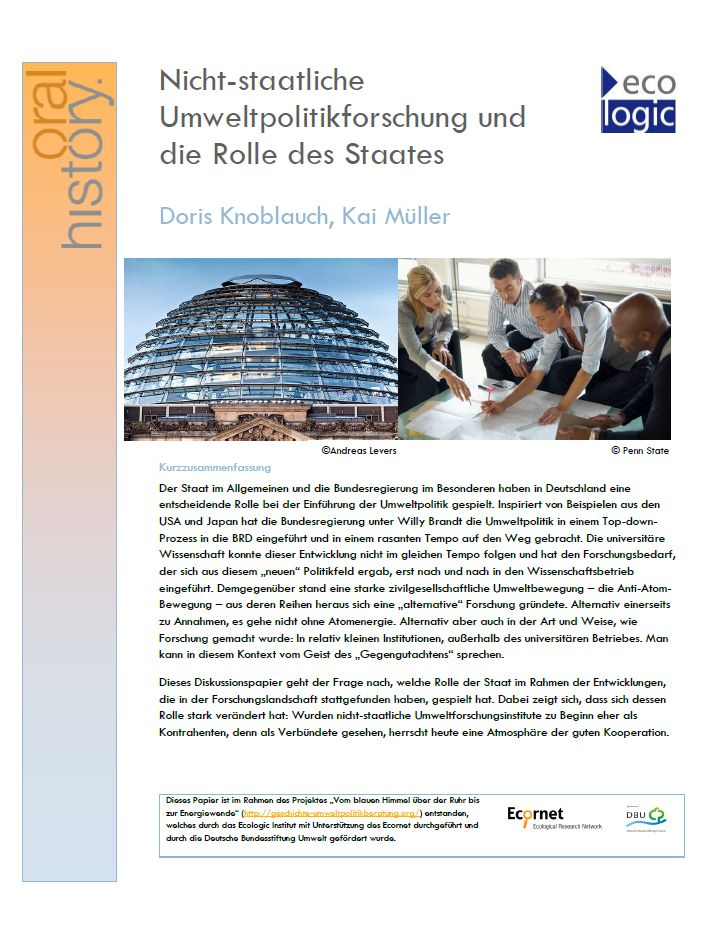
The state in general and the federal government in particular played a decisive role in the introduction of environmental policy in Germany. Inspired by developments in the United States and Japan, Willy Brandt’s government introduced environmental policy in West Germany through a top-down process and advanced it at remarkable speed. Academic research was unable to keep pace with these developments and only gradually incorporated the research needs arising from this “new” policy field into the academic system.
At the same time, a strong civil-society environmental movement – particularly the anti-nuclear movement – gave rise to a form of “alternative” research. It was alternative, on the one hand, in challenging assumptions such as the belief that nuclear energy was indispensable. On the other hand, it also represented an alternative way of conducting research: in relatively small institutions operating outside the university system. In this context, one can speak of a spirit of “counter-expertise” (Gegengutachten).
This discussion paper examines the role played by the state in the changes that took place within Germany’s research landscape. It shows that this role changed considerably over time: while independent environmental research institutes were initially regarded more as adversaries than as allies, their relationship with the state has since evolved into one characterised by constructive cooperation.
The project ‘From Blue Skies over the Ruhr to the Energy Transition’ (December 2012–June 2014) produced seven papers covering a range of topics. They drew on findings from the project interviews and placed them in the context of the existing academic literature. In doing so, the papers contributed to documenting the history of non-governmental environmental policy research and advice and identified areas in which the material collected could help fill existing gaps in knowledge. At the same time, the findings raised further research questions extending beyond the scope of the project.
Contact


- Language
-
German
- Authorship
- Funding
-
Deutsche Bundesstiftung Umwelt (DBU), Germany - Published by
-
Ecologic Institute, Germany - Year
- Dimension
- 20 pp.
- Project
- Project ID
- Keywords
-
history of environmental policy, independent environmental research, environmental research institutes, environmental policy research, science-based policy advice, alternative environmental research, environmental movement, anti-nuclear movement, science-policy interface, environmental policy advice, civil society research, environmental governance, history of environmental research, institutionalisation of environmental policy, independent research institutes, counter-expertise, state and environmental researchWest Germany, Federal Republic of Germany, United States, Japanhistorical analysis, institutional analysis, environmental policy analysis, research landscape analysis, actor analysis, analysis of institutional change, historical policy research, science-policy analysis, analysis of state-civil society relations, institutional development analysis
Langsdorf, Susanne; Hofmann, Elena 2014: Die Umweltbewegung in der DDR und die Umweltpolitikberatung in den neuen Bundesländern.
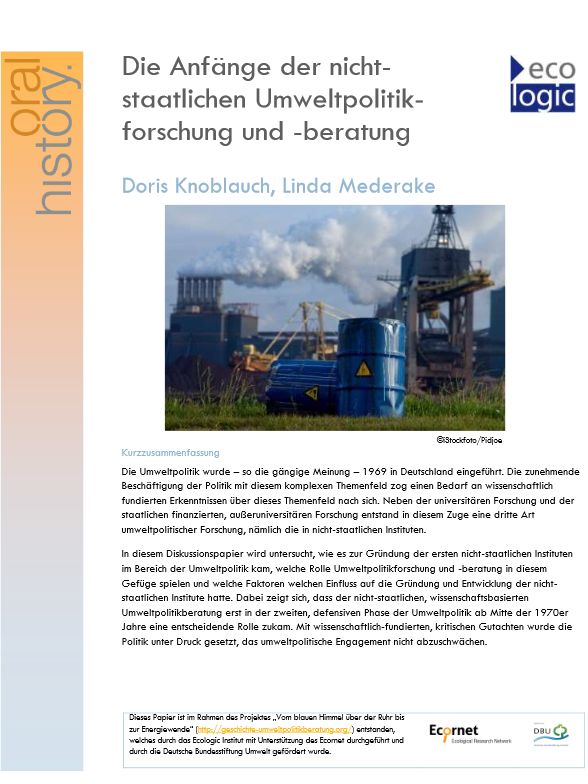
Knoblauch, Doris; Mederake, Linda 2014: Die Anfänge der nicht-staatlichen Umweltpolitikforschung und -beratung.
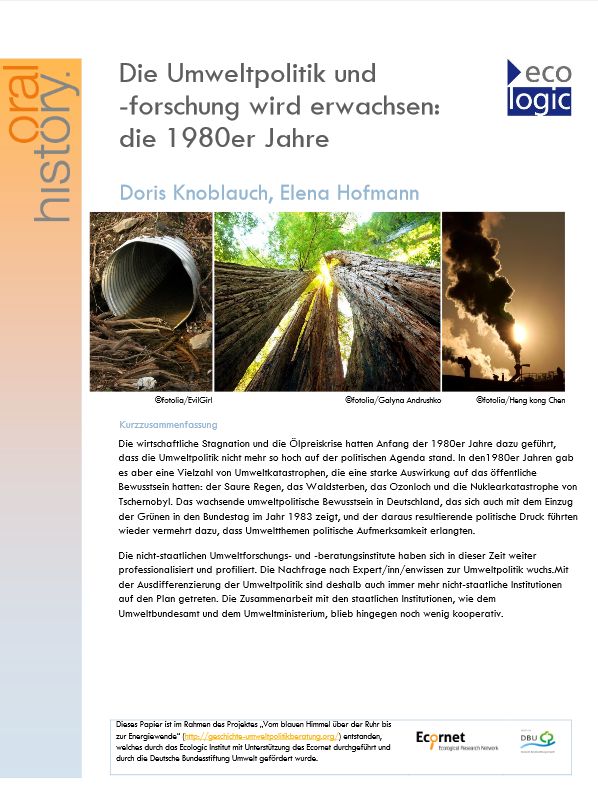
Knoblauch, Doris; Hofmann,Elena 2014: Die Umweltpolitik und -forschung wird erwachsen: die 1980er Jahre.
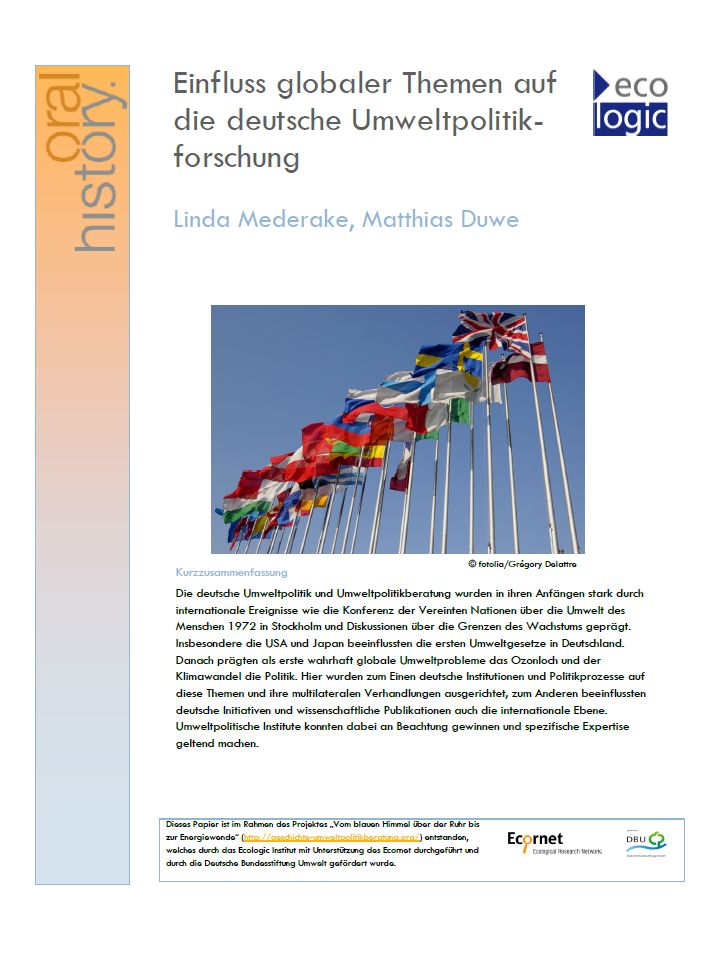
Mederake, Linda; Duwe, Matthias 2014: Einfluss globaler Themen auf die deutsche Umweltpolitikforschung.
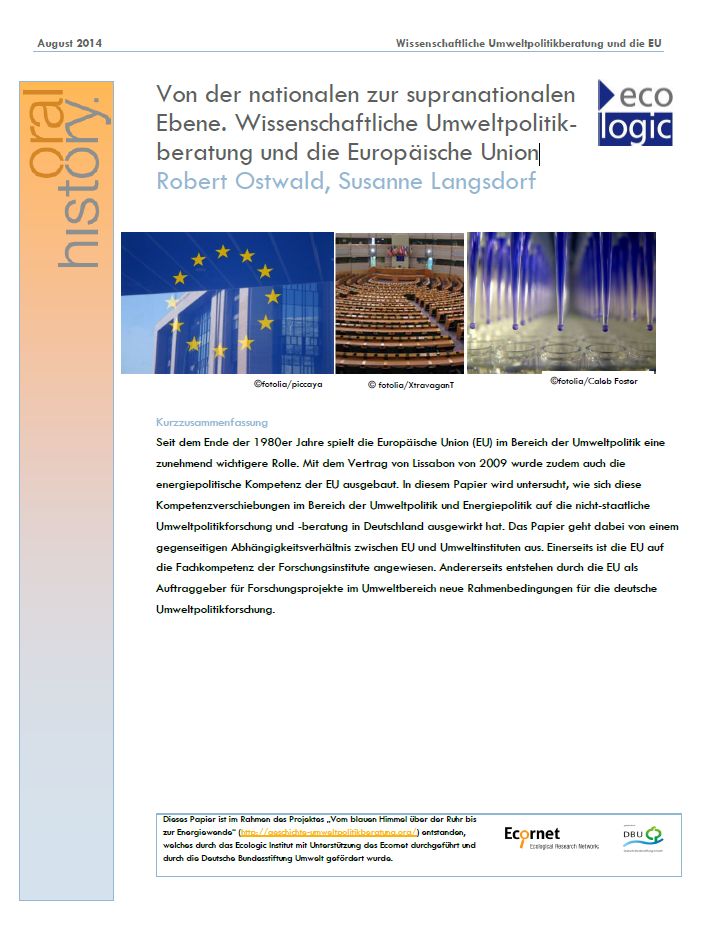
Ostwald, Robert; Langsdorf, Susanne 2014: Von der nationalen zur supranationalen Ebene. Wissenschaftliche Umweltpolitikberatung und die Europäische Union.
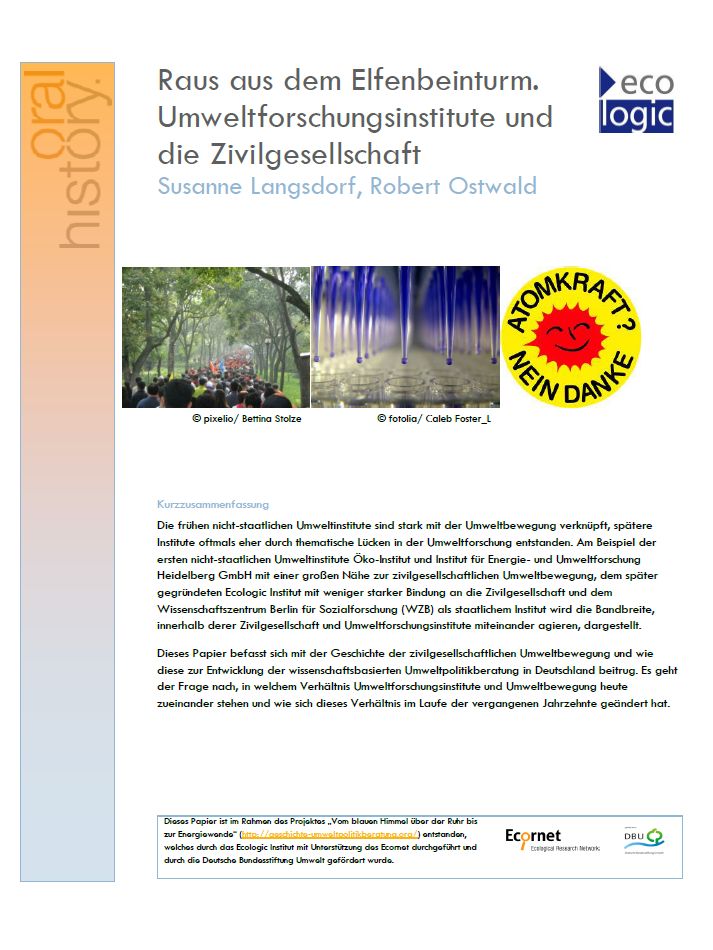
Langsdorf, Susanne; Ostwald, Robert 2014: Raus aus dem Elfenbeinturm. Umweltforschungsinstitute und die Zivilgesellschaft.