
Image by Alfons Landsmann from Pixabay, article page by Springer Nature, 2026
Challenges for Assessing and Implementing Nature-based Solutions at Landscape-scale
Insights from project on ponds and pondscapes
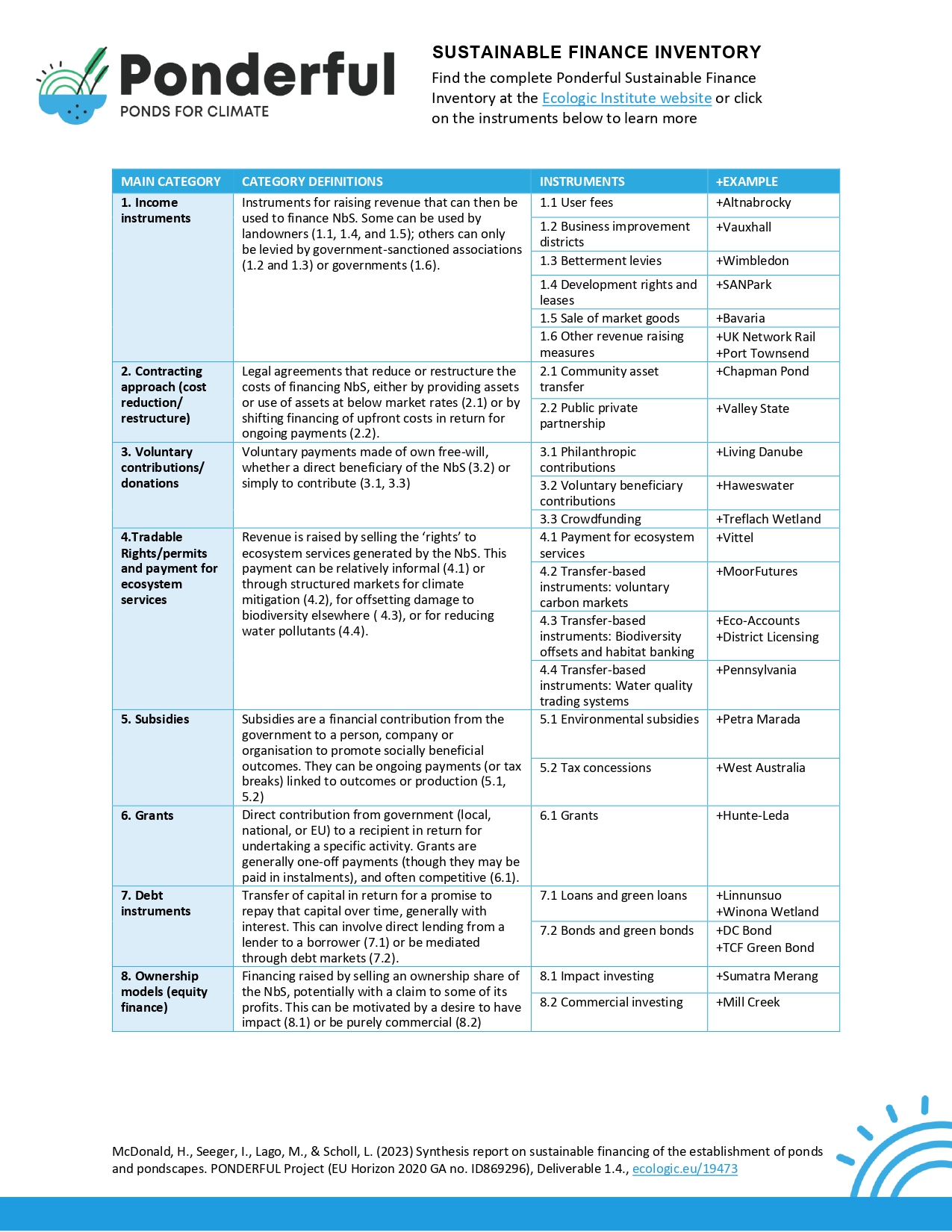
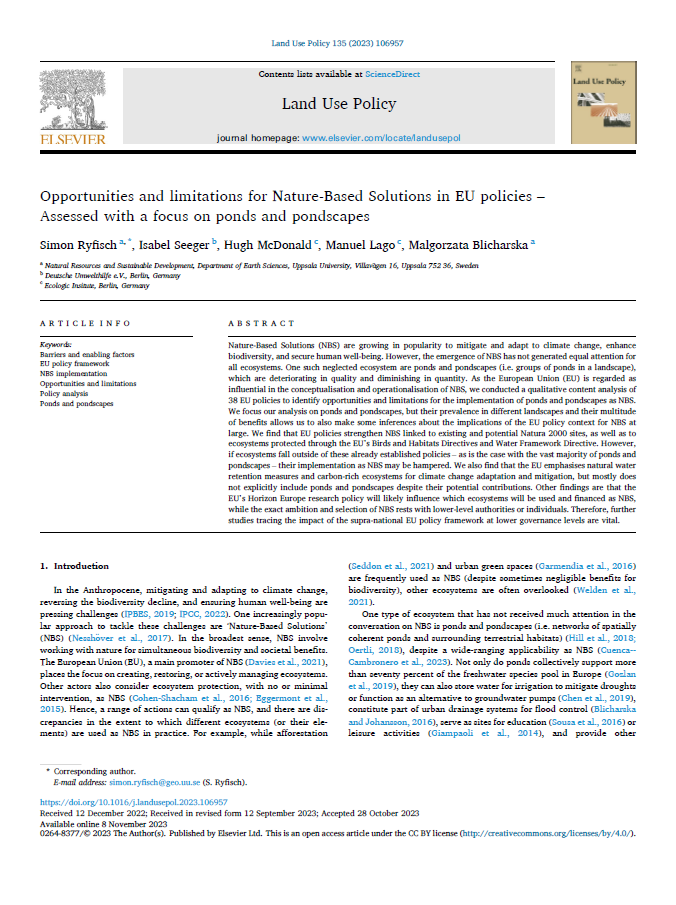
- Publication
- Citation
Blicharska, M., Lago, M., McDonald, H. et al. Challenges for assessing and implementing nature-based solutions at landscape-scale – insights from project on ponds and pondscapes. Hydrobiologia (2026). https://doi.org/10.1007/s10750-026-06212-0
Nature-based solutions (NbS) at the landscape scale are increasingly recognised for their role in supporting biodiversity, enhancing ecological connectivity and contributing to climate change adaptation. However, their assessment and implementation remain complex. This article examines these challenges using pondscapes – networks of ponds and their surrounding terrestrial habitats – as an example of landscape-scale NbS.
Key challenges in assessment and implementation of NbS
Drawing on the European research project PONDERFUL, the article analyses core dimensions of NbS assessment and implementation at the landscape scale. Particular attention is given to stakeholder engagement, governance and policy frameworks, financing mechanisms, and socio-economic considerations. The findings highlight that context-specific assessment approaches are critical for capturing the multiple functions and benefits of NbS. At the same time, the lack of standardised assessment frameworks, limited data availability and competing stakeholder interests complicate both evaluation and implementation.
Integrating stakeholder knowledge and participatory approaches
The article emphasises the importance of co-production of knowledge and participatory methods in improving NbS assessment. Workshops and stakeholder dialogues are used to integrate local knowledge, identify priorities and address trade-offs across sectors and scales. These approaches support more robust and socially relevant assessments while also strengthening ownership and trust among stakeholders involved in NbS planning and implementation.
Implications for landscape-scale planning and governance
The analysis points to the need for combining transferable methodological frameworks with context-sensitive, place-based approaches. Effective implementation of NbS at the landscape scale requires coordination across governance levels, alignment of policy instruments and integration of ecological and socio-economic perspectives. The findings provide relevant insights for both research and practice, particularly for advancing integrated and interdisciplinary approaches to landscape-scale NbS.
Contact




- Language
-
English
- Authorship
- Funding
-
European Commission, Directorate-General Research & Innovation (DG Research & Innovation), International - Published in
- Hydrobiologia – The International Journal of Aquatic Sciences
- Published by
-
Springer Nature, Germany - Year
- ISSN
-
1573-5117 (electronic)0018-8158 (print)
- DOI
- Project
- Project ID
- Keywords
-
freshwater ecosystems, small water bodies, pond networks, aquatic biodiversity, habitat diversity, ecological restoration, blue-green infrastructure, climate resilience, ecosystem services assessment, conservation planning, landscape ecology, habitat connectivity, environmental management, biodiversity conservation strategies, multi-functional landscapes, ecological monitoring, restoration ecologyEurope, temperate regions, rural landscapes, agricultural landscapes, peri-urban areas, cross-border ecosystems, regional scalelandscape-scale assessment, nature-based solutions, pondscapes, stakeholder engagement, co-production, participatory methods, workshop-based approaches, socio-economic assessment, policy analysis, governance analysis, financing mechanisms, case study methodology, context-specific assessment, interdisciplinary research, ecosystem connectivity, integrated landscape planning, mixed-methods approach, knowledge integration, pan-European research, multi-country case studies, landscape-level governance

Gutiérrez Miranda, Marcela; Felthöfer, Charlotte; Knoblauch, Doris (2024). Integrating Nature-Based Solutions in Policy and Planning: Findings and Lessons from INTERLACE Cities. Transversal City Impulse Paper. INTERLACE Deliverable 2.5.
Knoblauch, D., Gutierrez, M., & Burgos, N. (2024). Insight notes on coproducing value-added governance instruments for restorative NbS (Milestone 2.3). INTERLACE Project.
Speech:Which Policy Instruments Help Cities Implement Nature-based Solutions?
- Date
-
- Location
- Berlin, Germany
Naumann, Sandra and Davis, McKenna. (2020): Biodiversity and nature-based solutions: analysis of EU-funded projects. Brussels: European Commission.

Gerritsen E., Kopsieker L., Naumann S., Röschel L. and Davis M (2021). Using nature-based solutions to foster synergies between biodiversity and climate: Missed chances and new opportunities for a sustainable future. Think2030 policy paper by the Institute for European Environmental Policy (IEEP) and the Ecologic Institute.
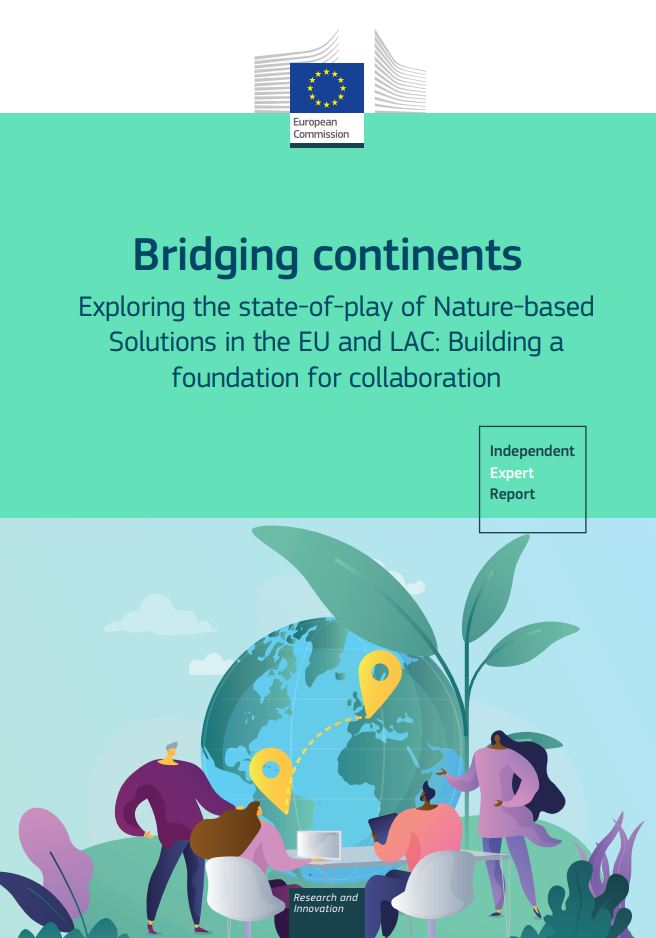
Burgos, N., Rizzi, D., & Davis, M. (2024). Bridging Continents. Exploring the state-of-play of Nature-based Solutions in the EU and LAC: Building a foundation for collaboration. European Commission, Directorate-General for Research and Innovation, Publications Office of the European Union.
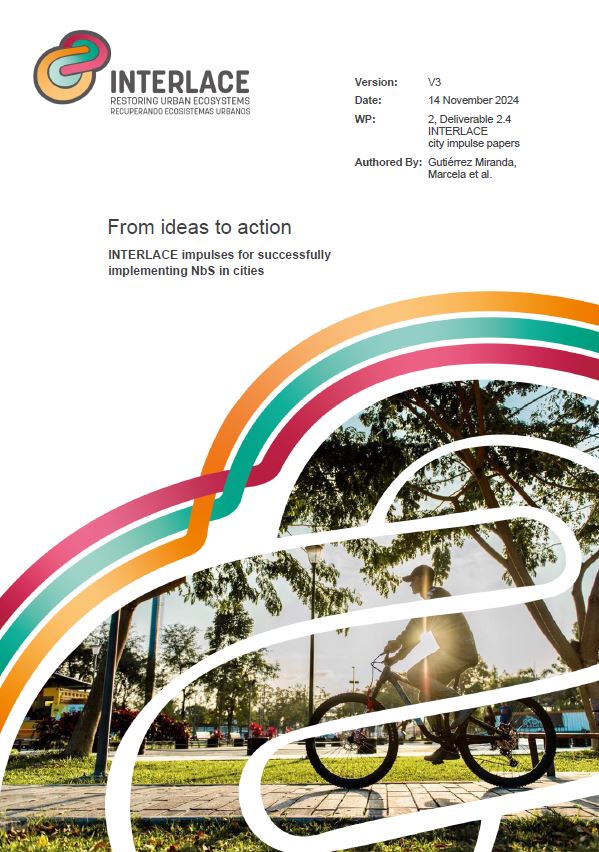
Gutiérrez Miranda, M.; Burgos Cuevas, N.; Felthöfer, C.; Knoblauch, D. (2024): From ideas to action. INTERLACE impulses for successfully implementing NbS in cities. INTERLACE Project Deliverable 2.4.
Panelists discussing nature-based solutions for the future of our cities at the Eco-city World Summit 2023.
|Photo by Malek Al Jebaie
Panel discussion:Exploring the Impact of Urban Governance Practices on Nature-based Solutions
- Date
-
- Location
- London, United Kingdom