Ecologic Institute Newsletter No 280 – January 2026
- Ecologic Institute Newsletter
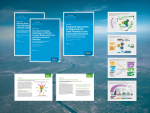
Integrated Approaches to the Triple Planetary Crisis – Reports, fact sheets and infographics on drivers, impacts and pathways for action
Climate change, biodiversity loss and environmental pollution rank among the most pressing global challenges of our time. The research project "Challenges for International Climate Protection in the Face of the Global Triple Crisis" now presents a series of reports, fact sheets and infographics that systematically analyse these challenges as a single, interconnected crisis. The publications examine the shared drivers and feedback loops of the triple planetary crisis, highlight social and ecological risks, and identify integrated policy approaches that can create synergies between climate action, biodiversity conservation and the reduction of environmental pollution.
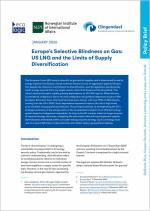
Europe's Selective Blindness on Gas: US LNG and the Limits of Supply Diversification – Policy Brief
Based on a novel analysis covering the entire European Economic Area (EEA, notably including Norway), this policy brief shows that US gas imports into the EEA sharply surged in 2025. They now account for almost 40% of total EEA gas imports and nearly 60% of LNG imports. This trend exposes Europe to heightened geopolitical pressure, price volatility and the risk of stranded assets. This policy brief offers a novel and clearer perspective on recent shifts in Europe's gas supply portfolio.
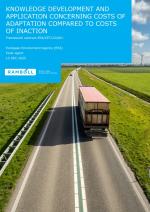
Knowledge Development and Application Concerning Costs of Adaptation Compared to Costs of Inaction – Report
This report strengthens the evidence base on the economic implications of climate change adaptation across the European Union. Its central objective is to analyse three key dimensions: the costs of adapting to climate change, the costs of inaction, and current levels of adaptation funding. The analysis focuses on three climate-sensitive sectors of strategic importance for the EU economy and society: transport, energy, and agriculture.
Costs and Benefits of Blue-Green Infrastructure in Rainwater Management – Report
Urban areas are increasingly exposed to heavy rainfall, flooding, heat, and drought as a result of climate change. This report presents a socio-economic analyses conducted within the AMAREX project, assessing 20 blue-green stormwater management measures with a focus on their ecological, social, and economic costs and benefits. Combining a multi-criteria analysis with a cost-benefit assessment, the study highlights the added value of blue-green infrastructure for climate adaptation and urban resilience.
EU Missions – Soil Deal for Europe – Fact Sheet
How strong is global support for healthy soils? A new EU fact sheet highlights the growing international momentum behind the Mission Soil Manifesto and the key role of the EU Mission "A Soil Deal for Europe" in protecting and restoring soils. Since its launch in April 2023, the Manifesto has brought together 3,655 signatories from 94 countries, including citizens, municipalities, companies, NGOs, and international organisations. Ecologic Institute plays a central role in this work by leading stakeholder engagement, managing the Manifesto and its global community, and supporting the activation of signatories and ambassadors worldwide.
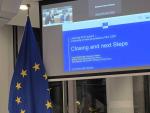
Learning from Buyers – Unlocking Private Purchases of EU CDR – Workshop
At a closed-door workshop co-hosted by the Ecologic Institute, the European Commission's Directorate-General for Climate Action (DG CLIMA) and the World Economic Forum, private buyers, alongside representatives from industry, the financial sector and EU institutions, discussed key factors shaping the development of the market for permanent carbon removals. The discussion focused on motivations behind purchasing decisions, existing barriers – including high costs, reputational concerns and policy uncertainty – as well as possible approaches for providing clearer and more reliable EU policy signals and coordinated purchasing models to strengthen private demand. The key findings are presented in the workshop summary.
EU Climate and Energy Policy in a Polarising World – Workshop Series
The 2025 edition of the Ariadne@Brussels workshop series took place from 8 to 10 December 2025. Researchers from the Ariadne project presented their latest findings on EU climate and energy policy and discussed them in an informal, focused setting with policy makers and stakeholders. Key takeaways and the slides from each session are available on the Ariadne webpage.
Freshwater Restoration in Focus – New MERLIN Podcast episodes on water-friendly farming and open-access training
Restoring Europe's freshwater ecosystems requires both supportive policies and accessible knowledge. Two recent episodes of the MERLIN Podcast explore how these elements can work together to scale up restoration across Europe. One episode, featuring Ecologic Institute's Dr. Josselin Rouillard focuses on how water-friendly farming can be mainstreamed through reforms of the Common Agricultural Policy, highlighting the close links between agriculture and healthy freshwater ecosystems. In the other episode, Ecologic Institute's Gerardo Anzaldua introduces the MERLIN Academy, an open-access online platform offering free training and resources for researchers, practitioners, and policymakers, and discusses the role of shared knowledge, nature-based solutions, financing, and governance in effective restoration efforts.
Scientific Statement Warns Against Pesticide-related Changes in the Draft Omnibus Package
An independent scientific statement, led by Dr. Lindsey Hendricks-Franco (Ecologic Institute) and co-signed by more than 200 researchers and medical professionals across Europe, has been addressed to European Commission President Ursula von der Leyen. The statement warns that proposed amendments to Regulation (EC) No 1107/2009 on plant protection products included in the draft Omnibus Simplification Package could weaken fundamental safeguards in pesticide risk assessment, with implications for environmental protection, biodiversity and human health.
Contents
- Publications
- Integrated Approaches to the Triple Planetary Crisis – Reports, fact sheets and infographics on drivers, impacts and pathways for action
- Europe's Selective Blindness on Gas: US LNG and the Limits of Supply Diversification – Policy Brief
- Knowledge Development and Application Concerning Costs of Adaptation Compared to Costs of Inaction – Report
- Costs and Benefits of Blue-Green Infrastructure in Rainwater Management – Report
- EU Missions – Soil Deal for Europe – Fact Sheet
- Recent: Presentations and events
- Learning from Buyers – Unlocking Private Purchases of EU CDR – Workshop
- EU Climate and Energy Policy in a Polarising World – Workshop Series
- Freshwater Restoration in Focus – New MERLIN Podcast episodes on water-friendly farming and open-access training
- News
- Scientific Statement Warns Against Pesticide-related Changes in the Draft Omnibus Package