Photo: Herbert Aust on Pixabay
Prioritising Wetland Conservation and Restoration in Europe
United voices for more policy impact
- Publication
- Citation
Porada, Hannah; Verwer, Caspar; van der Wal, Mark; Reed, Mark S.; Hurtado, María; Perez, Pilar; et al. (2026): Prioritising Wetland Conservation and Restoration in Europe: United Voices for More Policy Impact. White Paper. IUCN National Committee of the Netherlands (IUCN NL).
The white paper, Prioritising Wetland Conservation and Restoration in Europe: United Voices for More Policy Impact, brings together evidence and recommendations from seven EU-funded projects, including RESTORE4Cs, with contributions from Eleftheria Kampa, Senior Fellow at Ecologic Institute. The paper highlights the urgent need to accelerate wetland conservation and restoration across Europe, as degraded wetlands continue to drive biodiversity loss, weaken water resilience, and turn ecosystems that can store carbon into sources of greenhouse gas emissions.
The publication identifies four key priorities for policy action: improving coherence across EU policy frameworks, mobilising public and private finance, enabling landscape-scale implementation, and strengthening monitoring systems alongside stakeholder participation. Drawing on examples from Finland, Germany and Spain, it shows that successful wetland restoration depends not only on ecological knowledge but also on coordinated governance, fair incentives for land users, robust monitoring, and inclusive engagement with local communities.
With important EU policy processes underway, including the implementation of the Nature Restoration Regulation, the development of national restoration plans, and future discussions around the Water Framework Directive and agricultural policy, the white paper provides timely recommendations for policymakers at EU, national and regional levels. It calls for wetlands to be recognised as critical natural infrastructure for climate mitigation and adaptation, biodiversity recovery, water security and long-term socio-economic resilience.
Contact

- Language
-
English
- Authorship
- Credits
Authors: Hannah Porada (REWET), Caspar Verwer (REWET), Mark van der Wal (REWET), Mark S. Reed (WET HORIZONS; ForPeat), María Hurtado (REWET; ForPeat), Pilar Perez (REWET, ALFAwetlands), Emmi Haltia (ALFAwetlands), Iryna Shchoka (ALFAwetlands), Jan Peters (ALFAwetlands), Maria Tengö (ALFAwetlands), Marie Lorenz (ALFAwetlands), Tuula Larmola (ALFAwetlands; ForPeat), Liisa Ukonmaanaho (ALFAwetlands; ForPeat), Maria del Mar Otero (Restore4Cs, Wetland4Change), Antonio Camacho (Restore4Cs, Wetland4Change), Christoph Schröder (Restore4Cs, Wetland4Change), Wojciech Mroz (Palus Demos), Niall O'Brolchain (Palus Demos), Louise Holden (Palus Demos) Editors: Hannah Porada (IUCN NL), Caspar Verwer (IUCN NL), Mark van der Wal (IUCN NL), Mark S. Reed (SRUC)
- Funding
-
European Commission, Directorate-General Research & Innovation (DG Research & Innovation), International - Published by
-
Dutch National Committee of IUCN (IUCN NL), Netherlands - Year
- Dimension
- 15 pp.
- Project
- Project ID
- Keywords
-
coastal wetland restoration, wetland restoration planning, implementation roadmap, nature-based solutions, blue carbon, ecosystem restoration, ecosystem services, climate change mitigation, climate adaptation, biodiversity conservation, restoration prioritisation, restoration finance, sustainable finance, carbon sequestration, greenhouse gas mitigation, decision support system, restoration governance, adaptive management, policy integration, ecosystem resilience, habitat restoration, restoration monitoring, restoration indicators, coastal resilience, environmental governanceEurope, Atlantic coast, Baltic Sea, Black Sea, Mediterranean Sea, North Sea, Portugal, Spain, France, Netherlands, Lithuania, Romania, Camargue, Danube Delta, Ria de Aveiro, Curonian Lagoon, Valencian Wetlands, South-West Dutch Deltaimplementation roadmap, baseline assessment, policy analysis, policy mapping, indicator-based assessment, metrics development, spatial analysis, GIS analysis, remote sensing, decision support system (DSS), spatial decision-support toolbox, ecosystem condition assessment, stakeholder engagement, governance analysis, public-private partnerships, cost-benefit analysis, multi-criteria analysis (MCA), adaptive management, restoration prioritisation, monitoring and evaluation, policy integration, scenario-based planning, restoration planning, mapping of potentially restorable wetlands, evidence-based decision-making, ecosystem service assessment, sustainable finance inventory, policy inventory, harmonised assessment framework, European Community of Practice (ECoP)
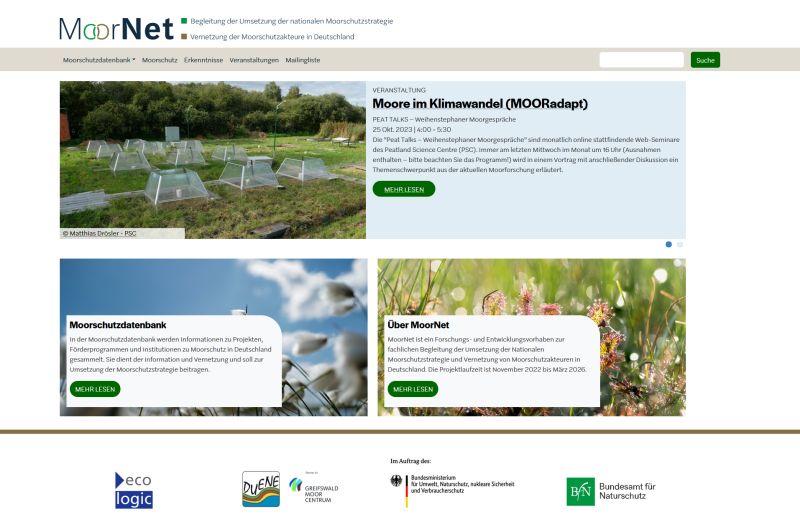
Ecologic Institute (2023): MoorNet. Website. URL: https://moor-net.de
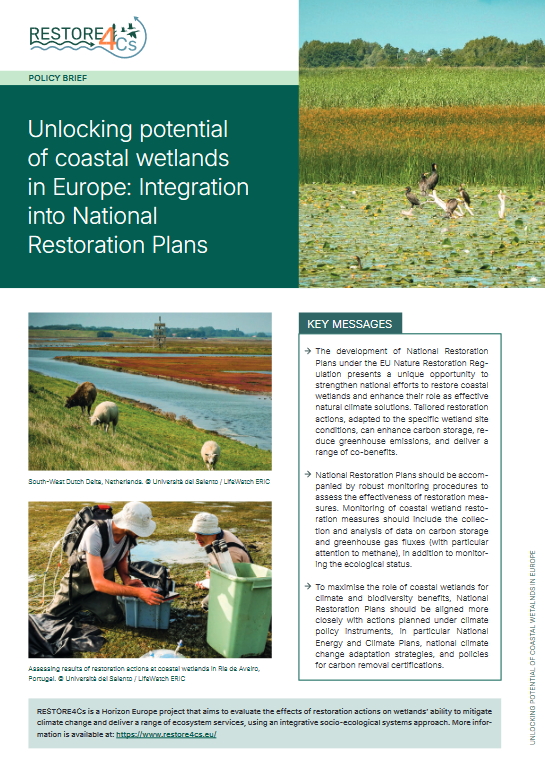
Kampa, E., Elkina, E., Otero, M., 2025. Unlocking potential of coastal wetlands in Europe: Integration into National Restoration Plans. Policy Brief. RESTORE4Cs project.
Kampa, E., Elkina, E., Otero, M., Lago, M., Schritt, H., Guelmami, A., Camacho, A., Bodivit, A., Pollman, N., Suarez, S., Lillebø, A., Schröder, C., & Ronse, M. (2025). Restoring Coastal Wetlands in Europe ‒ Implementation Roadmap to Guide National Action. Horizon RESTORE4Cs Project GA ID: 101056782.
Kampa, E., Elkina, E., Bueb, B., & Otero Villanueva, M. d. M. (2025). Restoring European Coastal Wetlands for Climate and Biodiversity: Do EU Policies and International Agreements Support Restoration? Sustainability, 17(21), 9469. https://doi.org/10.3390/su17219469
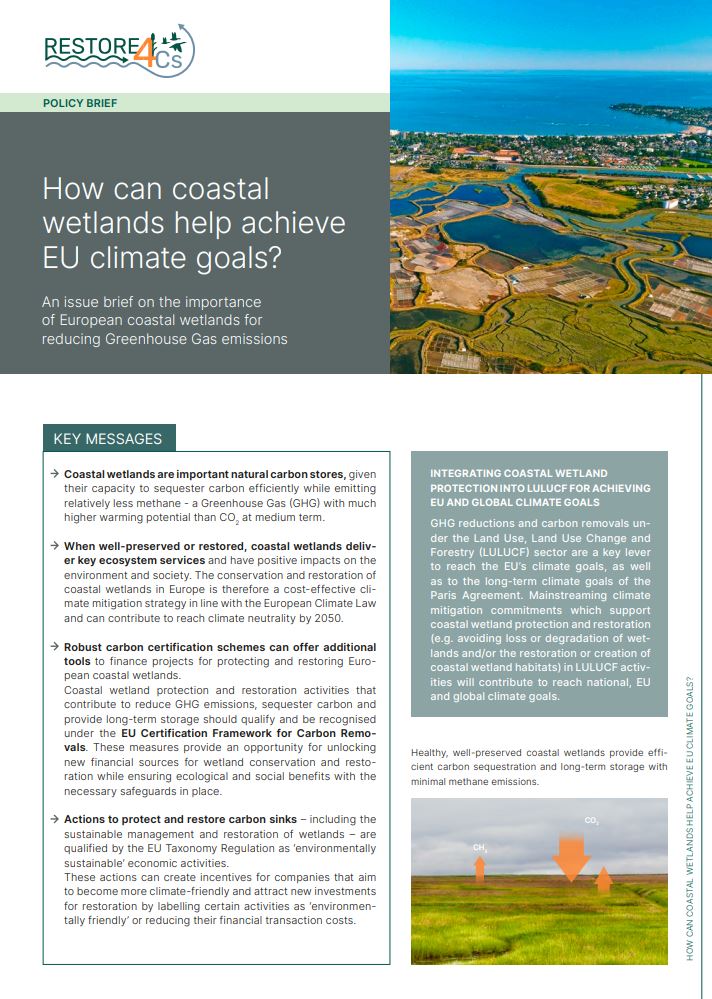
Otero, M., Camacho, A., Abdul Malak, D., Kampa, E., Scheid, A., Elkina, E., 2024. How can coastal wetlands help achieve EU climate goals? Policy Brief. Restore4Cs project.