
Photo: Canva.com, Cover: UBA, 2026
Arzneimittelindex Umwelt
Machbarkeitsstudie zur Etablierung eines pharmazeutischen Umweltinformations- und Klassifikationssystems in Deutschland
- Publication
- Citation
Vidaurre, R., Heni, Y., Woitaske-Proske, C., Peifer, C., & Gassner, U. (2026). Arzneimittelindex Umwelt. Machbarkeitsstudie zur Etablierung eines pharmazeutischen Umweltinformations- und Klassifikationssystems in Deutschland. Umweltbundesamt. https://doi.org/10.60810/openumwelt-8142
Prescribing decisions are currently guided primarily by therapeutic efficacy, patient safety and cost-effectiveness. A recent feasibility study explores how environmental information could also become part of routine pharmaceutical decision-making in the future. At the centre of the proposed concept is a German Environmental Pharmaceutical Index (EPI), designed to provide standardised environmental information on active pharmaceutical ingredients (APIs) and make it readily accessible for healthcare professionals. Environmental considerations are not intended to replace established therapeutic criteria but to provide an additional decision-support tool whenever multiple therapeutically equivalent treatment options are available.
Building on International Experience
To assess the feasibility of such a system, the research team evaluated established environmental information and classification systems in Sweden, Finland and Scotland. Sweden, in particular, has demonstrated how environmental information can be successfully integrated into pharmaceutical decision-making through Fass.se, Janusinfo.se and the Wise List. Building on these international experiences, the researchers examined how comparable approaches could be adapted to the German healthcare system. The study combined scoping literature reviews, qualitative stakeholder interviews, expert panel meetings, stakeholder workshops, and a comprehensive feasibility analysis covering technical, organisational, legal, financial and political aspects.
Delivering Environmental Information Where Decisions Are Made
The study concludes that a German Environmental Pharmaceutical Index is both technically and organisationally feasible. The proposed concept comprises three complementary components: an environmental information system, an environmental classification system, and a dissemination system. Environmental information, derived primarily from Environmental Risk Assessments (ERAs) conducted during the European marketing authorisation process, would be compiled within a central database and translated into a practical traffic light classification. This enables healthcare professionals to compare active pharmaceutical ingredients within the same therapeutic indication while maintaining transparency regarding the underlying scientific evidence.
Rather than creating additional workload for healthcare professionals, the information would be integrated directly into existing pharmacy and doctors' office management software, therapeutic guidelines, formularies and other established healthcare information systems, ensuring that environmental considerations are available precisely where prescribing and dispensing decisions are made.
Supporting More Sustainable Pharmaceutical Prescribing
The study highlights that reducing the environmental impact of pharmaceuticals requires action across the entire pharmaceutical life cycle. Alongside advances in pharmaceutical development and wastewater management, prescribing practices also offer opportunities to reduce environmental emissions. The proposed Environmental Pharmaceutical Index provides a practical framework for integrating environmental information into routine prescribing and dispensing without compromising therapeutic efficacy, patient safety or clinical appropriateness. By supporting environmentally informed and ultimately eco-directed pharmaceutical prescribing, the concept could contribute to a more sustainable healthcare system while reducing the environmental burden of pharmaceuticals.
Contact

- Language
-
German
- Authorship
- Funding
-
German Environment Agency (UBA), Germany - Published by
-
German Environment Agency (UBA), Germany - Year
- Dimension
- 222 pp.
- ISSN
-
1862-4804
- DOI
- Project
- Project ID
- Keywords
-
Environmental Pharmaceutical Index, pharmaceuticals in the environment, active pharmaceutical ingredients, environmental information system, environmental classification system, dissemination system, Environmental Risk Assessment (ERA), environmentally informed prescribing, eco-directed pharmaceutical prescribing, sustainable healthcareGermany, Sweden, Finland, Scotland, Europefeasibility study, scoping literature review, qualitative stakeholder interviews, expert panel meetings, stakeholder workshops, case study analysis, feasibility analysis, Environmental Risk Assessment (ERA)
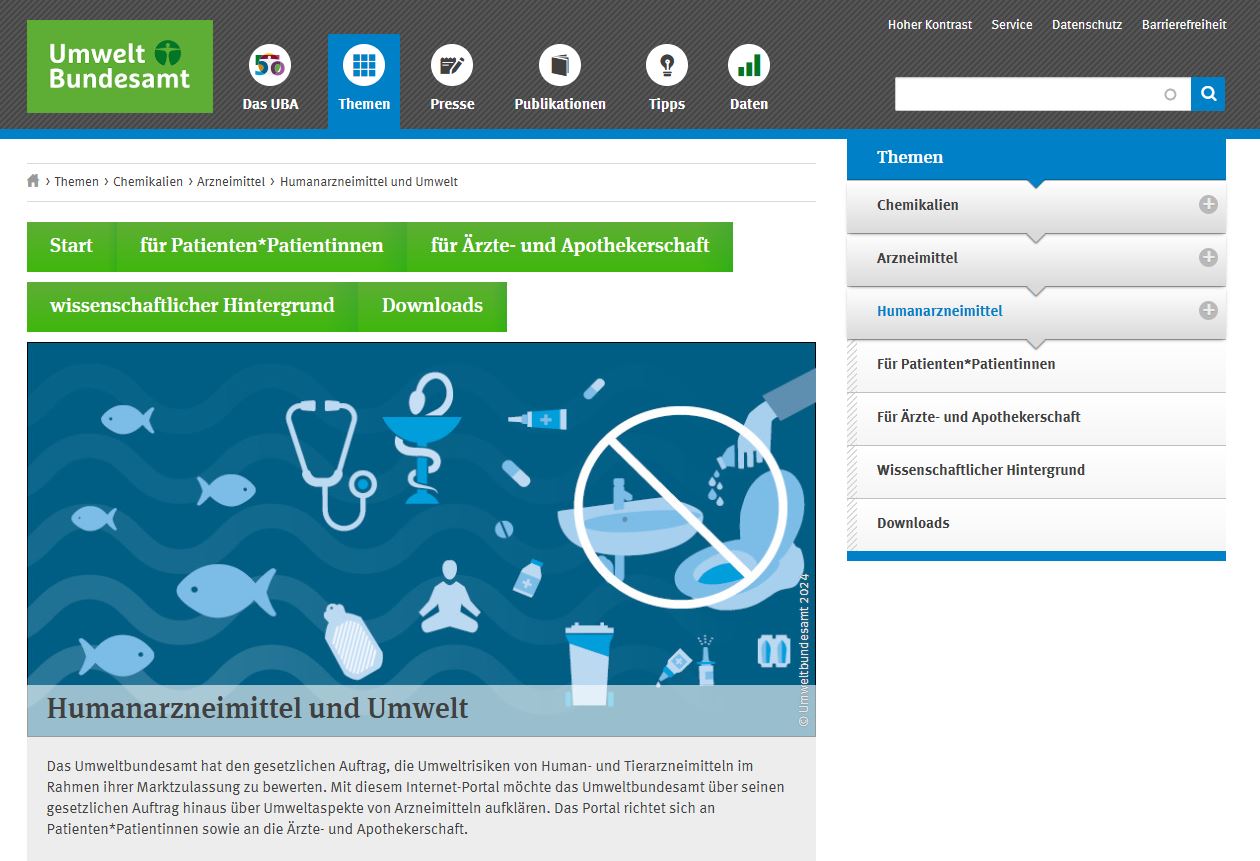
German Environment Agency (Ed.) 2025: Pharmaceuticals and the Environment. Internet portal. Dessau-Roßlau. URL: www.uba.de/en/hmp
Information and Teaching Materials for an Environmentally Conscious Use of Pharmaceuticals
- Duration
-
-
- Funding
-
German Environment Agency (UBA), Germany
Umweltbundesamt (ed.) 2018: Umweltaspekte von Tierarzneimitteln in der tiermedizinischen Praxis. Lehrmaterialien für Tierärztinnen und Tierärzte.
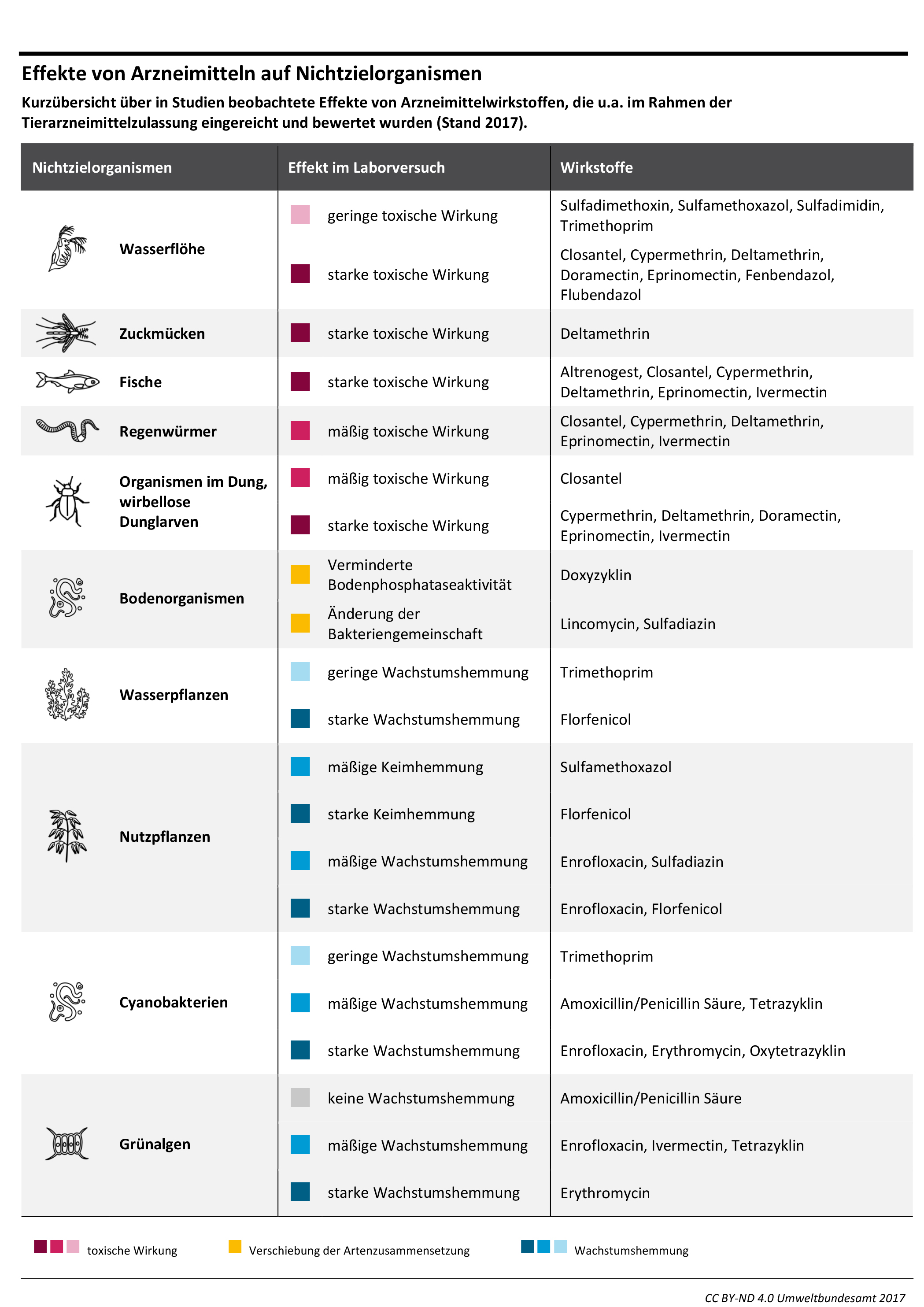
Umweltbundesamt (2017): Effekte von Arzneimitteln auf Nichtzielorganismen. Infografik.

Umweltbundesamt (2018): Tierarzneimittel in der Umwelt. internet portal. URL: www.umweltbundesamt.de/tierarzneimittel