How Can We Tackle the Plastic Pollution Problem?
Doris Knoblauch live on WDR 5's radio programme Quarks (in German)
- Presentation
- Date
-
15 September 2026 | 15:05
- Interview
Plastic is now found virtually everywhere in the environment – including in our rivers. But how does it get there, even in a country like Germany with a comparatively well-functioning waste management and recycling system? And what needs to change to prevent plastic from entering rivers and, ultimately, the oceans? Doris Knoblauch, Director of the Resources Programme at Ecologic Institute, discussed these questions on the German radio programme WDR 5 Quarks – Wissenschaft und mehr.
How plastic and microplastics enter our rivers
The sources of plastic pollution are more diverse than discarded bottles and packaging might suggest. Alongside this visible litter, microplastics enter the environment through numerous pathways. Tire wear particles, for example, can be washed away by rainwater; cigarette filters contain plastic fibres; and plastics can also be released through agricultural practices and everyday products. Via stormwater, sewer systems and other pathways, these materials eventually reach streams and rivers – and from there, often the sea.
Plastic Pirates: ten years of citizen science on plastic pollution
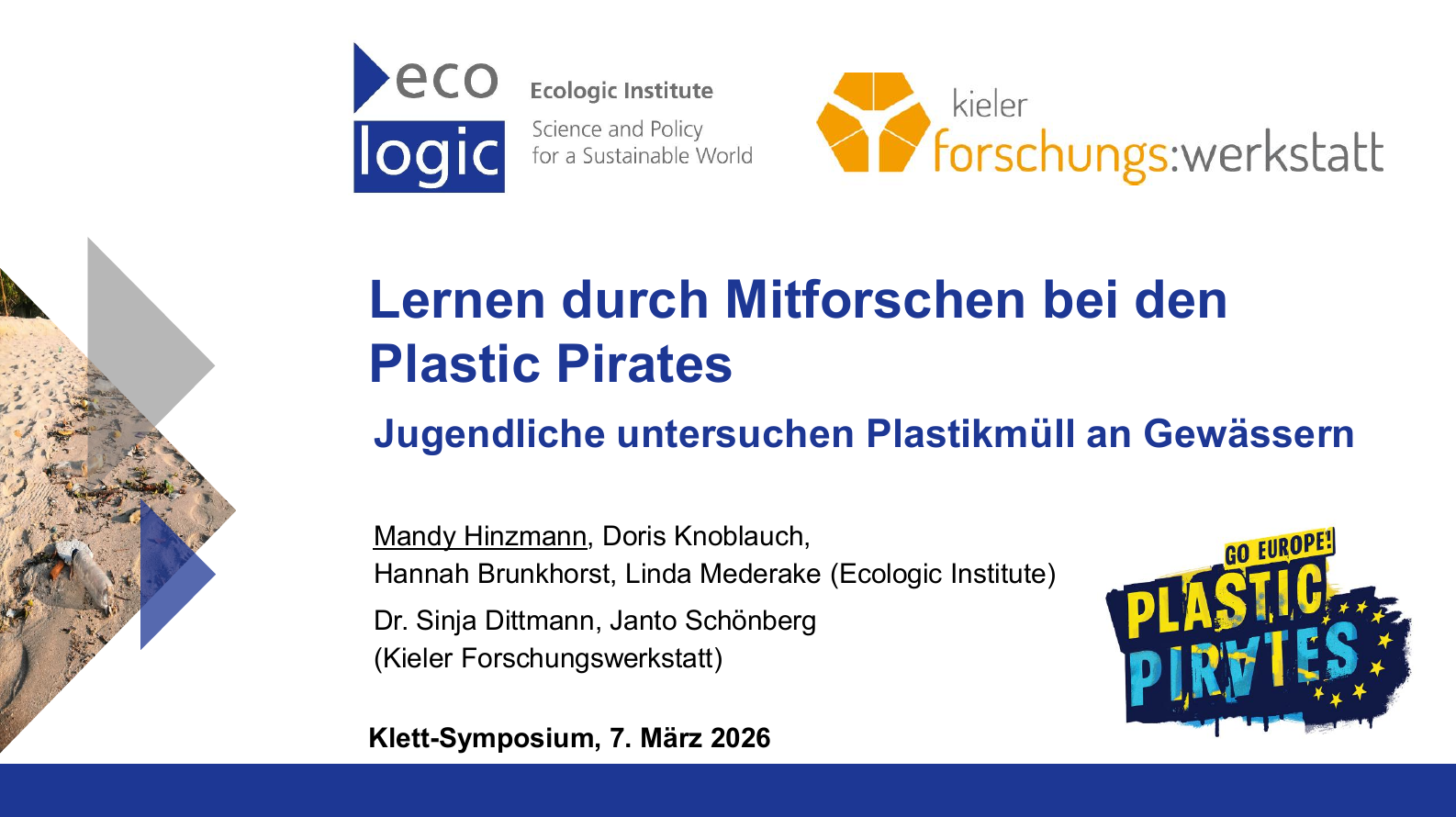
Data collected by the Plastic Pirates also illustrate just how long plastic can remain in the environment. The citizen science initiative celebrates its tenth anniversary in Germany in 2026. School students and youth groups investigate rivers and coastlines, using scientific methods to record the litter they find. Although certain single-use plastic products have been banned in the EU for several years, the field data have yet to show a clear decline in these types of waste. Once plastic enters the environment, it can remain there for a long time.
Preventing plastic waste: why clean-ups alone are not enough
This is precisely why collecting plastic once it has already reached a riverbank or entered the water cannot be the only solution. Clean-up campaigns are valuable and help raise awareness of the problem, Knoblauch explained. But action needs to begin much earlier, by preventing waste from being generated in the first place. Responsibility does not lie with consumers alone. Businesses and retailers can also make a difference – for example, by expanding reusable packaging systems and reducing single-use packaging throughout supply chains. Using products for longer and questioning high levels of consumption more broadly are equally important.
Education and citizen science raise awareness of plastic pollution
Education and awareness are another important part of the solution. Through the Plastic Pirates, young people see first-hand the scale of pollution in and around waterways. This experience often prompts questions that go beyond individual behaviour: What needs to change at the systemic level? What can businesses do? And which political frameworks are needed? For Knoblauch, fostering this kind of critical awareness is therefore an important lever for tackling plastic pollution. As she stressed in the interview, education on these issues is particularly valuable when it starts at a young age.
Global Plastics Treaty: addressing the full life cycle of plastics
From riverbanks, the discussion leads directly to the political and international level. One fundamental question lies at the heart of the negotiations on a global plastics treaty, which Knoblauch has followed as an observer: Should the international community focus primarily on improving waste collection, sorting and recycling – or should an agreement address the entire life cycle of plastics, starting with production? The positions of countries remain far apart. At the same time, Knoblauch stressed that the negotiations should not be considered a failure simply because an agreement has not yet been reached: the parties remain at the negotiating table and continue to seek common ground.
The WDR 5 discussion highlighted just how many levels need to come together to tackle plastic pollution effectively: understanding how plastic enters our waterways in the first place, raising awareness through education and citizen science, strengthening reuse and reducing unnecessary packaging along supply chains, and developing international rules that address plastics throughout their entire life cycle.
Contact